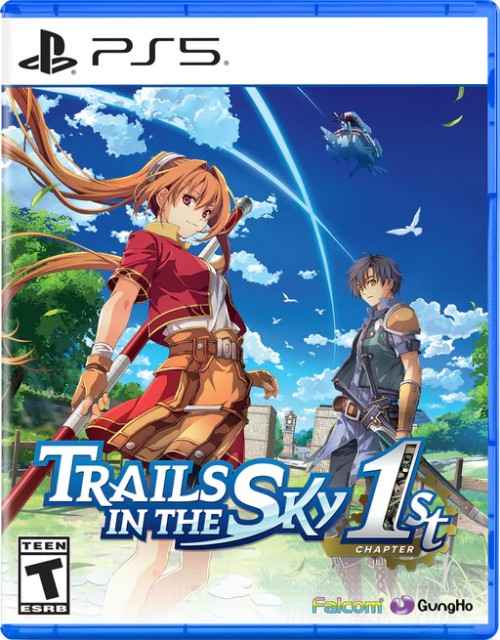
Trails in the Sky: 1st Chapter Review
Trails in the Sky: 1st Chapter is a remake of The Legend of Heroes: Trails in the Sky, originally released for PC in Japan in 2004. It was ported to the PSP in Japan in 2006, and North America got a localization of the PSP version in 2011. Unfortunately, the game didn’t sell well in North America, despite it reviewing well, and building a devoted cult following. This was extra upsetting because The Legend of Heroes: Trails in the Sky is the first part of a trilogy. The game ends on a cliffhanger, and the story is directly continued and concluded in Trails in the Sky SC and Trails in the Sky the 3rd.
Trails in the Sky SC got a North American PSP version, but Trails in the Sky the 3rd only got a PC release. North America didn’t get the PS3 or Vita versions of any of the games. The Trails in the Sky games have been trapped on PC, while the many sequel games have had regular console releases. These sequel games include Trails from Zero, Trails to Azure, The Legend of Nayuta: Boundless Trails, the Trails of Cold Steel games, Trails into Reverie, and the Trails Through Daybreak games. There are also more games on the way, including Ys vs. Trails in the Sky and Trails Beyond the Horizon.
The First of a Trilogy
There is an overarching story of all these Trails games, which begins with the Trails in the Sky trilogy. Instead of finally giving North America console versions of the original Trails in the Sky games, Nihon Falcom has decided to remake the trilogy. The first of these remakes, Trails in the Sky: 1st Chapter, is finally out!
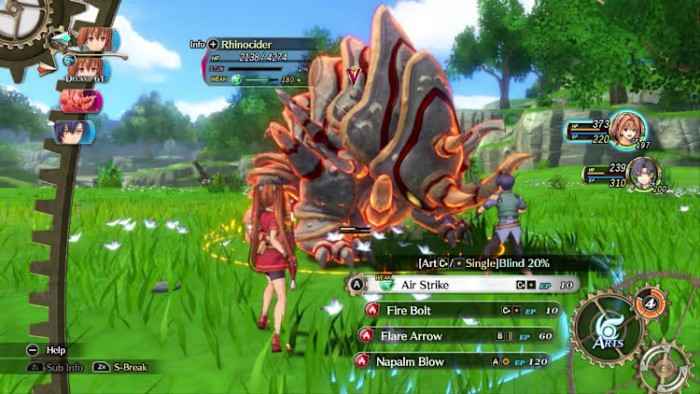
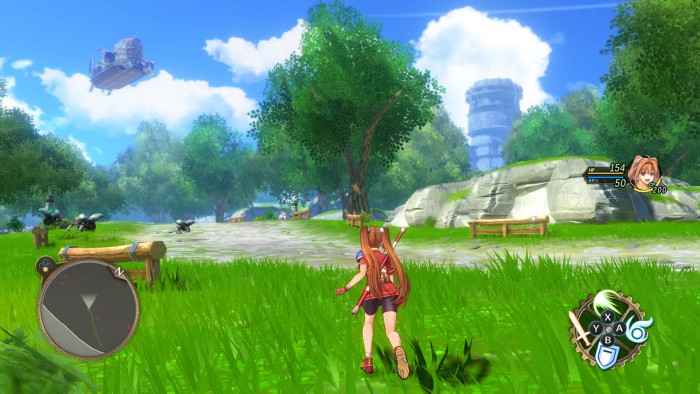
To be upfront, I haven’t finished any of the original Trails in the Sky games. I have played and reviewed some games from later in the Trails series, such as the first Trails of Cold Steel game, and The Legend of Nayuta: Boundless Trails. I have played the original Trails in the Sky, but I’m not so familiar with it that I can go into the minutia of differences between it and the new remake. Know that the original game has isometric sprite-based graphics, and turn-based combat with strategy JRPG elements. The new Trails in the Sky: 1st Chapter has 3D graphics that match the modern entries in the Trails series, and action JRPG combat.
An Escalating Conflict
Trails in the Sky: 1st Chapter’s story is about new bracers Estelle and Joshua. Late one night, Estelle’s father, Cassius, brings Joshua, a boy her own age, to their home. He’s in need of medical attention. There aren’t any details given to the player about Joshua’s past or about what happened to him. The game jumps ahead five or so years, and Estelle and Joshua are taking their final exam to become bracers. Bracers are warriors who help out around their area with needed tasks. After several bracer missions, and a few mysteries, the level of conflict escalates.
The story is one of the main reasons to play Trails in the Sky: 1st Chapter. The game’s world is rich with lore, and there’s lots of depth to the characters. My only complaint is that the narrative is definitely the first part of a greater story. It will take two more games for the story to conclude. The game’s plot isn’t self-contained. There’s still tons of content in Trails in the Sky: 1st Chapter, but it’s always a bummer playing something for 60 hours, only to get a “to be continued” at the end.
Action and Turn-Based Combat
Trails in the Sky: 1st Chapter’s combat is a real treat. Gameplay is real-time action combat by default. Circle attacks. Each character has a single button combo. X is dodge. Square changes combat to turn-based. Pressing circle does a single attack. Attacking increases CP (craft points), which can be spent to perform skills (called “crafts”). Crafts are used by pressing triangle. The player can move their character when choosing a craft, because many crafts require positioning, such as back attacks. Crafts also have different ranges, in different configurations. Stunning an enemy or attacking a stunned enemy allows the player to perform a follow-up multi-character “brave attack”.
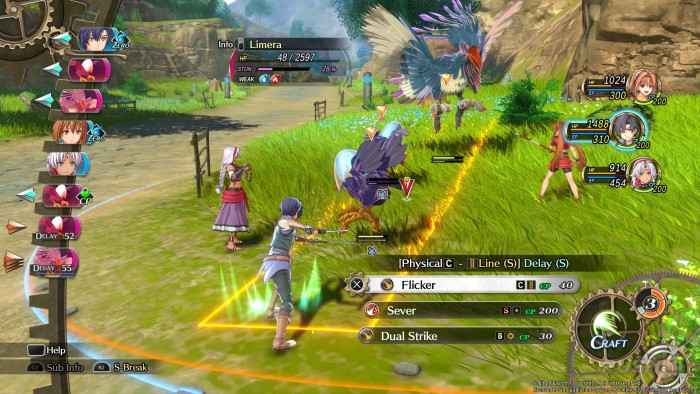
Pressing square allows the player to use magic (called “arts”). Arts consume “EP” (magic points). Arts can be attacks, healing, buffs, debuffs, etc. They all have a casting time. Lots of enemies are resistant to physical attacks, or have high evasion rates, so arts get used often. Many enemies also have elemental weaknesses, which can be exploited by using arts. This system lets players dispatch easier field enemies quickly with real-time attacks, but lets the player strategize and use all the systems for more difficult mobs and bosses. It reminded me of Metaphor: ReFantazio’s ability to easily dispatch weak enemies without needing to enter combat.
Orbment System
Arts and crafts come from “orbments”. The way orbments work are that the player collects “sepith”, which are elemental materials dropped by monsters. They can be turned into “quartz”, which are orbs that grant abilities (think Materia). Quartz can be set into orbments equipped to characters. A quartz of a certain element causes the value of that element to increase for that character. When certain elemental levels are met, characters get new abilities. Equipping quartz also increases different stats, depending on the quartz. Characters can buy more orbment slots.
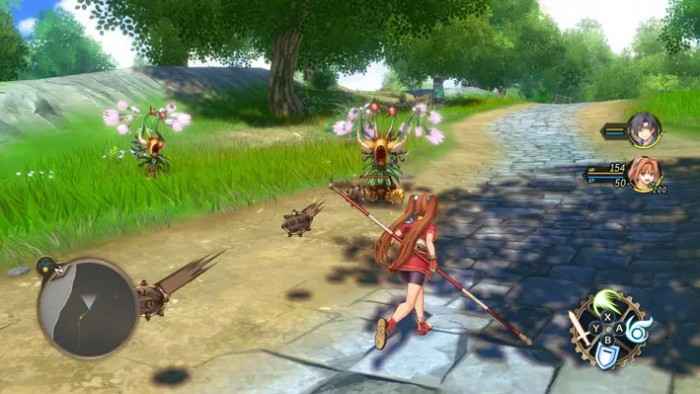
There are additional field controls outside of combat areas. L1 toggles-on running movement. L2 lets the player switch the leader character. Pressing L1 while holding R1 puts the game in “high speed mode”, where everything happens faster. This can even be done mid-conversation, which can be quite welcome. Holding R1 changes all the face buttons to menus for notebooks including quest notes, and a bestiary. My only complaint about exploration is that there are a lot of loading screens. They’re not long load times, but in a town, every door and every staircase has a load screen, and they add up.
Hate That Shorthand
There’s a lot of information to keep track of early on in Trails in the Sky: 1st Chapter. Every item has an icon representing an effect, and a range. Some stats have atypical names, like “EP” (energy points), “ATS” (arts strength) and “ADF (arts defense) and “AEV” (arts evasion rate). These are all because magic is called “arts”, physical skills are called “crafts”, and there are separate stats for arts and crafts. The player also has to remember lots of information like the difference between sepith, quartz, and orbments.

Options opens a menu with subsections for equipment, items, orbments, status, system, etc. The touch pad opens a second, very needed menu for control reminders, tutorials, and tips. The d-pad has menus set to each direction. Up is a conversation log, left is an item shortcut, right is an arts menu, and down is a larger map.
Lots of Written Documents
Trails in the Sky: 1st Chapter puts a heavy emphasis on collecting documents, and there’s tons of reading material to find and go through. These could be random people’s diary entries, or excerpts from history books. Trails in the Sky: 1st Chapter has a really well-developed world, especially if the player wants to explore every nook and cranny, and read everything. The original games took years to localize because of how much text they had.
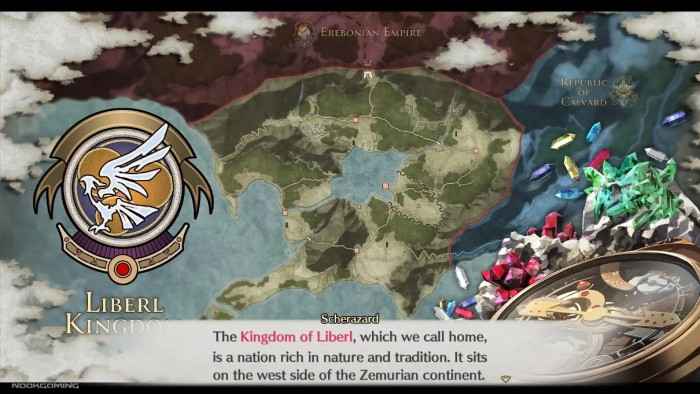
I didn’t have a problem with the amount of reading in Trails in the Sky: 1st Chapter, but I definitely think a lot of the game’s systems seem more complicated than they need to be. The game wants to rename common terms, and use abbreviations for them. We all know what magic and accessories are, and renaming them just creates confusion upfront. The number of menus is also out of control. How a game has ten menus is beyond me.
Ys-Like Aesthetics
Although I haven’t played many of the Trails games, I have played ALL of Nihon Falcom’s Ys games. Trails in the Sky: 1st Chapter is aesthetically on par with newer Ys entries. The visuals have the same vibrant, cell-shaded anime appearance. The voice acting is mostly very good, and has some Ys cast members. The music is phenomenal. I was truly shocked by how fantastic the music was. The score perfectly captures a classic JRPG sense of whimsy and adventure. I was always excited to go to a new area, just to hear more of the score.
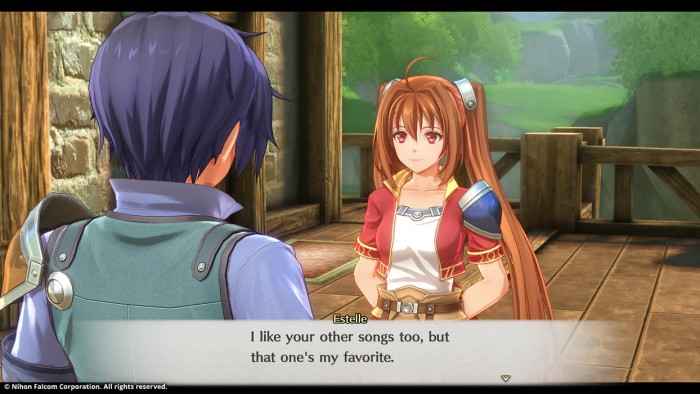
Trails in the Sky: 1st Chapter blew me away. I’ve always wanted to play more of the Trails series, but, as a console preferer, have seen the PC versions of the Trails in the Sky trilogy as a barrier. This remake has a wonderful world and narrative. It’s action/ turn-based hybrid combat system is incredibly fun to play. My only major complaints are that there are so many terms specific to this game, and so many needless menus early on, that it takes way too much time to realize how familiar the systems are. Trails in the Sky: 1st Chapter is a must-play for JRPG fans. Bring on the 2nd Chapter, because I can’t wait to see where this story goes!
***PS5 code provided by the publisher***
The Good
- Deep world building
- Switch between real time and turn-based combat
- Phenomenal music
The Bad
- Systems need streamlining
- Too many menus
- The story isn’t over