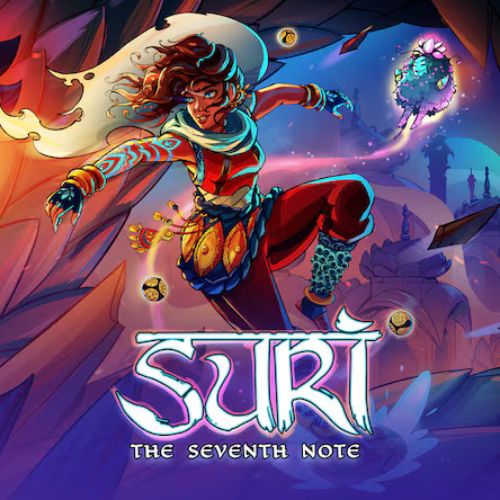
SURI: The Seventh Note Review
Many places around the world are testing the waters with video game development, and one market that’s creating a buzz is India. Part of Sony’s India Hero Project, SURI: The Seventh Note aims to be a breakout hit for the initiative, combining platforming and rhythm-based gameplay with a stunning backdrop inspired by Indian mythology. Will it manage to hit all the right notes, or will it be a discordant clash of ideas?
You play as Akira, a young woman who is in search of a magical fruit that will cure her mother of a deadly disease. With her father already fallen victim to the mysterious illness, you have no other choice but to leave your mother and venture forth. While this sets a suitable premise for your journey, it never soars to heights that warrant investment in the outcome. Cutscenes are static, with only a small number of portraits for characters. With basic text boxes for dialogue and a rudimentary script, it never immerses you in its tale.
When Two Worlds Collide
Gameplay is at the forefront. You must leap from platform to platform, bouncing off and dashing through objects in time with the beat. In order to truly nail this gameplay loop, tight mechanics are a necessity. Unfortunately, this is where the downfall of SURI: The Seventh Note begins. Jumps are a little floaty and the movement is a little loose, which reduces the satisfaction of hopping from one point to another. Due to this, frustration can ensue as the controls lack the finesse required for a platform-focused adventure.
As you must jump in time with the music, aspects of the environment pulse with the beat to support your timing. In addition to the audio, the beat also vibrates through the controller to help you quickly get in tune with the rhythm. This creates a hypnotic experience, with everything falling into sync as you navigate increasingly hazardous areas. While stages grow in complexity, with disappearing platforms and more, the time signature remains consistent, requiring you to leap at half or full beat to progress.
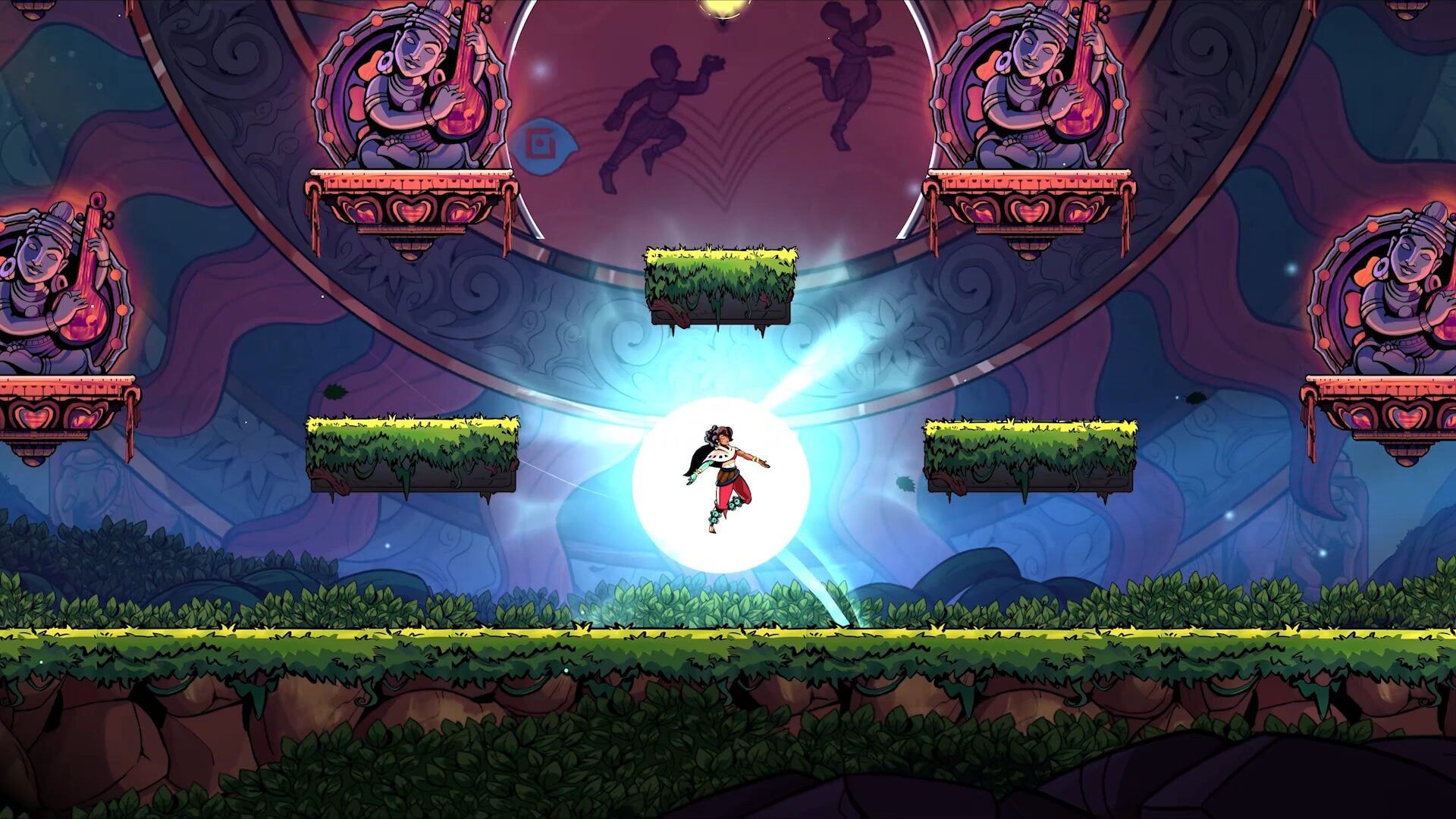
Each segment has items that you must absorb with a perfectly timed bounce. Hidden rooms possess extras that you will need to 100% the area. Leaping off successive items improves your multiplier, granting bonuses as you move from area to area. This gives the incentive to explore each route and re-do levels to collect each collectable.
Even though you can calibrate the sound and your inputs to improve latency, everything never feels perfectly in sync. After several attempts to correct the issue, a slight delay remained, creating a disconnect between the audio and visuals. This hinders the flow of the experience as you never truly lock in to the adventure due to issues with the rhythm and movement.
Can’t Find Its Rhythm
The art direction is wonderful, with vivid colours that make each environment feel distinct. Akira also looks great, even though the animation is rather basic. While iconic Indian design traits are used throughout, the audio fails to reach the same heights. As this is a rhythm-focused adventure, you’d expect the audio to be a highlight. Music is deeply woven into the country’s history, forming an integral part of its cultural identity. Due to this, it’s disappointing to hear the basic soundtrack that backs the adventure. Rather than delving into the region’s varied sounds, Tathvamasi Studios opts for basic rhythms and subtle melodies, falling short of a true celebration of its musical heritage.
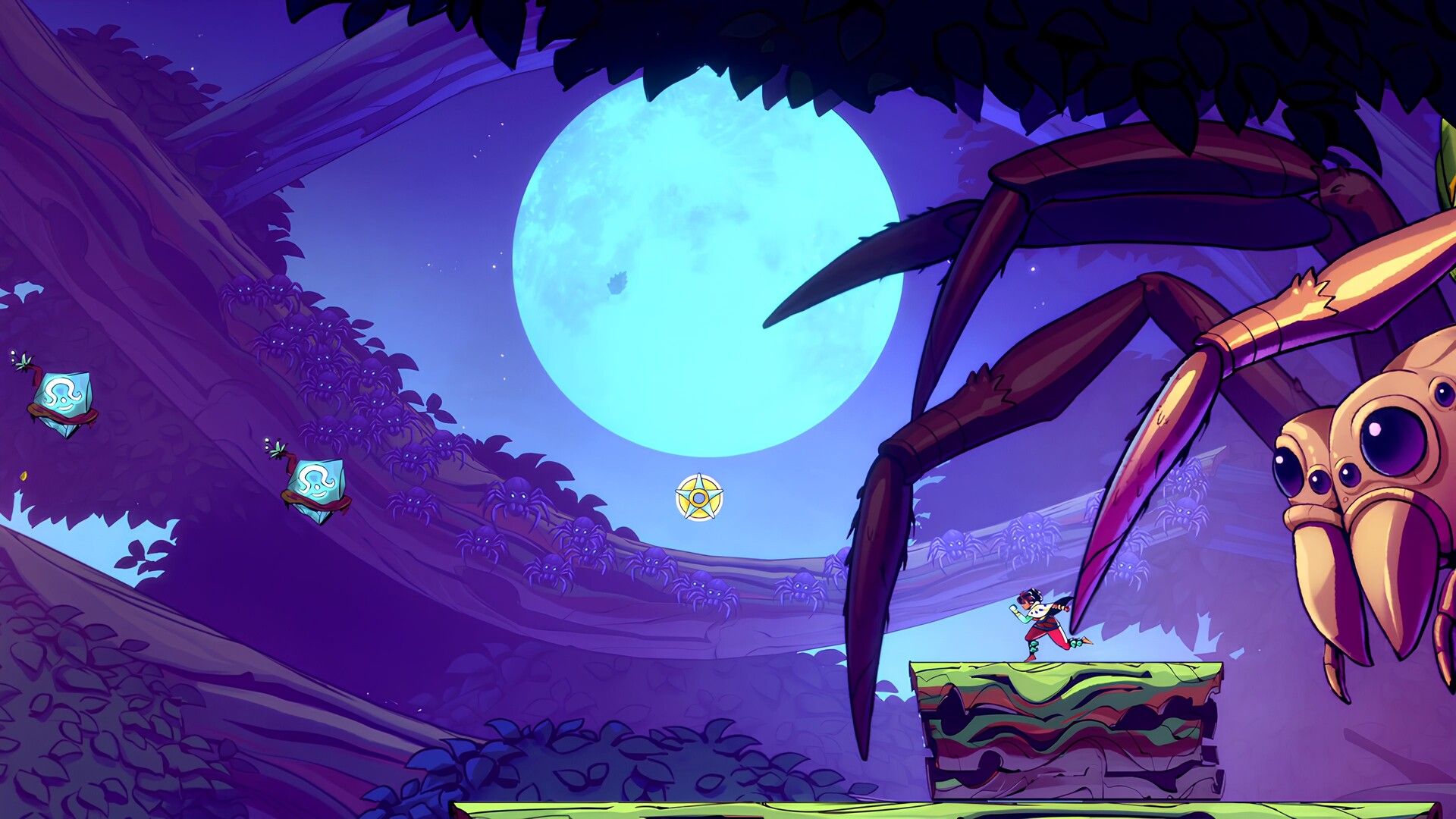
SURI: The Seventh Note fails to live up to its exciting premise. The idea of combining rhythm-based gameplay and platforming with an Indian aesthetic sounds like a dream. However, neither aspect manages to stand on its own, and ultimately, the two systems struggle to blend together. Although the visuals are strong, the basic animation, coupled with the floaty movement, hinders the music-themed platforming. Music should be where the game shines; instead, the simple beats fail to capture the flair and extravagance of India. While there are plenty of interesting ideas, these never truly reach their full potential, resulting in an experience that feels less than the sum of its parts.
***A PS5 code was provided for this review***
The Good
- Strong Visual Identity
- Nice Level Design
- Use of Haptics
The Bad
- Floaty Movement
- Basic Music
- Syncing Issues