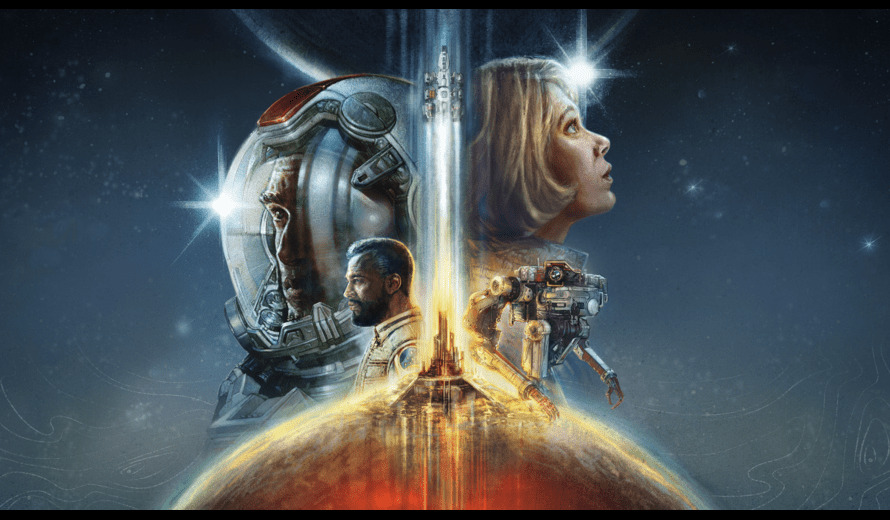
Starfield: A Bethesda Eulogy
When Starfield – Bethesda’s first new franchise in decades finally hit the release calendar in 2023, Bethesda boys and girls like me prayed for a home run. After all, Fallout 4 had fallen short on the role-playing side, and Fallout 76 had completely whiffed – the trend was not a promising one. Still, they were saying all the right things – infinite choice, be who you want, “see that moon? you can fly there!” – and a masterwork seemed feasible.
Unfortunately, Starfield’s 2023 iteration was painfully mediocre. I pored over 100 hours into the PC version, looking for fun I never quite found. Starfield had its moments, like the engaging ship-building system, but missed all the points that made Skyrim such a persistent presence in the landscape. The writing was clunky and paint-by-numbers. The galaxy, large as it was, was exceptionally boring. Choice, role-playing, and exploration were either absent or cardboard cutouts of real systems.
With the Free Lanes update and a PS5 release, the time seemed right to try again with the toxic ex whose belongings I threw off the balcony in the rain 2 and a half years ago. So, did those two years bear any fruit whatsoever?
*Note: this review covers plot points, and is pretty spoiler-y*
Starfield can’t be truly ‘fixed’. Core decisions made about the game during design lit the rocket’s fuse, and that momentum can’t be altered short of starting over. What’s most infuriating is that the engines making up the rocket ended up pointing in random directions. Instead of pointing Starfield at the end goal of incredible generational RPG, most of the decisions conflict or cancel one another out.
The Bethesda Promise
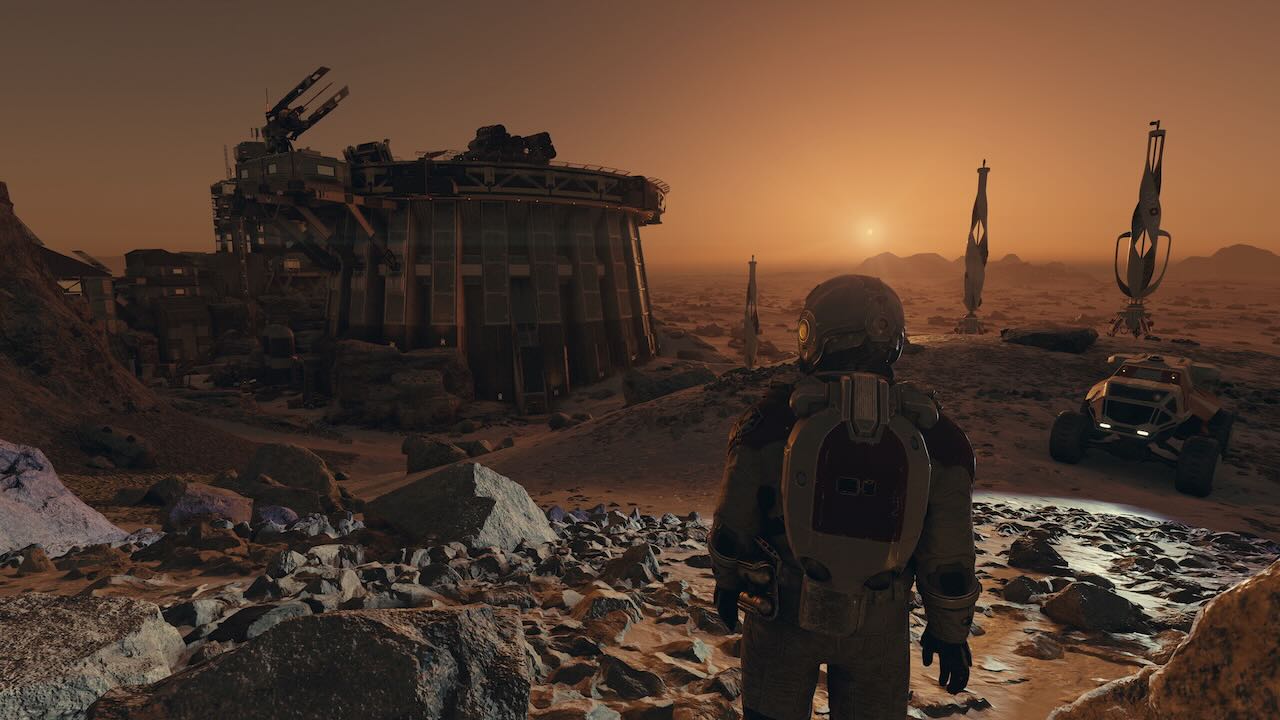
The experience of playing a traditional Bethesda game is one of curiosity. Setting off in a direction is the quintessential experience of playing Skyrim and Fallout, and historically, that’s paid handsomely in the form of environmental storytelling and interesting lore. In Starfield, having 1000+ planets to land on necessitates nearly complete reliance on procedural generation and radiant quests. The algorithm simply can’t generate the curated experience that has made past Bethesda games special.
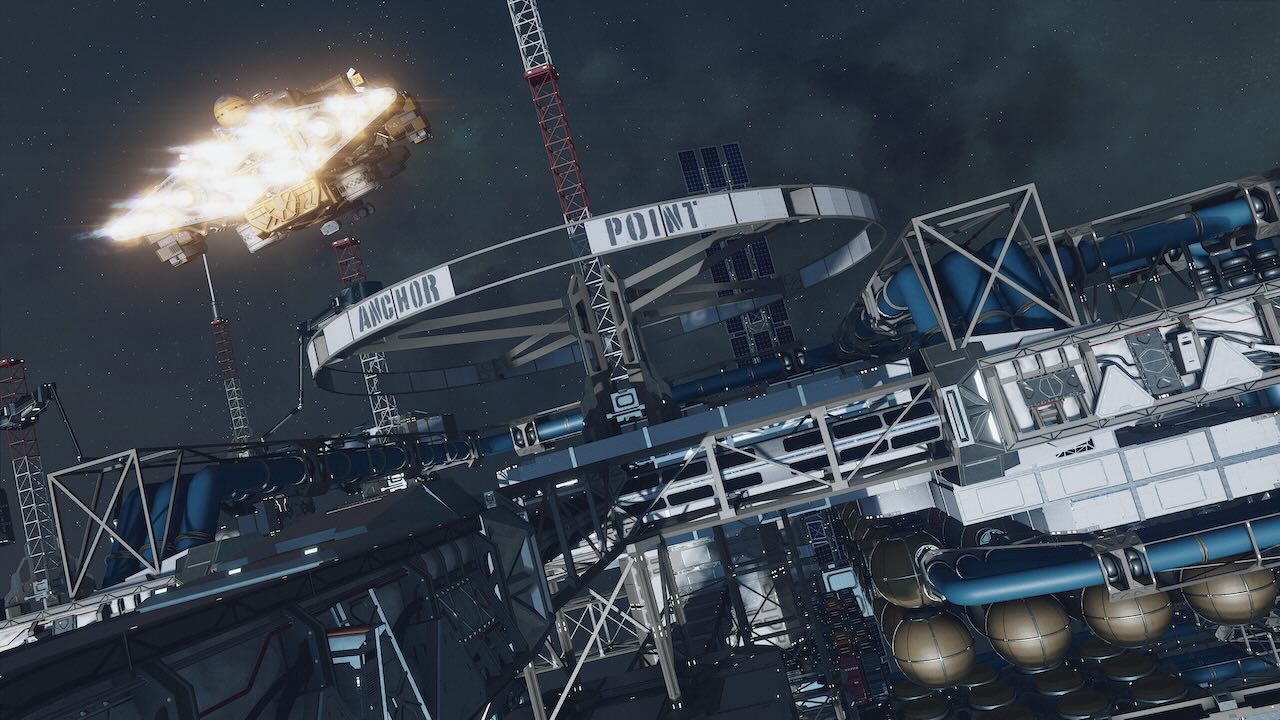
What it can generate, ad infinitum, is characterless blobs of land to the horizon in all directions. It’s not interesting to navigate or traverse – any plants and animals are pretty repetitive and unengaging – and POIs are literal stamps of each other. Bethesda made a big deal about blazing a trail and finding places no one has ever been, but this isn’t true. Literally every place you can land has an abandoned UC something or other, or a cryo lab, or whatever. The negative spin of that is 2 fold, in that you’re never discovering a new place, and once you’ve seen a POI, you’ve seen them all. There’s zero variation in enemy placement, props, or even slates found. I’ve cleared the UC listening post dozens of times, and the newly added POIs only marginally soften the impact of how identical each instance is.
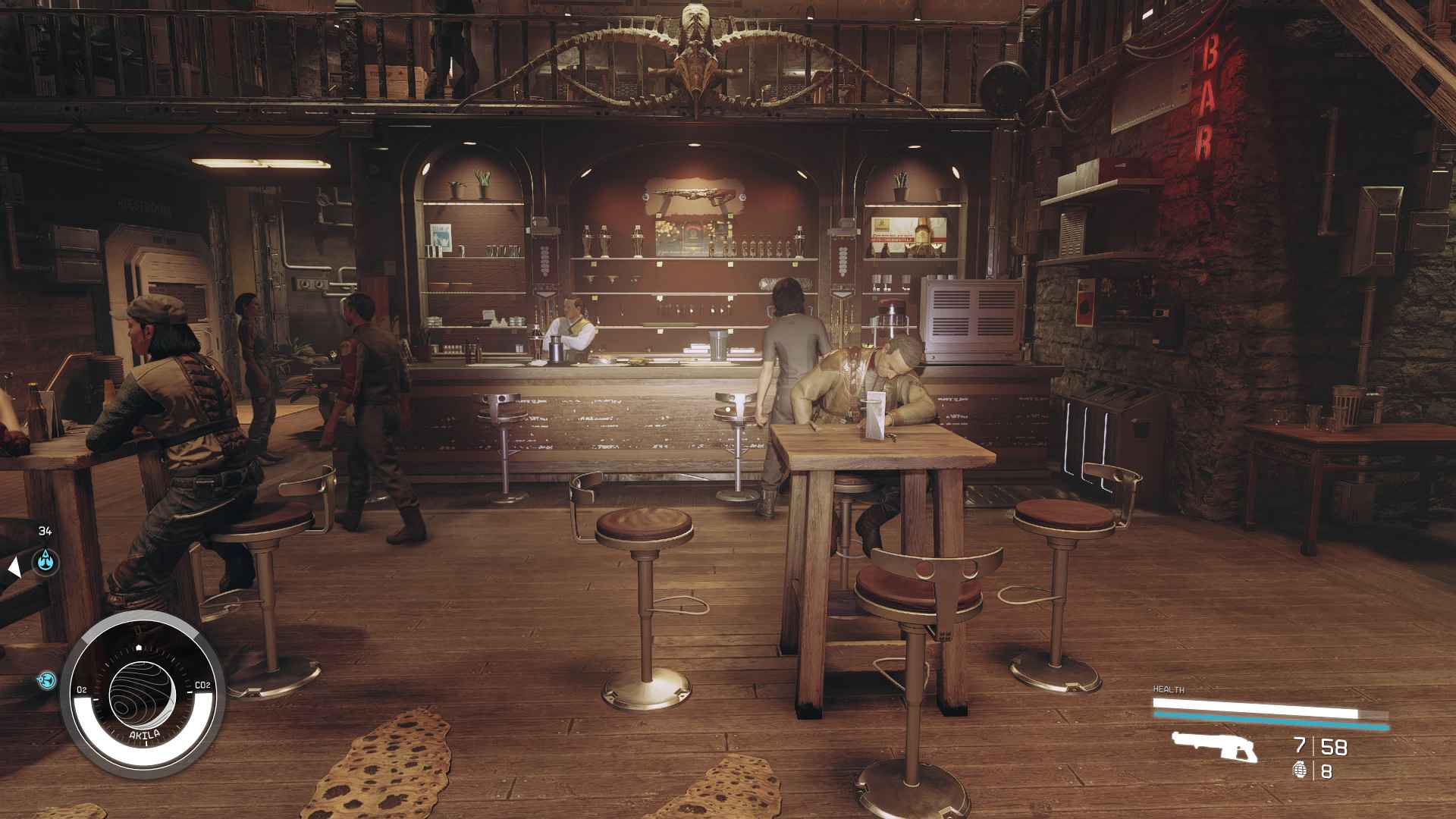
There was a moment I had recently where I remembered what Bethesda used to do. I ran across a new POI – an illegal clinic. I was legitimately intrigued. I wanted to know: what were they doing here? Why is the Syndicate involved? What might this lead to? The answer is… nothing. There’s nothing. No information, no computer files, no cryptic directions to another location, just bad guys and loot. I can barely describe how frustrating that was. The level design was decent, and the battles were pretty fun, there’s just no purpose behind the encounter.
That singular moment sums up a lot of Starfield. There’s no point. Allow me to expand on a few cases in point. Take the galaxy itself. There are factions that once upon a time were at odds. The wars and conflict happened in the distant past, communicated only via random lore drops. In other words, the most interesting world events have already happened, and have zero impact on the present other than finding space cowboys on a few planets.
The Illusion of Depth
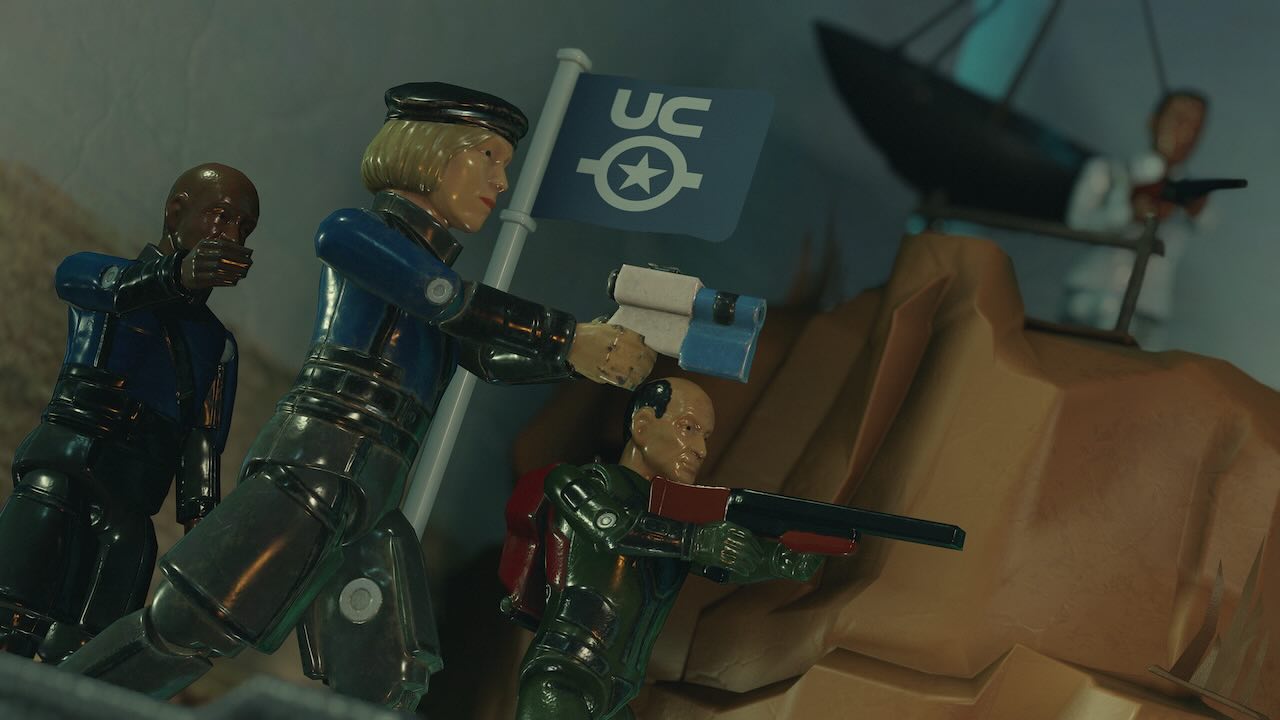
The illusion of immersion and choice is barely surface deep here. Starfield is terrified of a player missing a quest line, and in ensuring you can’t miss content they remove all impact of anything. I can kill a few hundred Slayton Aerospace employees including their CEO in cold blood, and no one ever comments on that. Not your companions, not the cops, there are zero repercussions for that choice. Ditto in the Ryujin or Crimson Fleet (the Thieves Guild and Dark Brotherhood) questlines, where you can literally obliterate the entirety of the UC fleet and still become the hero of the republic in the Vanguard quest line. Once you notice that complete lack of interactivity, everything falls apart.
They had the perfect solution in the main quest line – The Unity. By jumping into the Unity and resetting the world, there’s the chance to redo everything, differently. But you can’t. There are no unique outcomes, nothing ever comes back around to haunt you, and the wooden writing and characters have nothing of value to communicate. You can’t even reroll your traits and background when going through the Unity, not that there’s anything but the most trivial differences between any of them.
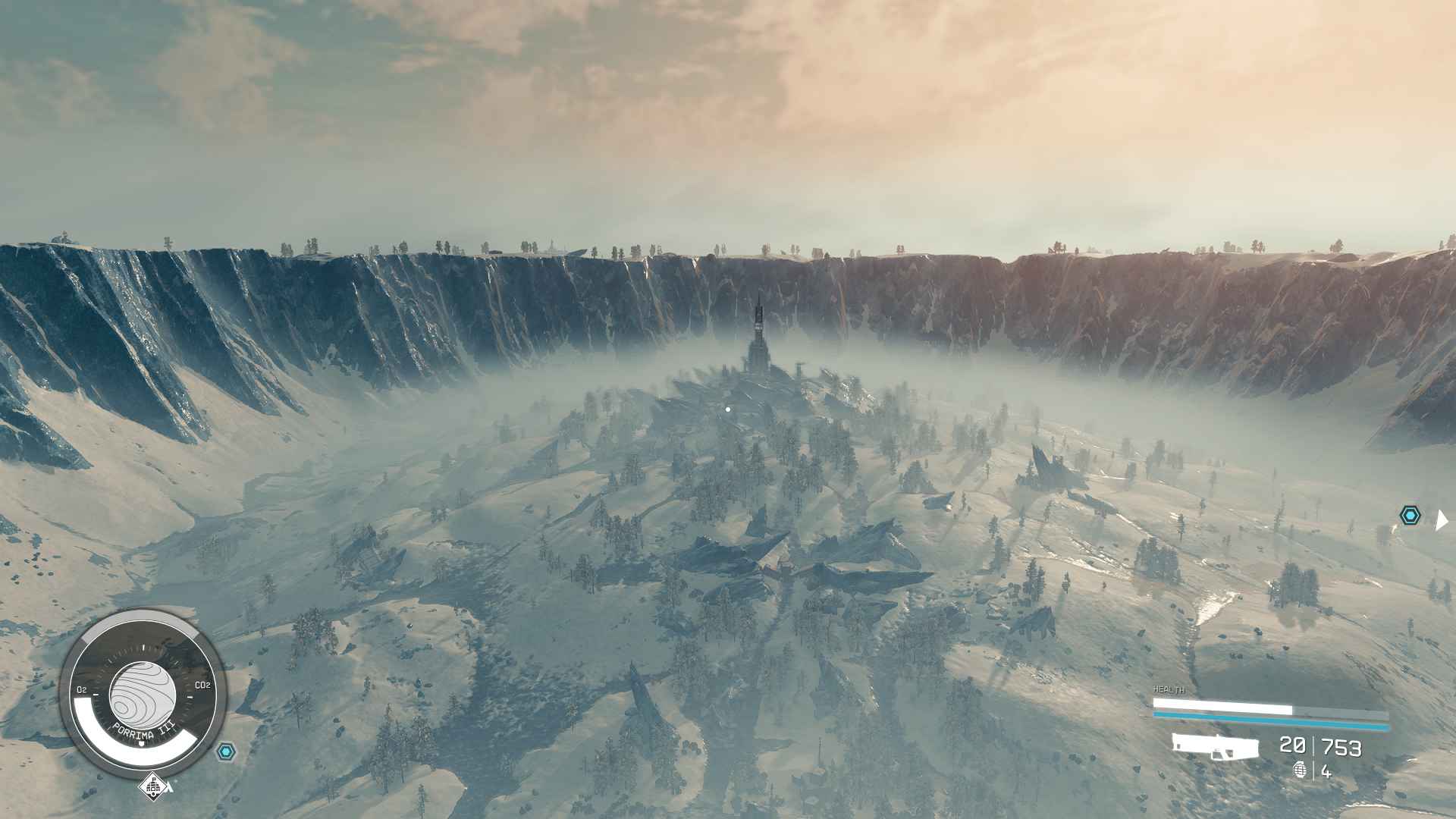
The facade of choice falls apart the minute you try to do anything but the planned path. Take Neon’s artifact quest for example. You and Walter are there to buy the artifact, and nothing – and I mean nothing – can alter that very defined flow of events. You can’t kill the seller and take the artifact. You have to imagine when a game makes you redo quests (the Unity, remember), that people are going to try and change the outcome. It’s horribly disappointing, and a perfect example of counteracting forces I mentioned earlier. Starfield would have been a much better experience if it employed a singular vision. If they wanted a light-RPG action game, that would be fine. If they wanted to make No Man’s Sky, also fine. But it’s not far enough in either of those directions to be a good – or coherent – experience.
Where No Man’s Sky leans into systems like environmental hazards and the need for fuel, they can be completely ignored in Starfield. Are they necessary systems? No. But if they contribute nothing to the whole, why are they here? No Man’s Sky recovered brilliantly from a catastrophic launch by overhauling everything, and Starfield feels like it would benefit from that same treatment. Given Bethesda’s output trajectory that feels incredibly unlikely, and raises significant alarm bells about their future releases.
Competent Components, Wired Incorrectly
There are good pieces here, though most if not all of them are smothered by other inadequacies. The shooting, for example, I quite like. It feels like an enhanced version of what Fallout 4 did, and I find the act of shooting in Starfield to be pretty well-balanced. The boost pack is a nice addition to the mix, particularly in low-gravity environments. The gotcha, though, is two fold. One is an over-reliance on the principle that bullet sponge = difficulty. “Hard” fights in Starfield boil down to persistence, where harder difficulties will test patience, not skill. The second is enemy AI. I actually thought the AI was competent when Starfield released, but it seems to have taken a giant step back with the Free Lanes update. Distant enemies have sniper precision, but will often just stand still and get shot up close. Flanking and taking cover seem to have completely disappeared from the mix, turning the (frequent) firefights into repetitive completion exercises.
Companion AI is equally broken beyond being hilariously so, with companions randomly sprinting around or running into walls. Sarah, Andreja, and Barrett are some of the least engaging companions Bethesda have cooked up, and such blatant immersion-breaking doesn’t help matters. I could write a college-level thesis on the missed opportunity that is Sam, who is set up to have dire consequences be part of his story through his daughter, but is the character equivalent of a department store mannequin.
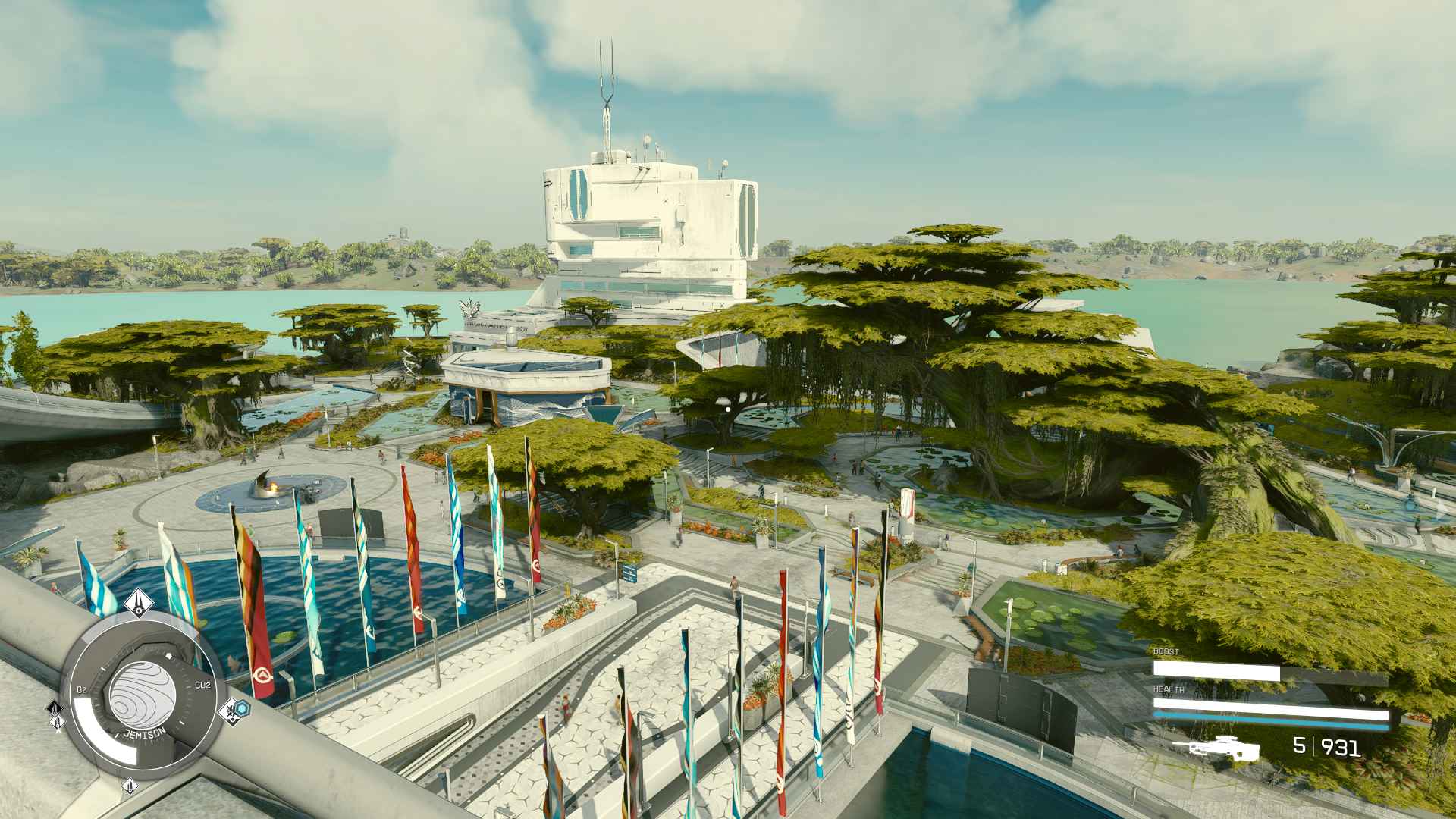
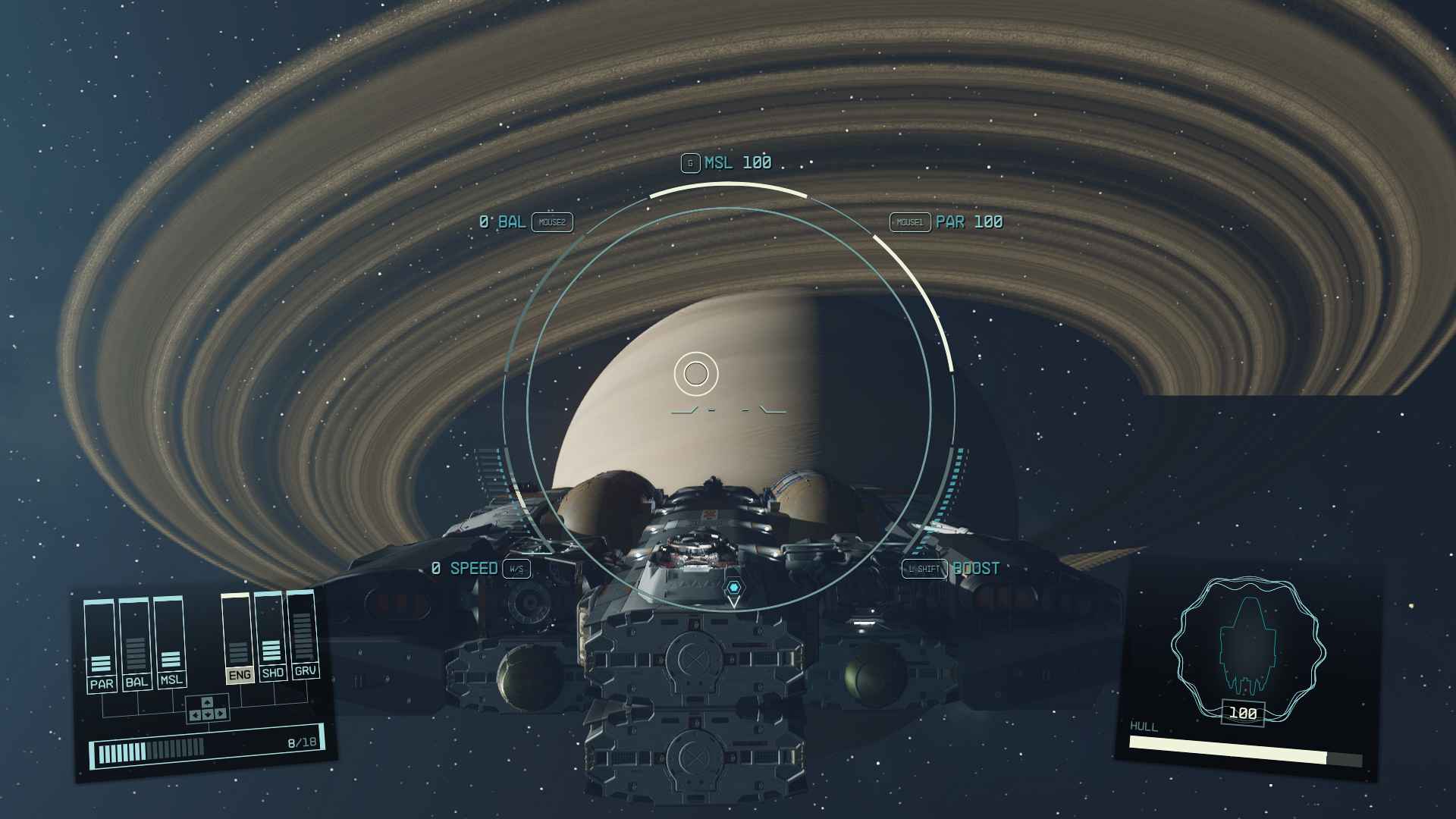
Ship building was highlighted in my opening thoughts, and I do really enjoy building ships in Starfield. You can construct some truly ridiculous stuff, but getting a believable, cool-looking ship built is truly fun. I do wish I had more control over how interior modules get connected, or more pieces that don’t have ladders, but spending an hour or two building something awesome is a good old time. If only flying and fighting were as engaging.
Ship battles are about as you’d expect – airplane mechanics in space, with a lot of turning, boosting, and mashing fire buttons. The power management system is the start of something interesting, but it’s a half measure. Taking on other ships is far from a dynamic experience. Flying around is one of the major updates in the Free Lanes, and honestly… it’s not great. I understand that there are enormous technical hurdles to implementing something like cruise mode, and I applaud the effort. It’s just not that fun. Travelling between bodies doesn’t really feel like travelling, especially when you can literally bump into planets and bounce off. These updates add surface area and endgame content, but fail to address the foundational, structural flaws in how Starfield was put together.
Performance Anxiety
Performance has never been a Bethesda hallmark, and Starfield on PS5 is, frankly, horrible. On the PS5 Pro, crashes occur once every 30ish minutes. More often than that if you ever dare to open the scanner or drive the vehicle. Out of necessity, I played on the Performance mode as it seemed the most (relatively) stable, which resulted in a muddy visual presentation. The game looks miles better on the Enhanced mode, but the framerate is brutal, and stability was even worse in my experience. Compared to playing on a decent PC – which I did for 100+ hours – the experience here is measurably less stable and worse performing, never mind the increased modding potential on the PC side. Given the choice and a burning desire to play Starfield, the PC is the way to go.
There’s no doubt in my mind: it’s time to move on from the Creation Engine. Yes, every item has physics, but the experience is unacceptably poor for a AAA studio. I don’t need to be able to pick up every pencil or half-eaten sandwich – if bolting those suckers down improves performance by even 10%, Bethesda needs to make that call in their next game.
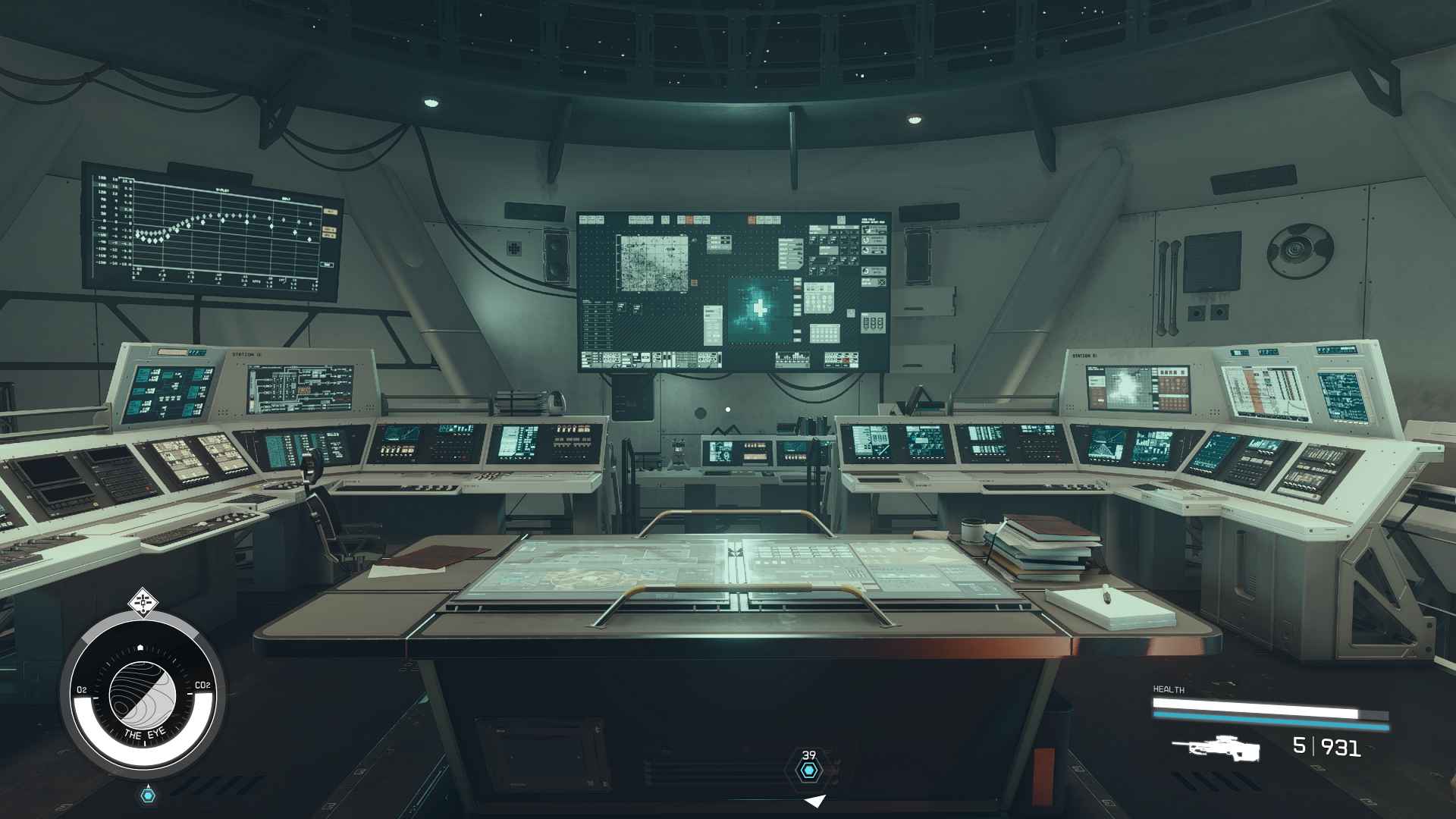
Starfield is a broad and ambitious game that falls significantly short of the mark whether compared to previous Bethesda efforts or other entries in the space RPG landscape like No Man’s Sky. There are some competent gameplay pieces, but they feel like they were built in the vacuum of space without radio contact, and never really came together when everything got wired up. Some die-hard Bethesda fans might be able to find the fun I was looking for, but I’d recommend tempering expectations at the very least. If you’re a PS5-only player who missed out on the 2023 release, tread with caution. The PS5 version lured me back like a toxic ex who promised they’d changed, and what I found confirmed what I’d already known. Starfield is easily the weakest single-player game in Bethesda’s catalogue, and a sour glimpse into what we might have to expect out of The Elder Scrolls 6.
***PS5 code provided by the publisher***
The Good
- Fun ship building
- Competent combat
- Visual design elements
The Bad
- Devoid of choice and consequence
- Atrocious performance
- Procedural construction breaks exploration