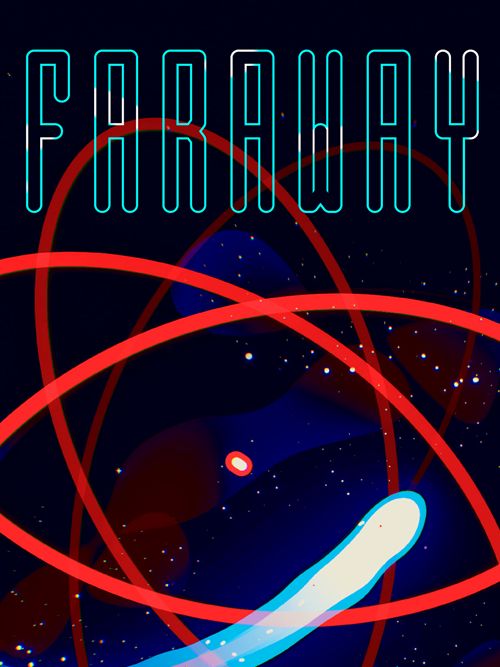
Faraway Review
Sometimes we forget that games don’t need bleeding-edge graphics, complex narratives, memorable characters, or dramatic violence to be fun and engaging. Sometimes all you need is one button to push, some chill music, and some basic lights and shapes. In some ways, that’s a pretty complete description of Faraway. But of course it misses what the game really is and why it can be pretty addictive.
So Near, So Far
Faraway is a procedurally generated arcade game with a strong emphasis on mastering its handful of techniques. In a nutshell, you “play as” a decaying shooting star. To survive, you link other stars into constellations by harnessing their orbital momentum to propel you around and deeper through space. Your shooting star moves endlessly forward. By hitting a button press at just the right time, and at the optimal length, you catch the orbit of a nearby star.
It sounds easy, but getting the timing just right definitely takes some practice. Not to mention a good deal of intuition around the physics of decaying orbits, the conservation of energy, and genuine strategy. There is an easier difficulty, which slows down the pace and gives you a little more time to plan. The easier mode also gives you more explicit guidance about where to go.
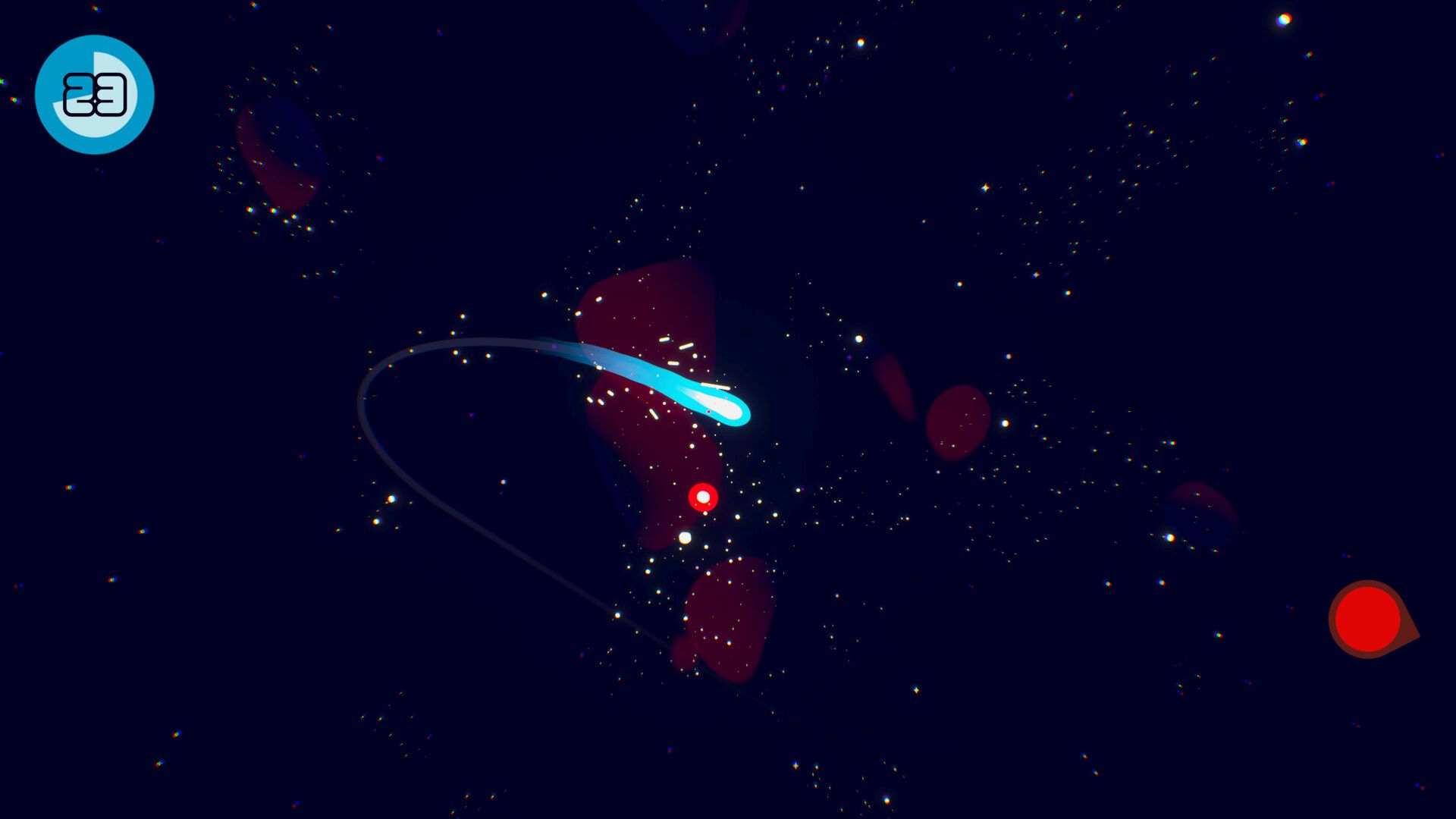
While I wouldn’t call Faraway a music or rhythm game per se, music and sound are an important part of the experience. There’s a little synth cue when you achieve a specific goal, and the music becomes more structured as you weave together patterns.
Free-For-All
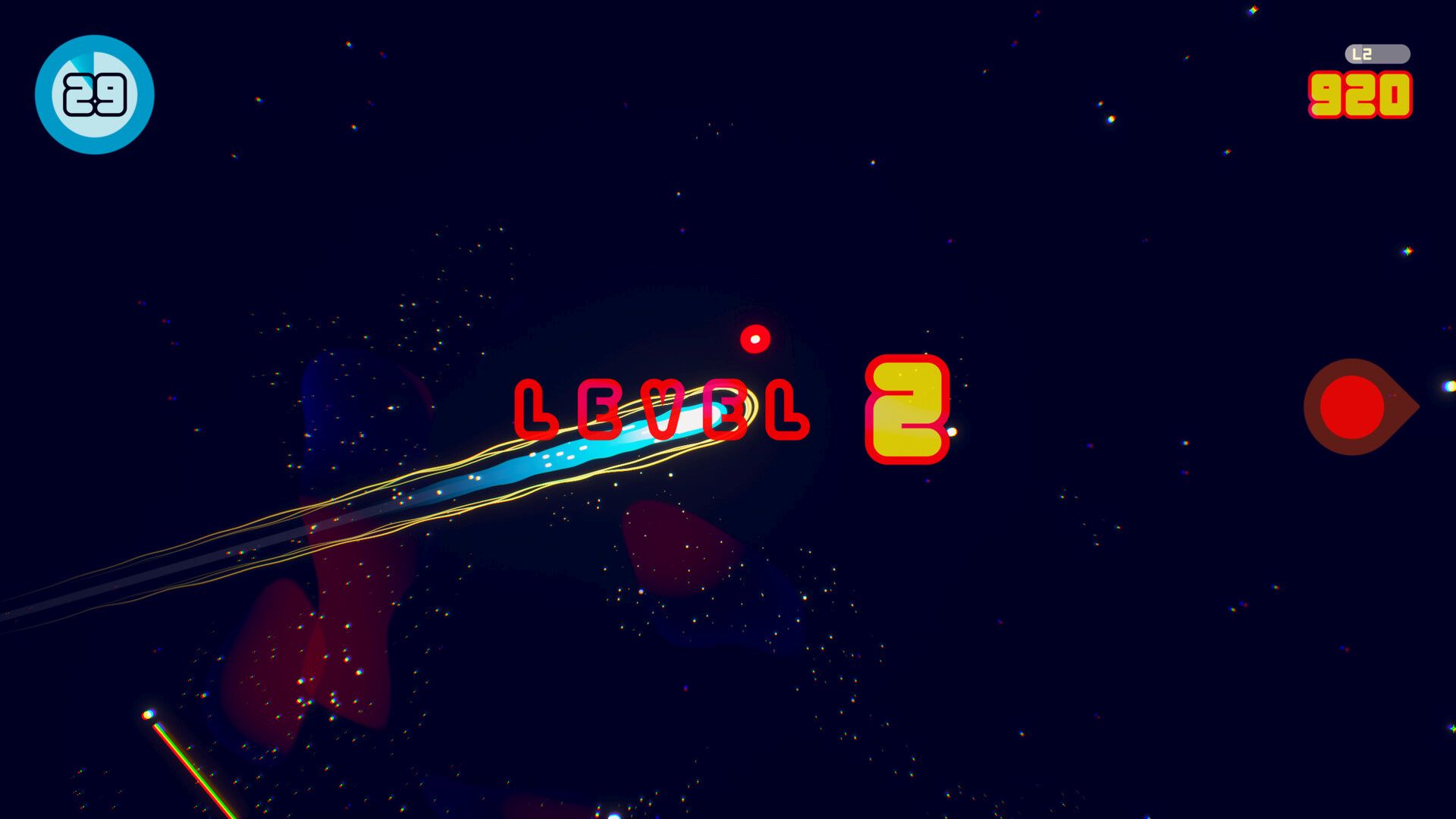
Faraway has two modes: a 16-level “campaign” of handcrafted stages, and a procedurally generated endless mode. The stages are essentially a protracted tutorial, each one introducing new challenges, puzzles and techniques. They’re required playing before jumping into the free mode.
The endless mode is basically a score challenge with a leaderboard, to see how long you can survive. As with classic arcade games, stringing together successfully met objectives earns score multipliers. As chill as the game might seem, there’s definitely the potential for fail states in Faraway. Either flinging yourself into empty space or missing a critical orbit and running out of energy will end the run. You must constantly balance the high-energy cost of building score multipliers against the absolute necessity of hitting the next pocket of stars to recharge.
Minimalist Aesthetic
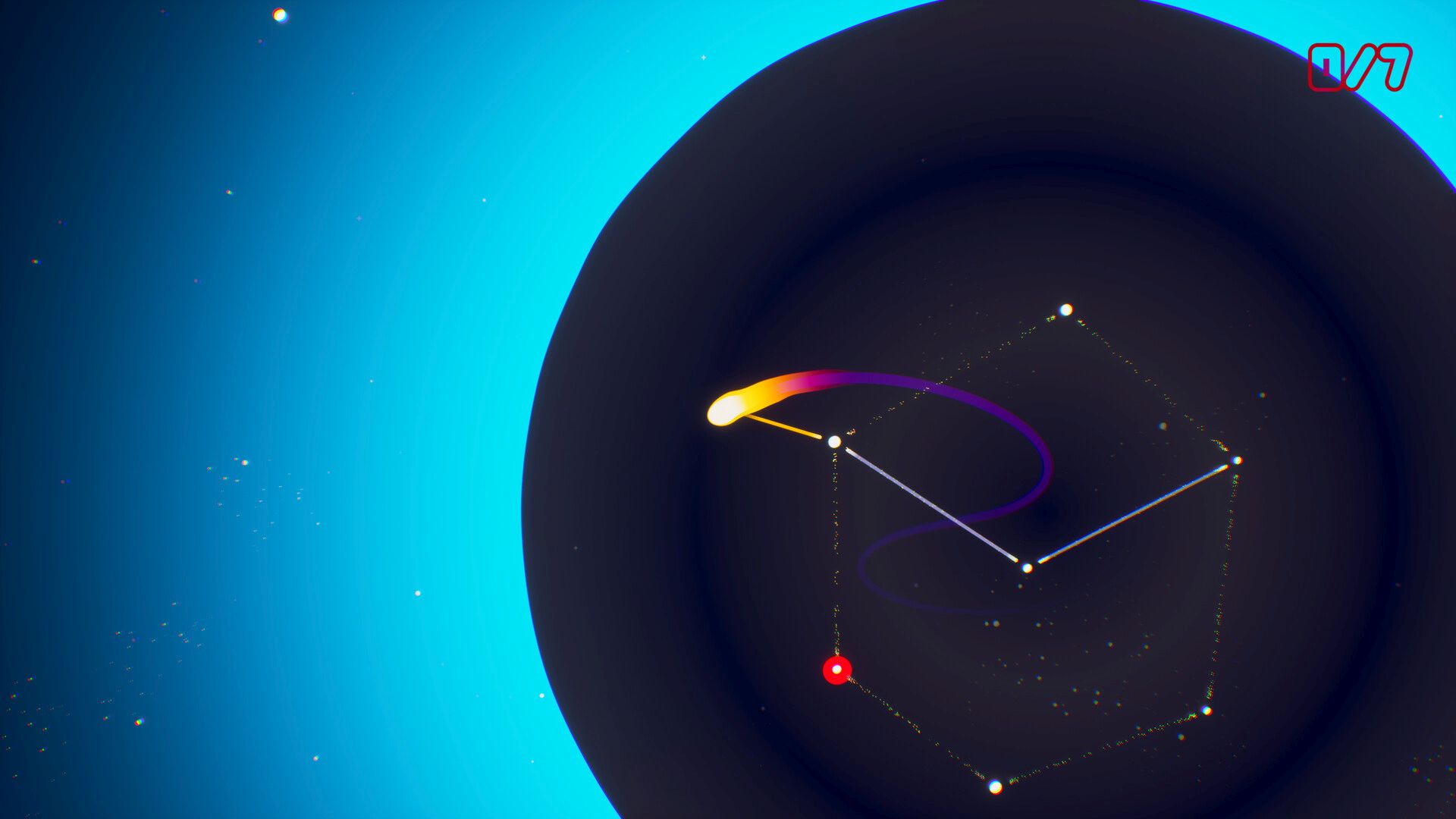
Made by solo developer Steph Thirion, Faraway is built with a clean, uncluttered-but-attractive art style that highlights the core concept. You won’t be distracted or bedazzled by effects, which is good considering how important precision and timing can be. There’s some visual variety across the premade levels and in procedurally generated endless mode. Overall, the art doesn’t stray too far from its basic orbit. However, the visuals are not static. Lights pulse and orbits change and glow as you play, really feeling like they come alive and react to your inputs. This is important, as it helps give the game a bit of emotional range.
Faraway has no narrative per se, but there is unvoiced text now and again that gives direction and context to the player. I suppose you can layer on whatever meaning you’d like. Maybe it’s an existential look at the vast, lonely universe or the importance of connection.
Faraway looks and sounds like a super-chill game that you can get into the zone and relax with. Underneath that comfy exterior is a game that can be very difficult and at times a little opaque. We’ve all seen those puzzles where you need to connect distant objects with one, uncrossed line. There’s a lot of that kind of puzzle in Faraway but under the added pressure of a time constraint and limited chances for a do-over. Faraway controls with a single button, but unlearning the instinct to control speed or direction with a thumbstick takes some effort.
To Chill or Not to Chill
Faraway is an at-times exacting physics puzzle game in the appealing disguise of a chill-vibe experience. In truth, playing Faraway without mastering its timing and mechanics is not much fun. It’s absolutely possible to get into a flow state where the physics becomes second nature and the music and lights join in, but the trippy good time will come only after lots of practice.
***PC code provided by the publisher for review***
The Good
- Creative concept
- Chill vibe and colorful art
- Lots of mechanics to master
- Nice, understated soundtrack
- One button control
The Bad
- Can be really tough to master
- Some opaque goals
- Overall, a little monotonous in tone