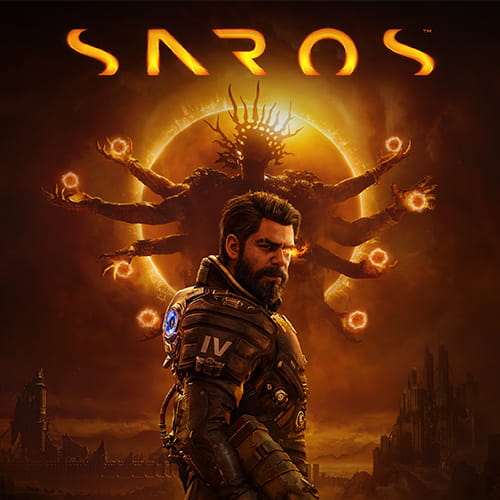
Saros Preview
With Saros, Housemarque are back to remind the industry that their motto “game is king” is an objective truth. Sure, games and all forms of art have various intents. While a gripping story is an appreciated bonus, action games demand engaging play. I’ve gone hands-on with Saros for a few hours and can confidently declare it’s delivering both.
Into The Great Unknown
You play as a Soltari enforcer named Arjun as he seeks answers in the haunting world of Carcosa. Cosmic horror-inspired aliens stand between him and his team on their quest. I haven’t learned much about the characters yet, but I’m a fan of sci-fi and cosmic horror.
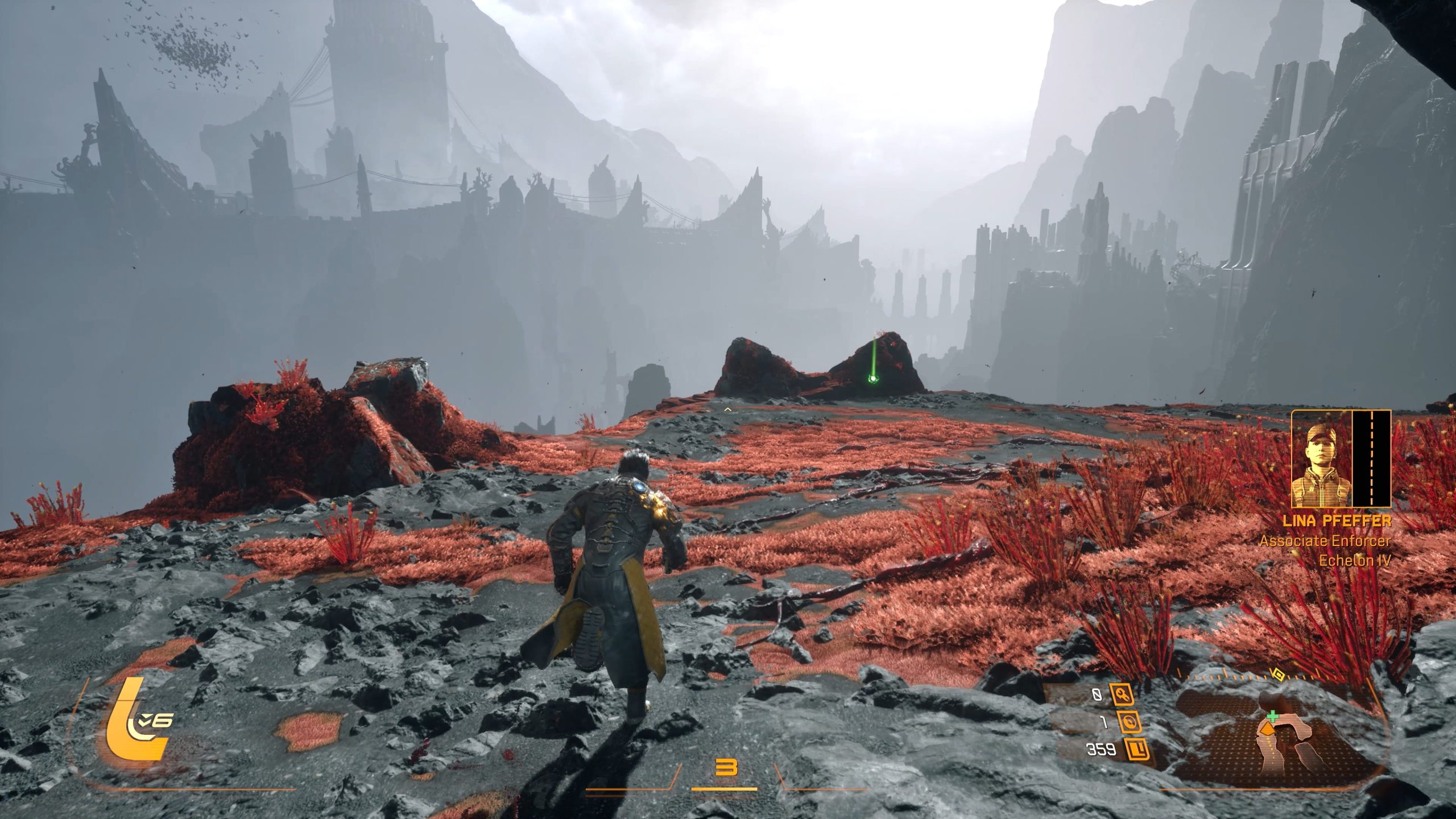
Carcosa’s home to many biomes, most of which I haven’t seen. In the opening hours, you explore valleys and cliffs across a mountain littered with what appears to be ancient, dilapidated ruins. I have theories about their origins, but I’m hoping the game will keep me guessing.

Themes of power, corruption, and regret are expressed throughout the story, with an emphasis on mystery and depth. If you’ve played Returnal, you’re aware of its surprising revelations. Between it and Saros, Housemarque has honed their strength in cryptic, atmospheric storytelling.
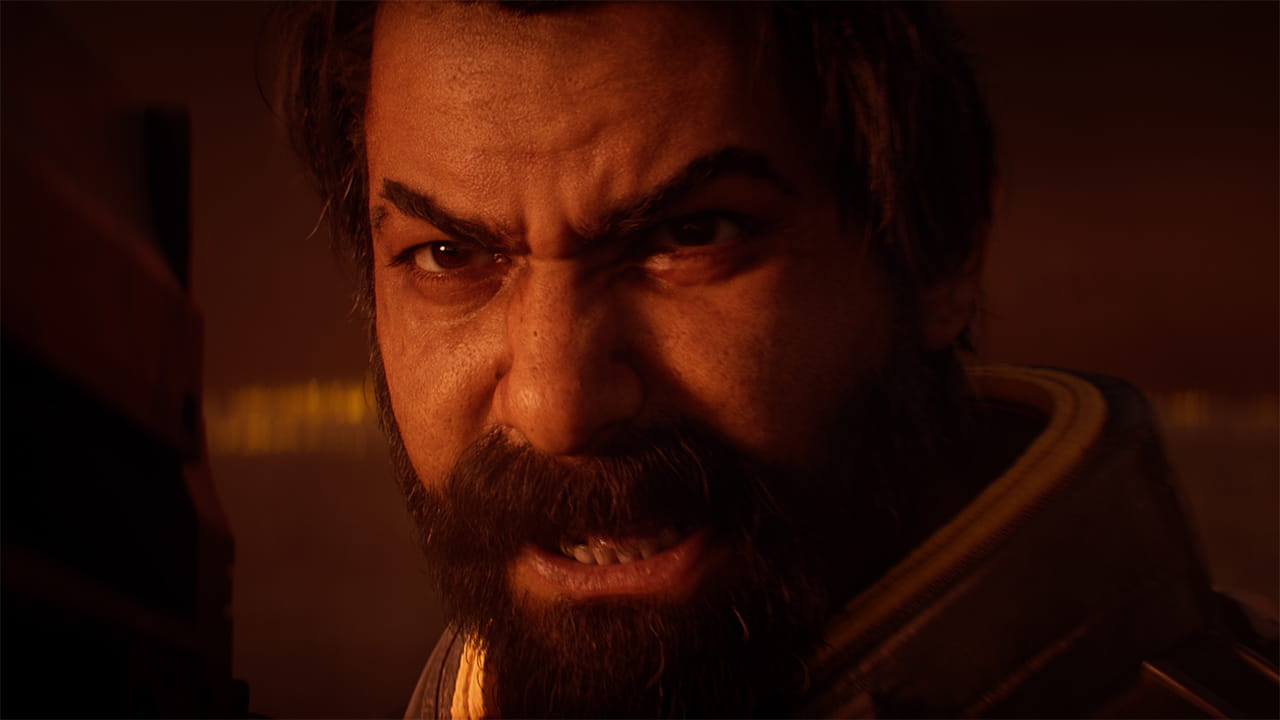
It all centers around an ensemble cast supporting Arjun’s character study. I’m a fan of Rahul Kohli’s work. I’m looking forward to seeing the extent of his performance here.
Refinement, not reinvention
The team is transparent about the gameplay being an evolution of the work they began with Returnal. Full disclosure: I did not finish Returnal, but I’ve witnessed it all through others’ playthroughs. Roguelikes and games with similar elements have never clicked for me. However, I’m always able to recognize excellent game design, regardless of my taste.
Saros may be the one that finally grabs me for multiple reasons. Most importantly, it’s a lot of fun to play. If you dig Returnal’s bullet-hell style gameplay, you’ll feel at home here. Initially, the similarities are evident. However, Housemarque describes Saros as “bullet-ballet.”
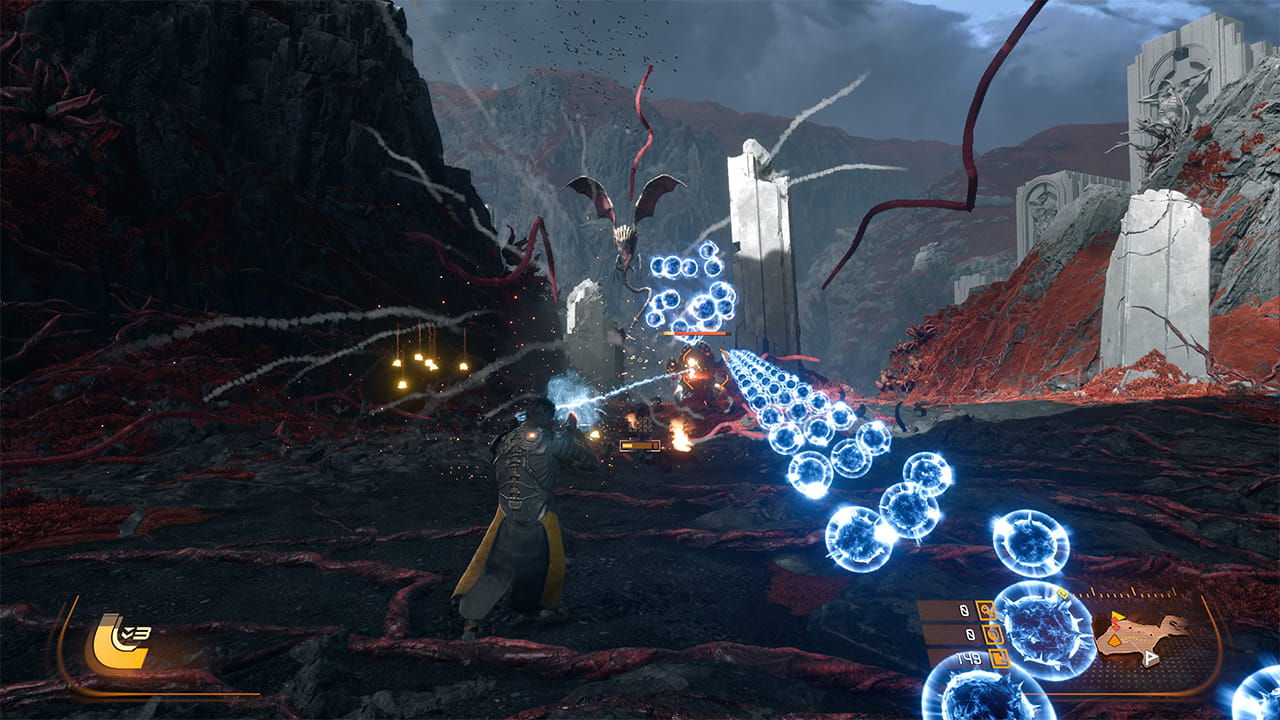
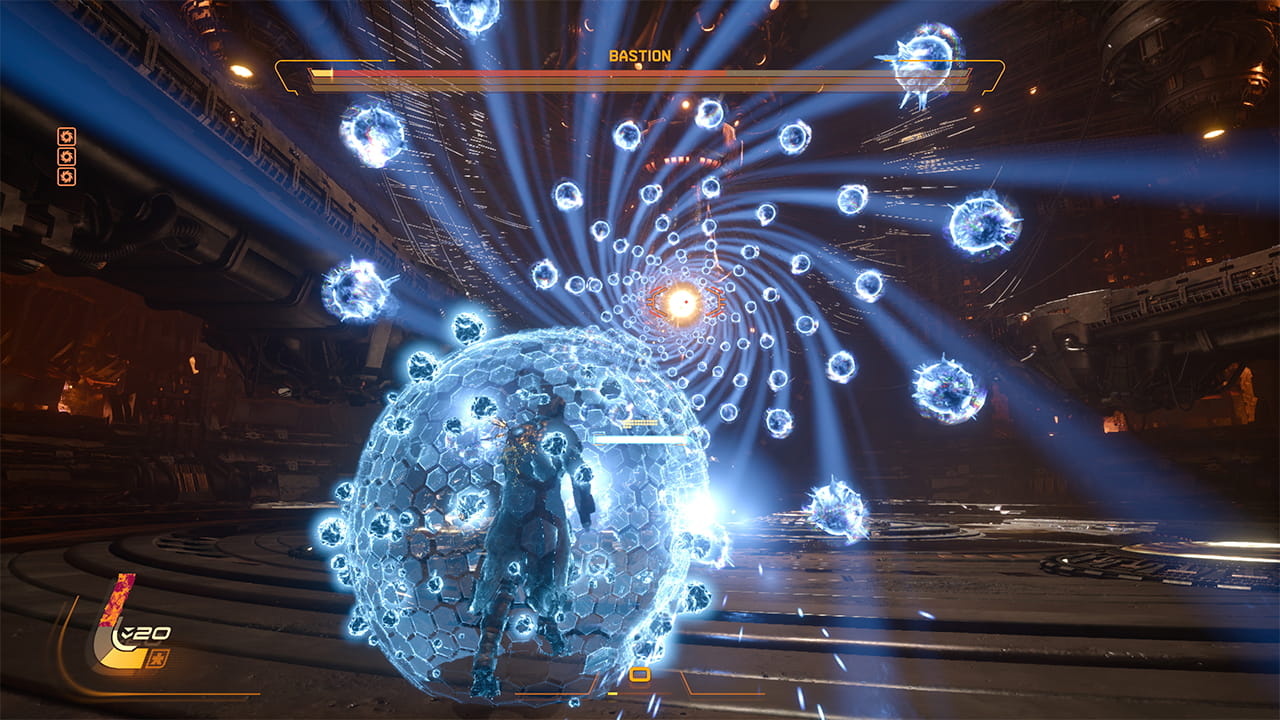
You aren’t merely dodging the abundant enemy projectiles; you’re absorbing them with your Soltari shield. In doing so, you harness energy that can be unleashed through powerful weapons granted to you by Carcosa. Aptly named “eclipse” weapons, they function similarly to energy blasts that deal massive damage.
Player Experimentation
I only got a taste of the eclipse weapons during my time hands-on. Speaking with Creative Director Gregory Louden and Art Director Simone Silvestri, I learned there are several types to wield throughout the game, along with many standard weapons that become increasingly exotic as you progress.
Returnal was challenging, and Saros certainly levels up the difficulty. I appreciate the gameplay demanding my full attention moment to moment. When I’m playing any high-octane action game, it’s essentially therapeutic. I’m locked in, temporarily tossing aside all of life’s hardships or the day’s demands.
You’re frequently acting on the fly, choosing between dodging, blocking, firing your primary weapon regularly, or using its alternative fire mode, and unleashing eclipse attacks. It’s exhilarating. Housemarque excels at telegraphing information to the player through colorful indicators. It’s an element I’ve admired in their art direction since Resogun.
Throughout every run, there hasn’t been a moment I’ve felt lost or cheated. That’s often an underrated accomplishment in challenging game design. The world design is gorgeously handcrafted, with procedurally generated paths for every run.
Fortune Favors the Bold
While I haven’t seen all the planet has to offer, the world’s levels and vistas are connected, rather than stepping through portals seen in Returnal.
Part of the fun is the risk and reward of venturing off the main path leading to bosses. Exploration is prominent. There’s much to discover, from improved weapons to health pickups to artifacts that alter gameplay in many ways.
Along the way, you cross locations and collectibles that flesh out the nature of Arjun’s team, their mission, and the mystery of Carcosa. Housemarque have shared their desire for richer world-building in Saros. From what I’ve seen so far, it’s working.
A major gameplay shift occurs during the eclipse phase of each run. Carcosa’s mystery deepens when what appears to be a moon or something like it blots out the sun. Enemies grow stronger, and so do you. Your eclipse weapons deal more damage, and the risk-and-reward factor of artifacts, now called corrupted artifacts, increases.
Every Death is Valuable
I highly value agency in the games I play. I love the flexibility of experiences, or at least the illusion of it. Another reason I’m feeling optimistic about seeing Saros through to its end is the inclusion of an upgrade system.
During runs, you collect a substance called Lucentine. It serves as currency to invest in permanent upgrades for Arjun, such as improved health, armor, and shield, as well as environmental benefits like discovering better weapons more frequently, and much more.
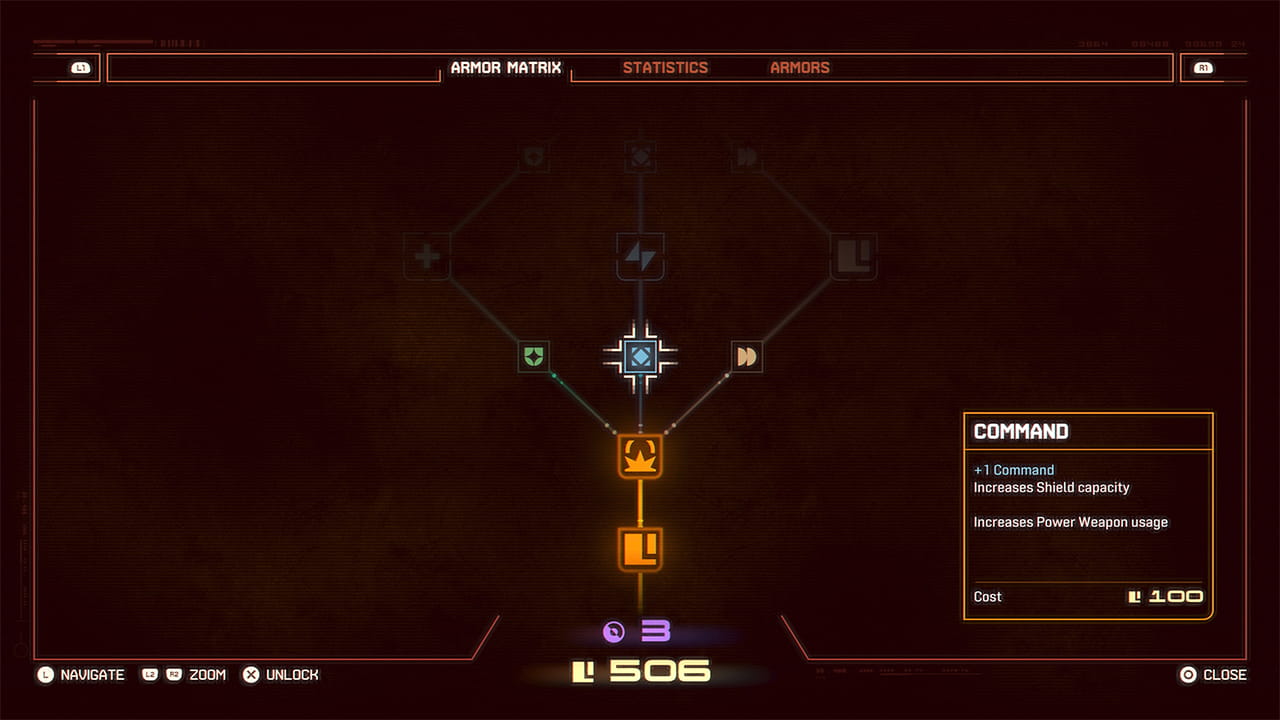
Repetition in any capacity drives me insane, in life and in games. It’s the main reason I’m not interested in Roguelikes. Many games in the genre have introduced a myriad of incentives to keep players engaged, and they work. There’s a significant, dedicated audience for these games, and I believe they’ll dig Housemarque’s approach with Saros.
The team has shared that the goal is “making every death valuable.” You’re able to return more powerful every time. In my brief time playing, it works, and it feels great. Upgrades make your tenth or twentieth attempt at a boss more bearable, for example. The ways in which it functions throughout the entire game remain to be seen. I felt notable progression throughout the first three hours. Seeing how it expands across dozens of hours will be interesting.
Malleable Experience
If you’re a psycho desiring an even gnarlier difficulty, Saros includes gameplay modifiers that can either increase the challenge or alleviate it. These modifiers will not affect trophy acquisitions, but I’m curious to know if there are some rewarded to those who choose the wilder modifiers.
In conversation with Gregory and Simone, I learned they’re keeping the trophy information under wraps, but confident trophy junkies will be satisfied. Another aspect that Returnal fans may rejoice over is that an auto-save feature is included at launch.
Additionally, Saros is designed around tighter sessions. Runs are usually confined to thirty minutes. Most of us lead lives outside of games, and there are countless instances of needing to step away in the middle of gameplay. When those moments inevitably arise, you don’t need to worry about losing progress.
Technical Excellence
My favorite aspect of Saros, and Housemarque games in general, is how good it feels to play. As part of PlayStation Studios, the team is appropriately harnessing the power of PS5 across presentation and gameplay.
I love it when developers maximize the DualSense controller’s potential. Running, dodging, aiming, and firing weapons and abilities feels phenomenal. That shouldn’t surprise Returnal fans. I’ve played enough of that game to know the team has further refined the controls in Saros.
Action games of Saros’ nature typically influence a mouse and keyboard for me. Saros feeling as remarkable as it does on a controller is a testament to Housemarque’s achievement. Even the many nuances present through the haptics contribute to the immersion. They’re succeeding in maximizing the console’s capabilities for their game.
Beautiful and Immersive
A bonus I want to mention is that the dodge ability is mapped to L1 by default, rather than Circle, like in Returnal. You could remap the controls in that game, as well as in Saros, but it’s nice not needing to take your right thumb off the stick during heated encounters.
There’s a beautiful marriage between visual, auditory, and tangible feedback. I’d mentioned the great visual cues, and the sound design is outstanding. Informative when it needs to be, and ethereal and other worldly consistently.
It’s all complemented by a killer soundtrack from composer Sam Slater, blending angelic choirs, synths, and drone-metal tones. It contributes profoundly to immersion.
I played on a base PS5. The game ran at what looked and felt like a locked 60fps, and looked lovely doing it. Housemarque confirms that the PS5 Pro version will feature enhancements. We don’t know the details yet, but I imagine it’ll incorporate raytracing and PSSR 2. As the PS5’s lifecycle moves into its latter half, I’m seeing my investment in Pro beginning to justify itself.
Saros may be Housemarque’s magnum opus. We’ll have our answer when it launches on April 30th. Keep an eye out for our full review between now and then.
***Travel, hotel, and preview invitation provided by Sony***