The Walking Dead: Streets of Survival Review
You know, not everything needs to be a 100-hour RPG. Some nights I just want to fire something up, knock out a couple levels, and move on. The Walking Dead: Streets of Survival feels designed specifically for this type of experience. And for the most part, I can say it accomplishes exactly what it sets out to do. It doesn’t overreach or overstay its welcome, and it knows exactly what it’s supposed to be.
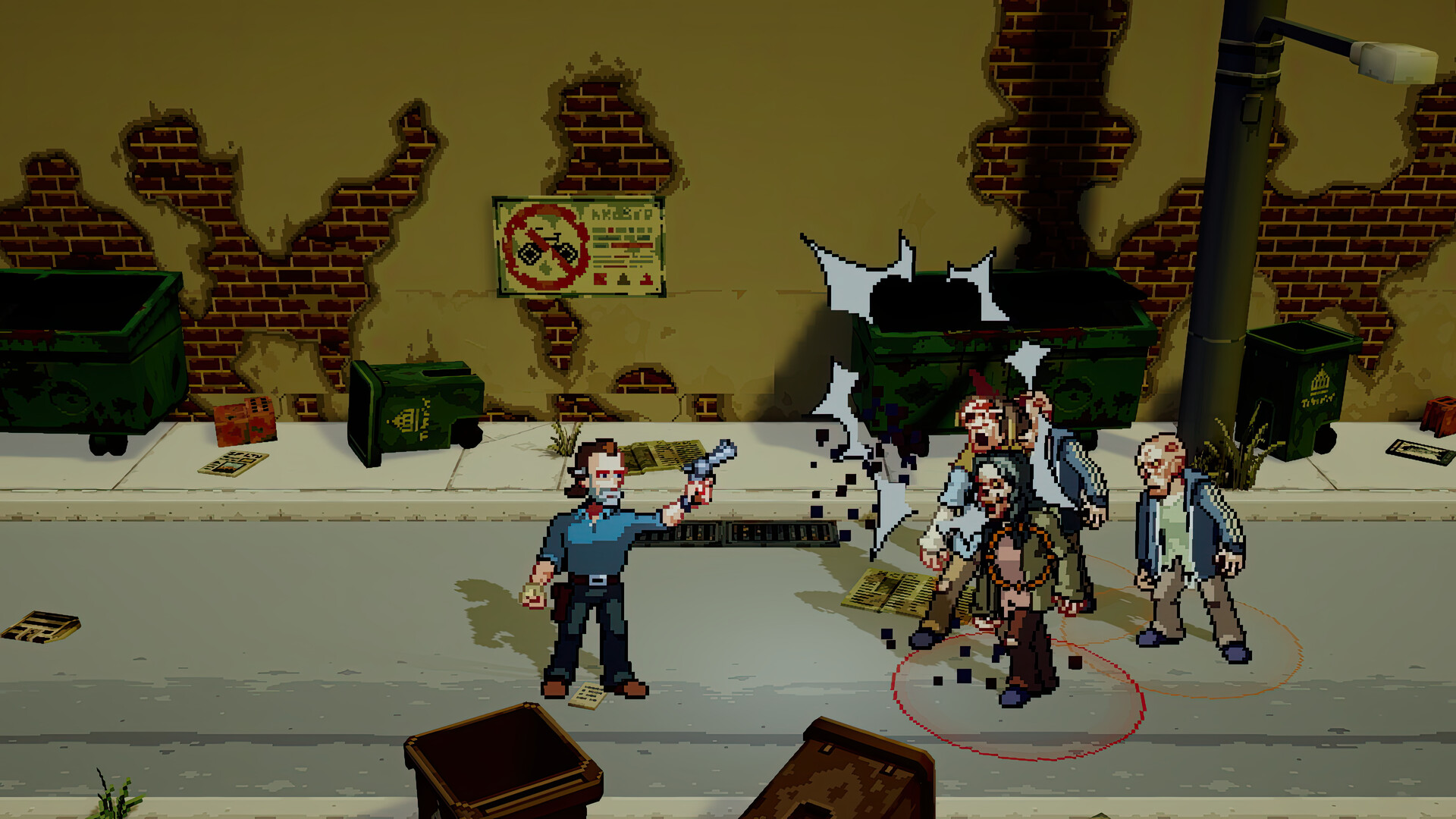
Odaclick Game Studio, the developer behind 2024’s The Karate Kid: Street Rumble, has stayed the course in delivering another decent beat-em-up that will get you through a weekend. The premise couldn’t be more straightforward: choose a survivor, smash your way through walkers and Saviors, and keep moving.
The campaign takes place following Carl’s death during the All Out War storyline against Negan. To my surprise, I ended up appreciating the setting far more than anticipated. Tearing it up through locations such as Alexandria, Hilltop, and the Sanctuary brought a steady stream of familiar faces and moments from the show that I hadn’t thought about in years. It almost made me want to watch the original run all over again.
Surface Level
But the truth is, there’s no pretending this is some deeply layered narrative experience. It’s not that, nor does it want to be. What Streets of Survival does well is connect individual stages to recognizable moments from the show, giving the campaign more context than simply throwing an endless barrage of enemies at you.

Rick, Daryl, and Michonne (plus a fourth unlockable character) are each given time to shine. Some levels force your character choice, while others allow you to tackle them with whomever you choose. But it’s the encounters with Negan, Simon, and memorable zombies such as Winslow the Well Walker that provide some of the campaign’s best moments. There’s a genuine sense of nostalgia attached to seeing these characters again, particularly when the game recreates familiar situations from the TV series.
Even some of the smaller details work. Enemy dialogue occasionally references darker moments from the show, and those little callbacks were enough to pleasantly pull me back into The Walking Dead universe.
Start Mashin’
Unfortunately, the combat is where Streets of Survival starts showing its limitations. The majority of encounters revolve around repeatedly hammering the same button until the walkers are down. Ranged weapons and special abilities are available, but they aren’t used frequently enough to fundamentally alter the rhythm of combat. It’s like for every ten melee attacks you get a bullet or two, making the balance feel too far skewed to one side.

That’s disappointing because weapons such as Rick’s magnum and Daryl’s crossbow could have provided each character with more individual personality during fights. Instead, I found myself relying on the basic melee attacks for most of the campaign. This doesn’t mean their ranged weapons aren’t effective, but it does mean the character’s uniqueness tends to suffer.
There are several difficulty settings, including an optional Easy Mode, which gives players some control over the challenge. Though, bear in mind that this equates to nothing more than you take more damage and the enemies take less. It’s hard to knock when a game as simple as Streets of Survival does this, but it doesn’t change the fact that this sort of lazy difficulty management never feels great.
Don’t Bring Your Friends
What doesn’t make quite as much sense is the lack of cooperative play. Streets of Survival is all about taking down enormous groups of walkers. Does that not sound like a tailor-made experience for co-op? So the absence of a two-player mode almost feels like a slap in the face to both Walking Dead fans and beat-em-up fans in general.
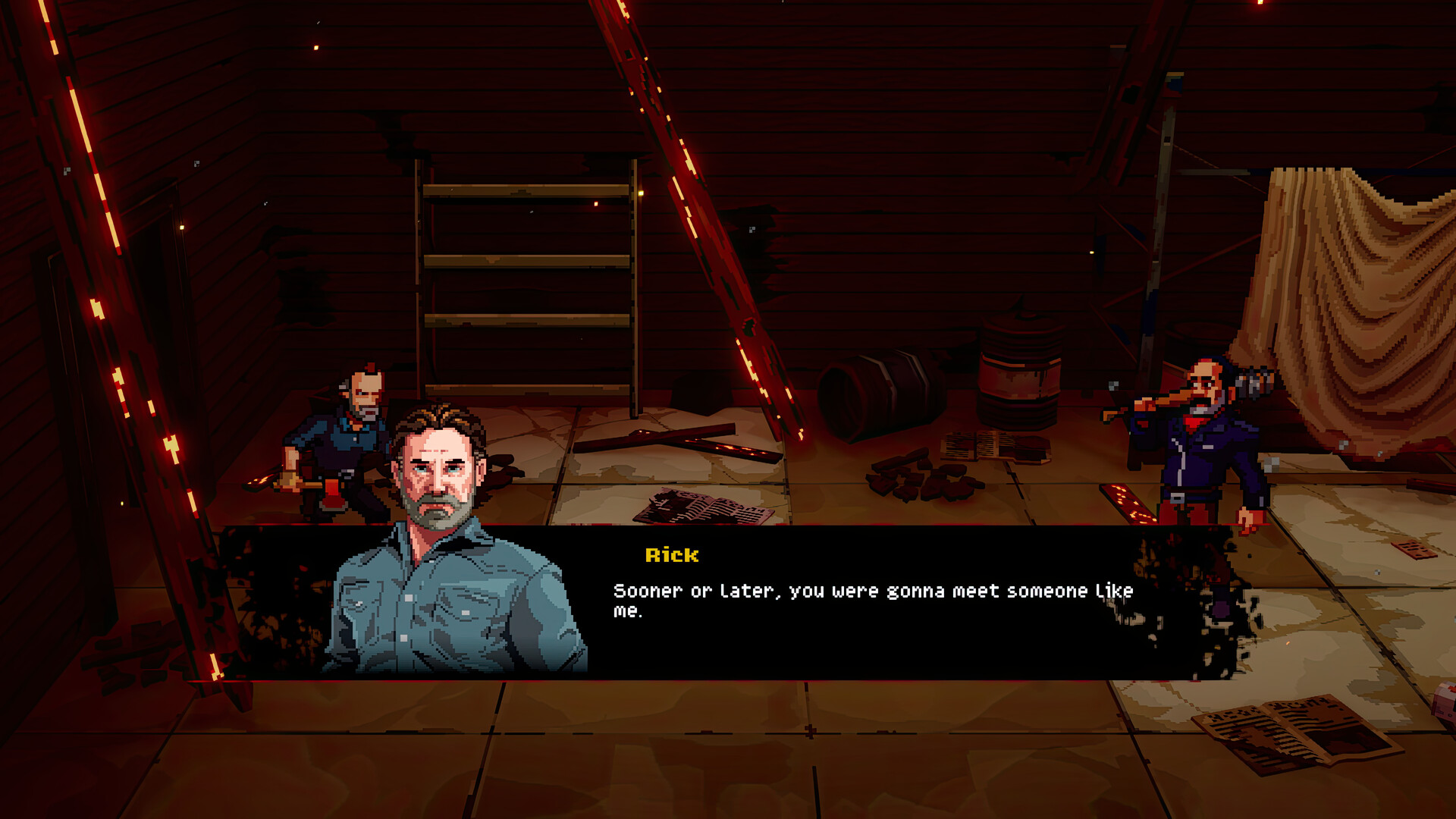
At least Streets of Survival offers each character a skill tree. And this progression system provides some additional incentive to keep on fighting. Skill trees allow each survivor to receive upgrades to things like damage, healing, and other abilities. Deciding where to spend those points provided a few moments where I had to stop and think about what would benefit me the most. Though, truth be told, I didn’t ever feel like I made a “wrong” decision in where to allocate my resources. It’s nothing deep, and there aren’t enough unique skills to create radically different builds. By the time the credits rolled, most upgrade paths felt fairly similar.
With that said, Streets of Survival’s 16-bit pixel-art style captures the atmosphere of The Walking Dead far better than I expected it to. The dirty color palette and (surprisingly) detailed environments give this version of the zombie apocalypse an appropriately grim feeling without sacrificing the charm of the retro-inspired art direction.
Capturing the Spirit
Each location also has its own distinct identity. Alexandria’s graffiti-covered walls look noticeably different from Hilltop’s overgrown fences and vegetation, and the environmental details help prevent the different stages from blending together. No two levels felt alike, and they managed to capture the spirit of The Walking Dead universe. And, for my money, that was the most important thing Streets of Survival needed to do.
The Walking Dead: Streets of Survival isn’t a game I’ll be returning to over and over again. There simply isn’t enough mechanical depth or variety to make repeated playthroughs particularly compelling. But what it did do was remind me of one of Daryl’s old supply runs: get in, grab what you need, and get back out before you have time to overthink it. Streets of Survival isn’t particularly spectacular, but it’s short, straightforward, and easy to digest.
***A PS5 code was provided for this review***
The Good
- Solid level design
- Nice and bloody
- Brought me back to The Walking Dead universe
The Bad
- Shallow combat
- No co-op
- Weak difficulty options