Tomodachi Life: Living the Dream Review
Few games can capture the bizarre charm that imbues many of Nintendo’s releases. Absurd and delightful, their titles often strike that balance perfectly, delivering a moreish experience that keeps you immersed. Building on the cult following of the original on the Nintendo 3DS, Tomodachi Life: Living the Dream aims to crank up the weirdness and flesh out its social simulation with a plethora of new options. But does the sequel amplify its endearing qualities, or does the dream begin to distort into something more unhinged?
Tomodachi Life is one of the few games that truly capture the notion of creating your own, unique story. Miis are at the centre of the experience, and you have full autonomy over their creation. From their appearance to personality traits, you can mold your residents into living characters that wander the town in search of companionship. Although a relatively simple creation suit, derived from the Wii, you can manipulate a variety of features to create Kokeshi doll-style versions of your loved ones and others. It’s simple and quick to do, which entices you to create a large and often bizarre community that you can guide in subtle ways, nudging relationships, resolving disputes, and watching as unexpected friendships and rivalries unfold.
Welcome All!
Nintendo introduces more inclusive design with the ability to select non-binary Miis and alter voices for any gender: even though these are the monotone, robotic voices of the past, options to personalise are welcome. In addition, you can also choose same sex relationships as an option, adding further variety to the residents on your island. Paired with a broad personality system where you can alter a range of traits, Miis differ from one another, leading to a society full of unique characters.
The island quickly comes alive with new locations and opportunities being regularly introduced. Mundane tasks such as feeding the locals and forming relationships by picking up residents and dropping them off next to someone are central to the experience. This leads to weird yet charming moments, where people grow giant to express their love, cure hiccups with a prod, and much more. Just when you think you’ve seen it all, something new and delightfully strange occurs. The fact that these scenarios feature avatars of your loved ones only adds to the humour, making each moment land even more effectively.
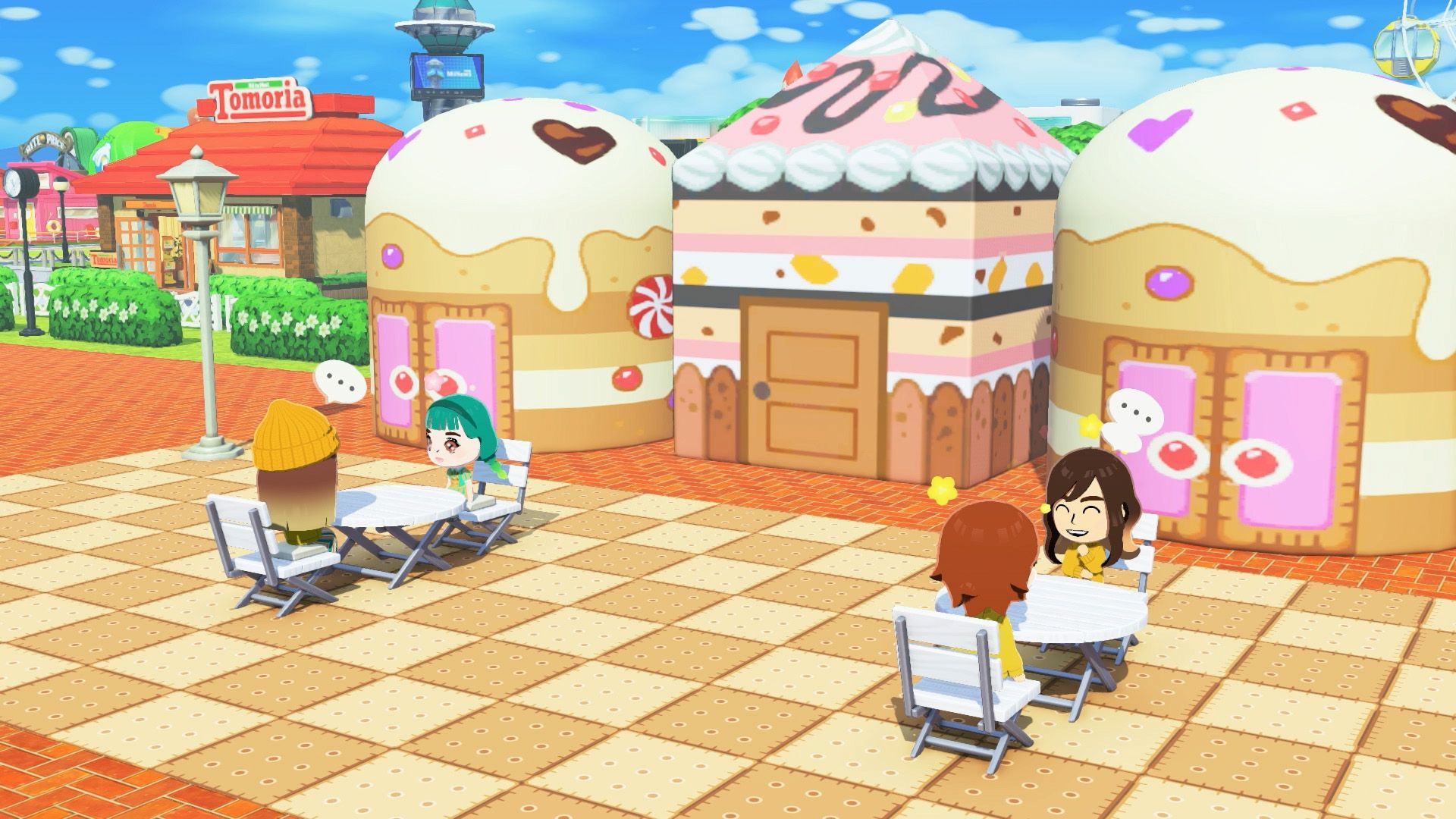
Activities are simple, with minimal gameplay, making this an accessible experience. While anyone can enjoy the simulation, it is a passive title that excels with short and frequent bursts rather than long sessions. After 30 minutes or so, there is little to do, barring simply observing the ongoings. However, due to the viewing nature of the game, it lends itself to a family experience where many can watch and chip in with ideas on how to progress relationships and choose responses.
From Mii to You
As your Miis become happier, your island levels up, allowing you to give gifts to inhabitants and further personalise with new customisable options. It’s here that the game thrives, as you are given the ability to modify most things on the island. You can quickly move buildings around, terraform the environment, create new foods, clothing and much more. Draw what you like and it becomes part of the world. Soon you’ll have residents wandering around in Pearl Jam tops and food that replicates mum’s home-cooked daal to make the place exactly how you’d like. There’s a great sense of freedom that allows you to make the adventure your own and I can’t wait to see what others create.
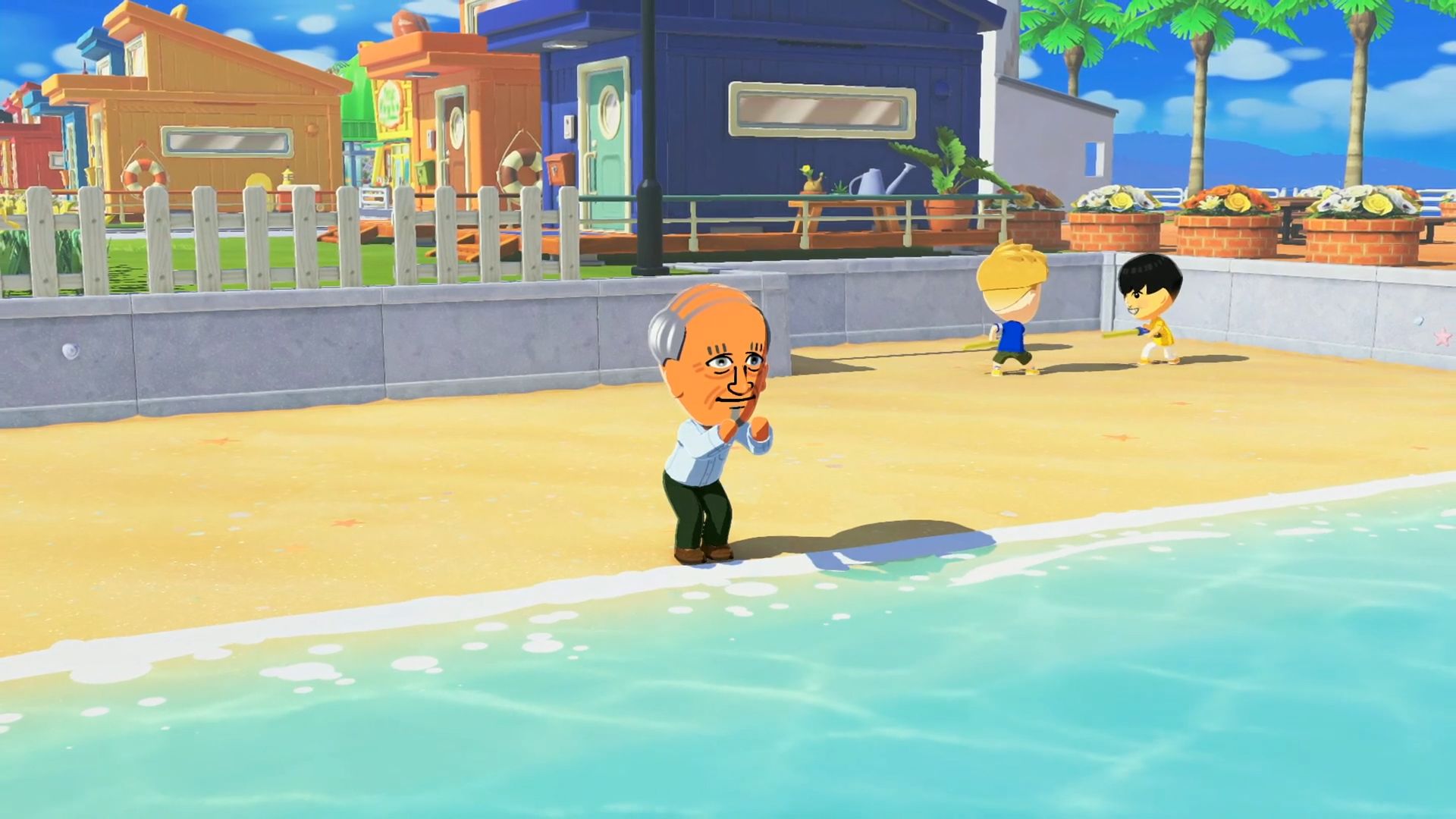
Characters form their own stories, building relationships that can lead to love and even marriage. Couples and friends can move in together, upgrading from a small, single-room house to a sprawling mansion. However, things aren’t always rosy; islanders can fall out, requiring you to lift their spirits with gifts and holidays. Once received, residents use these items around the island. It’s a joy to watch them play with new additions, learn new skills, and create wonderfully strange scenarios.
Life on the Island
Tomodachi Life: Living the Dream is a weird but strangely addictive title that continues to surprise each time you dip in. The level of customisation helps create a truly unique experience, where the Miis, clothing, and more are shaped entirely by your choices, letting you fine-tune every detail to reflect your own quirky vision. This leads to an array of wacky stories and situations that keep you coming back for more. Although there’s a lack of traditional gameplay and not much to keep you playing for longer than short bursts, it’s a successful evolution of its predecessor and a relaxing, cosy experience that’s easy to return to.
***A Nintendo Switch 2 code was provided by the publisher***
The Good
- Very Customizable
- New Content Keeps Coming
- Weird and Charming
The Bad
- Little Gameplay
- Quickly Run Out of Things to Do
- Robotic Voices