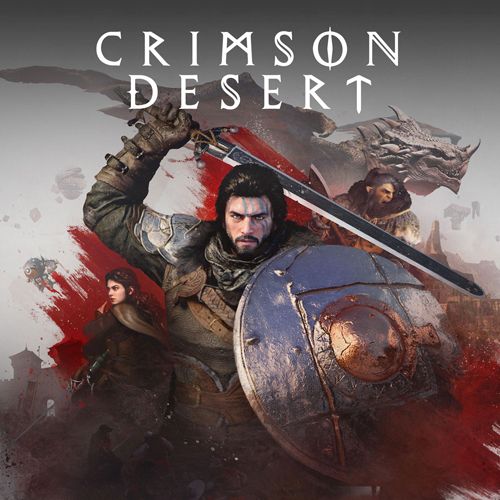
Crimson Desert Review
Whatever else Crimson Desert is, it’s almost unbelievably big, unnecessarily complex at times, and absurdly ambitious. All the pre-release hype about its many facets and mechanics is — for a change — entirely justified. There are hundreds of hours of content, much of it engrossing and satisfying to engage with. But to be fair, Crimson Desert has its share of pain points too. Not so much in terms of performance, but as a reflection of the developers’ approach to design and the inevitable clash of so many systems trying to coexist.
Crimson Desert is an action-adventure RPG but not a Dark Souls wannabe, though it borrows here and there from the genre. Players looking for the next Elden Ring are in for a shock — though not necessarily a disappointment — on multiple levels. For one thing, Crimson Desert is bigger in land mass and denser in content. But it’s also a less welcoming or forgiving game, especially when it comes to progression and combat. Its pacing is entirely different, too.
Kliff’s Big Adventure
I won’t spoil much of anything about Crimson Desert’s narrative beyond what’s already in the public domain. Set in the medieval fantasy realm of Pywel, you play as Kliff, a warrior in the Greymane mercenary clan. During the game’s long tutorial section, the Greymanes are ambushed by the rival Black Bear clan, and Kliff is seemingly killed. The surviving Greymanes scatter. Kliff awakens near the village of Hernand and the game introduces the player to the usual menu of action-adventure activities. Things feel pretty familiar.
At the end of this little introduction, Kliff steps through a magical portal to the Abyss, a vast array of islands floating in the sky. Suddenly, Crimson Desert becomes a puzzle game, as Kliff manipulates objects and energy to open doors and progress through the world. Even in these first, baby puzzles, instructions can be obtuse. It’s a choice that only gets more explicit as the game progresses. At the end of his first time in the Abyss, Kliff literally gets his wings and the ability to glide down to the earthly realm. It’s at that point that Crimson Desert actually begins.
While the pacing of the opening sections feels weirdly disjunct, in retrospect, it does a good job of setting the scene and introducing the narrative and gameplay purposes of the Abyss, the realm where Kliff will learn important core skills and abilities. It also lets the player know how important puzzles are to the game, which might come as a surprise. The narrative relationship between the Abyss and Pywel becomes more explicit as the game unfolds its story. That said, the Abyss sections were the least engaging part of Crimson Desert.
Back to Earth
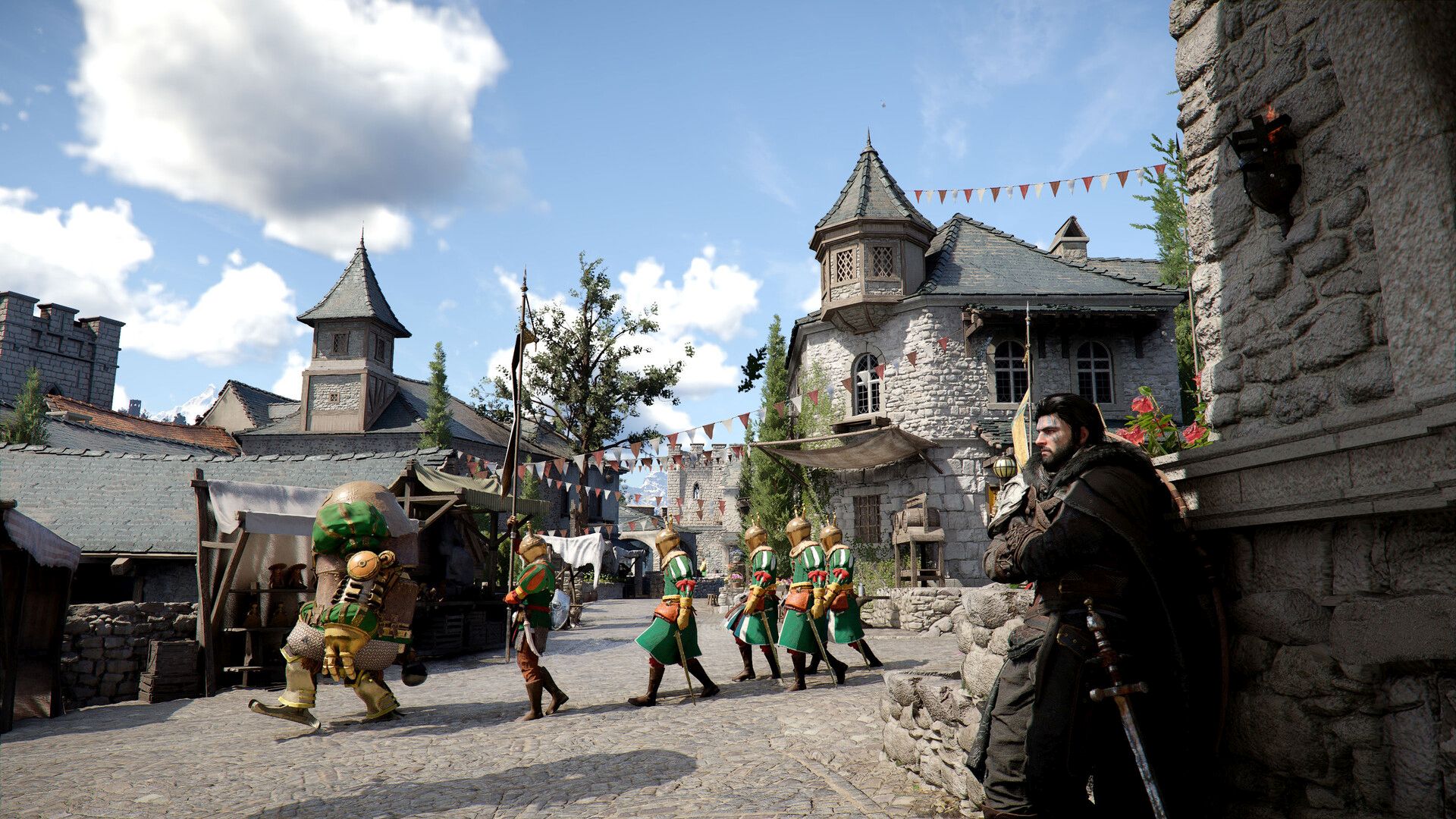
Crimson Desert begins in Hernand, a region that is very much reminiscent of the Shire (or Limgrave), with rolling hills and farms, quaint villages, winding streams and magical forests. A few things stand out immediately. First, the world is absolutely beautiful, and remains so throughout. Over the course of the game, the player will visit a handful of distinctive regions and they’re all visual feasts in one way or another. There’s almost never the feeling that assets are simply copy-pasted, either. Crimson Desert’s version of nighttime is especially effective.
As you start to interact with the world, you run into the second realization: there is a nearly overwhelming amount of stuff to do, fight, make, and find. Cooking, fishing, logging, gambling, and mining, completing dozens of side quests, faction quests, and Greymane quests to build and expand the home base camp. Then, of course, there’s the main quest, puzzle solving, time in the Abyss, and combat. Lots of combat.
The third big realization is that Crimson Desert is by and large hands-off when it comes to opening up its secrets. A great many of its systems and mechanics are left to players to discover, and some can be extremely opaque. Puzzle clues can be annoyingly cryptic or simply poorly written. There are also some bugged puzzles, too, and it can be hard to know where to place the blame. The developers have said they want players to form a community around solving puzzles and optimizing the mechanics. Believe them.

Bigger Puzzles
The final realization is how thoroughly interconnected everything is. No matter how seemingly mundane a task might seem, it pays off somehow, often in multiple or unexpected ways. You might stumble into a cave with what seems like a simple puzzle. But solving that puzzle might require visits to far-separated locations, which initiate other quest opportunities. The nesting of main and side quests, faction quests, puzzles, and crafting or resource gathering can at first seem disjunct and confusing.
Eventually, the game’s rhythms and loops become second nature. There’s also the occasional feeling that Crimson Desert abandons its sense of what’s really engaging for most players. Some multi-part activities are simply tedious. However, an update just prior to launch has already made significant quality-of-life improvements like greater item storage. The developers are keenly attuned to player feedback.
Unlike most RPGs, Kliff is not earning XP, souls or coin to level up his stats. Instead, Abyss Cores are the key to unlocking new abilities on the relatively straightforward talent tree. That tree has three main branches, focused on stamina, strength and magic. But Kliff doesn’t simply increase stamina, for example, instead unlocking stamina-based abilities like longer glide time. Abyss Cores can be earned in lots of ways, primarily through quests, combat and puzzle solving. They can also be purchased from a specific merchant.
If You Build It, They Will Come
Gear, on the other hand, is leveled through visiting various smiths, supplying them with materials and completing their quests. For a long time some of it feels like typical open-world busywork, but eventually Crimson Desert gives you a greater range of options, like growing your camp with enough Greymanes that they handle some of the work. But of course, do so requires a number of recruitment quests.
Crimson Desert has the usual array of fantasy RPG weapon types, and leveling them up is obviously one of the keys to success in combat. However, Kliff’s skills and abilities are perhaps even more important. Crimson Desert is the kind of game where you find a few weapons you love, level them up and stick with them for dozens of hours.
Power Fantasy
Crimson Desert’s combat is excellent, but it takes many hours, lots of Abyss Cores, and unlocking a range of abilities to really click. Once everything begins to synergize, the combination of familiar action-RPG mechanics and wild, aerial force push abilities and combos feel unique and powerful. Much later on, there are flying dragon fights and jet packs, and Big Daddy-like drill arms. Oh my.
One of Crimson Desert’s biggest and most persistent flaws, however, is that the controller mapping requires many inputs do serve double duty both in and out of combat. Even after dozens of hours and lots of muscle memory, the control scheme still feels awkward. As of this writing, controllers cannot be remapped.

Enemy variety is fantastic, though of course, each region has its rotating cast of regulars. There are over 75 bosses and they can be extremely — and sometimes infuriatingly — challenging. This is especially true early in the game, when Kliff is underpowered, and bosses are weak to a specific ability Kliff has yet to acquire. While you do eventually control two other playable characters, story-driven boss battles are always you versus the boss (and their minions). A recent patch allows you to summon one of the two secondary characters to accompany you, at least during exploration. This helps with crowd control.
Bellyachin’
Crimson Desert stumbles — though never fatally — in a few other areas. Many of the NPCs are extremely engaging and well acted but the hero at the story’s center is just plain dull, with a remarkably narrow emotional range. Crimson Desert is set in the same universe as Pearl Abyss’ Black Desert Online, and even has some crossover characters.
Performance for me was overall pretty good on a high-end PC, with crashes in a few specific, mission-related places and some texture pop-in. However, my fellow reviewers had a much wider range of performance issues. Considering Crimson Desert’s size and complexity, it’s not unreasonable to expect a few growing pains. That’s small comfort when a crash or bug wipes out hours of progress.

Forgiveness
There were times in the early hours of Crimson Desert where the game’s beauty and ambition were overshadowed by frustration with the controls, momentum-killing puzzles or seemingly impossible bosses. In large part, this was because I was bringing thousands of hours of FromSoft expectations to a game tuned to a very different frequency. Many hours later, they were balanced by a greater appreciation for what Crimson Desert actually does very well.
Crimson Desert is a remarkable achievement in open world design, with an inexhaustible number of things to see, do, and fight. It’s a miracle that it never collapses under its own weight. It isn’t perfect. By both accident and design, there are times when clarity and user-friendliness temporarily disappear, and the game’s rough edges and opaque mechanics overshadow the fun. A lot of games over-promise and under-deliver. Crimson Desert is not one of them.
***PC code provided by the publisher for review***
The Good
- Immense and impressive world
- Huge amount of quality content
- Distinctive combat
- Tons of variety
- Great audio design, acting and music
The Bad
- Dull main protagonist
- Opaque systems
- Frustrating controls
- Lots of bugs, some serious
- Difficulty spikes in boss design