Rivage Review
While the idea of a time loop in a game could be frustrating, there are plenty of examples where they nail the mechanic. Returnal used this to showcase its fast and frenetic gameplay, whereas Deathloop used it as a storytelling tool. Rivage aims to use this as a basis for a puzzler. Think Groundhog Day in space, and you’re on the right track. Will this be the next game to master the mechanic, or will its repetitive structure trap players in a cycle of frustration?
You play as Miranda, a doctor as part of a team sent into outer space to find a planet suitable for humanity. Things take a drastic turn when you awake to find the space station empty, with no trace of life. You must now explore the quiet ship to solve this mystery and escape the time loop trapping you.
Finding Fiction
Throughout the station, there are notes, emails, and messages which highlight the relationship between characters, giving you further insight into each person who inhabited the place. While this does build the narrative, it never truly gets gripping due to the poor pacing.
The station’s power determines each loop. When the power runs out, everything shuts down, and you must enter a back room and interact with an upright arcade machine that sends you back in time to try again. Due to this, you can only achieve so much in a single loop. As every door you open drains a bar, you must carefully plan your route, deciding which areas are worth exploring.
Puzzles vary in terms of complexity and clarity. Some are well designed, encouraging you to use what you learn from the environment to solve problems and progress to your next objective. Some, however, are not particularly clear, requiring some guesswork to solve. Tying this into the time loop mechanic can also build frustration. While I like the idea, the execution lets it down. As trial and error is a key component to decipher puzzles, having to re-loop during this process can quickly become frustrating, forcing you to repeat familiar tasks before attempting a new solution.
Objectives are not always clear, resulting in aimless wandering as you try to work out what to do next. While I enjoy the sense of discovery, the game often provides poor signposting for puzzle triggers, meaning you can collect a key item without any indication of where to use it. This can lead to extended periods of backtracking and clicking the array items in each room until you stumble on to the item you require.
Clumsy Controls
The K9 is a system that stores clues, passwords and screenshots so that everything is stored in one place. It’s a neat idea, which aims to house all information in one place so you don’t need scraps of paper to note things down. Unfortunately, the developers designed this with a mouse and keyboard in mind, and it isn’t great to navigate with a controller. The same applies when interacting with items in the world. Everything is awkward to manipulate, which adds further irritation to the experience.
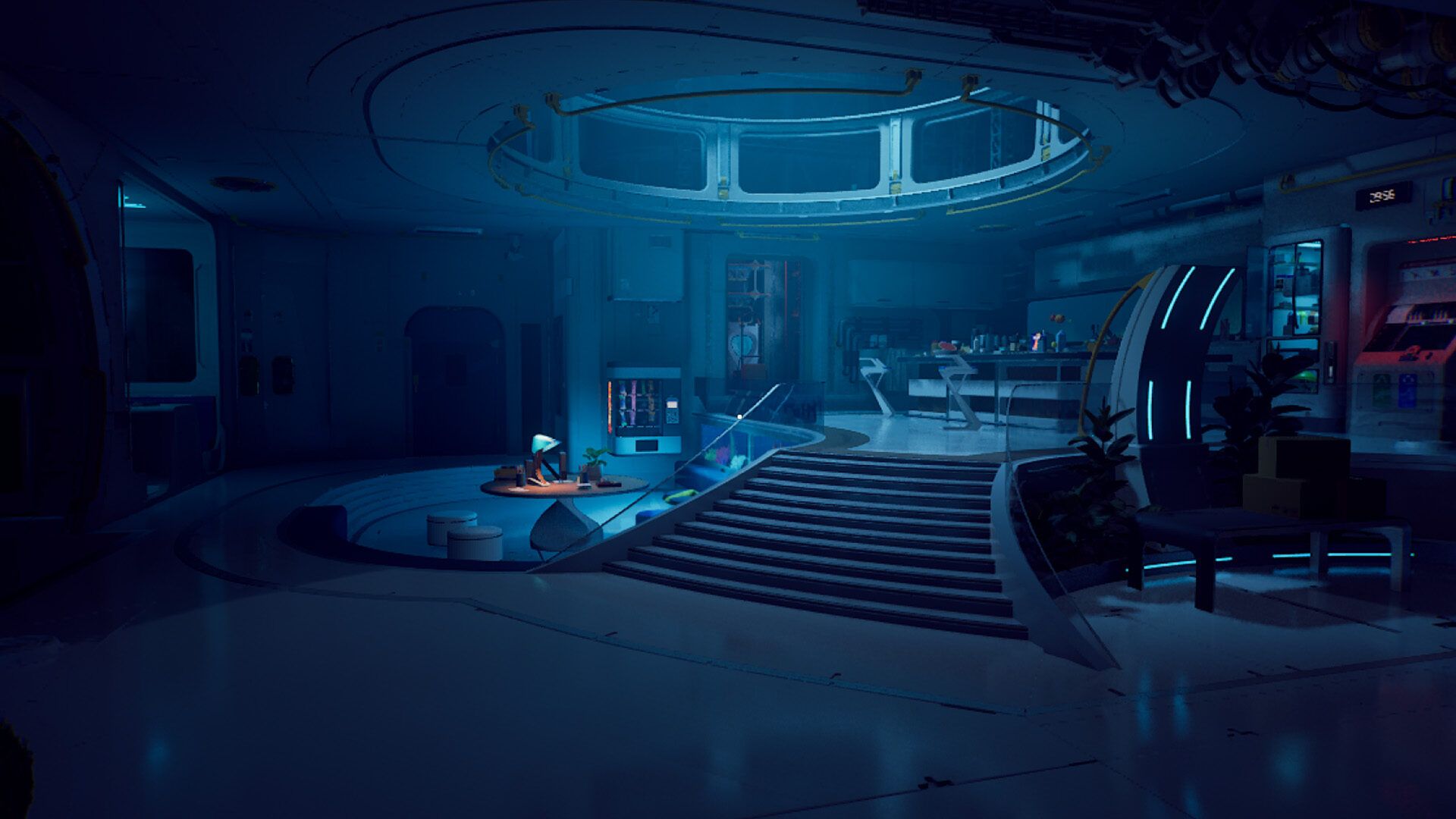
The environment is well designed with a clear lived-in aesthetic, which adds to the gravitas of the location being devoid of life. Each room feels distinct, adding to the character of the space station, while also informing you about the person who lived there. Visually, the game is strong, but there is a caveat. The Rivage Steam page mentions the use of AI during early development, but the developers have now removed these assets. While it’s difficult to say if any of these aspects still remain in the game, it’s something to consider before purchasing.

Rivage has an interesting premise but struggles to meet its potential. While the time loop mechanic is great in theory, its application is tedious, resulting in moments of frustration. Most puzzles are well designed, but initiating these can be harder than the puzzles themselves. Paired with the poorly signalled objectives, you may have to wander and re-loop due to a lack of direction. The poor controller support also makes interactions feel clumsy and undermines the satisfaction of solving its puzzles. Despite an intriguing premise, it never quite escapes the gravity of its own design flaws.
*** A PS5 code was provided by the publisher ***
The Good
- Some Strong Puzzles
- Interesting Time-loop Mechanic
- Nice Visuals
The Bad
- Gets Frustrating
- Poorly Signalled Objectives
- Possible Use of AI Artwork