Order of the Sinking Star Review
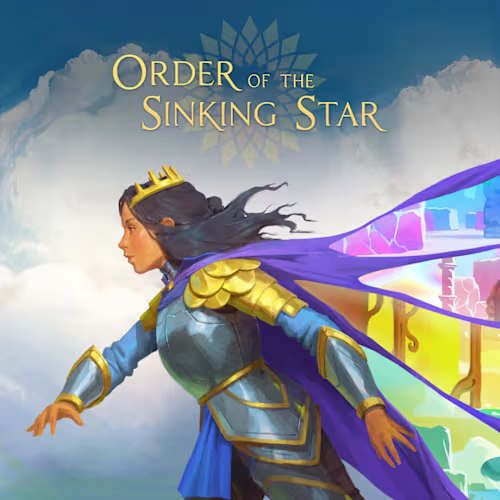
Jonathan Blow is a genius. His attention to detail in each of his creations leads to remarkable experiences that resonate long after the credits roll. Braid changed the landscape of indie titles when it launched as part of Xbox’s first Summer of Arcade. Suddenly, gamers paid more attention to smaller studios, primarily due to the creativity showcased in his debut release. Following this, The Witness expanded his extraordinary approach to puzzles, delivering a groundbreaking adventure that challenged even the greatest minds. His latest release, Order of the Sinking Star, is an audacious game that was 10 years in the making. Will its intricate puzzles and ambitious design once again showcase Blow’s mastery of the genre, or will this be one puzzle too far?
Sentenced to execution, a group of supporters helps you teleport to a mysterious world to flee your pursuers. Now in a strange new place, you discover an array of deadly contraptions bespoke to four distinct regions. Your goal is to venture through each unique area while learning about the Overworld and piecing together its history and many secrets. Each biome also includes a story with the character within and also links to the larger tale, creating a multilayered narrative that gradually builds. Although the plot sits in the background, audio logs left by previous explorers give insight into the world and history, drip-feeding information as you delve deep into its enthralling puzzles.
Seeing The Bigger Picture
Order of the Sinking Star is an anthology that seamlessly intertwines four games, each with its own mechanics and rules. With no guidance or tutorial, you are left to venture in any direction, letting you organically discover and learn the game. Symbols adorn surfaces, spiralling you to another area for you to tackle a series of puzzles before heading back. Skills you use in biomes seep into the Overworld, requiring you to experiment with your abilities to reach new puzzle rooms. This makes the area much more than a hub to access conundrums; it’s an interconnected world where every discovery and ability can open up new paths.
Heading north leads to the Heroes of Hauling, a reworked version of Jonah Ostroff’s Heroes of Sokoban. In the realm, you control high fantasy characters, each with their own ability to manipulate aspects of the environment. From simple abilities, such as pushing items, to more complex skills that allow the character to teleport objects within their gaze, each character is distinct, offering a fresh perspective on the puzzle ahead. This soon evolves, as puzzles start to include more than one character, requiring you to juggle between them, using their skills to support one another to reach the exit.
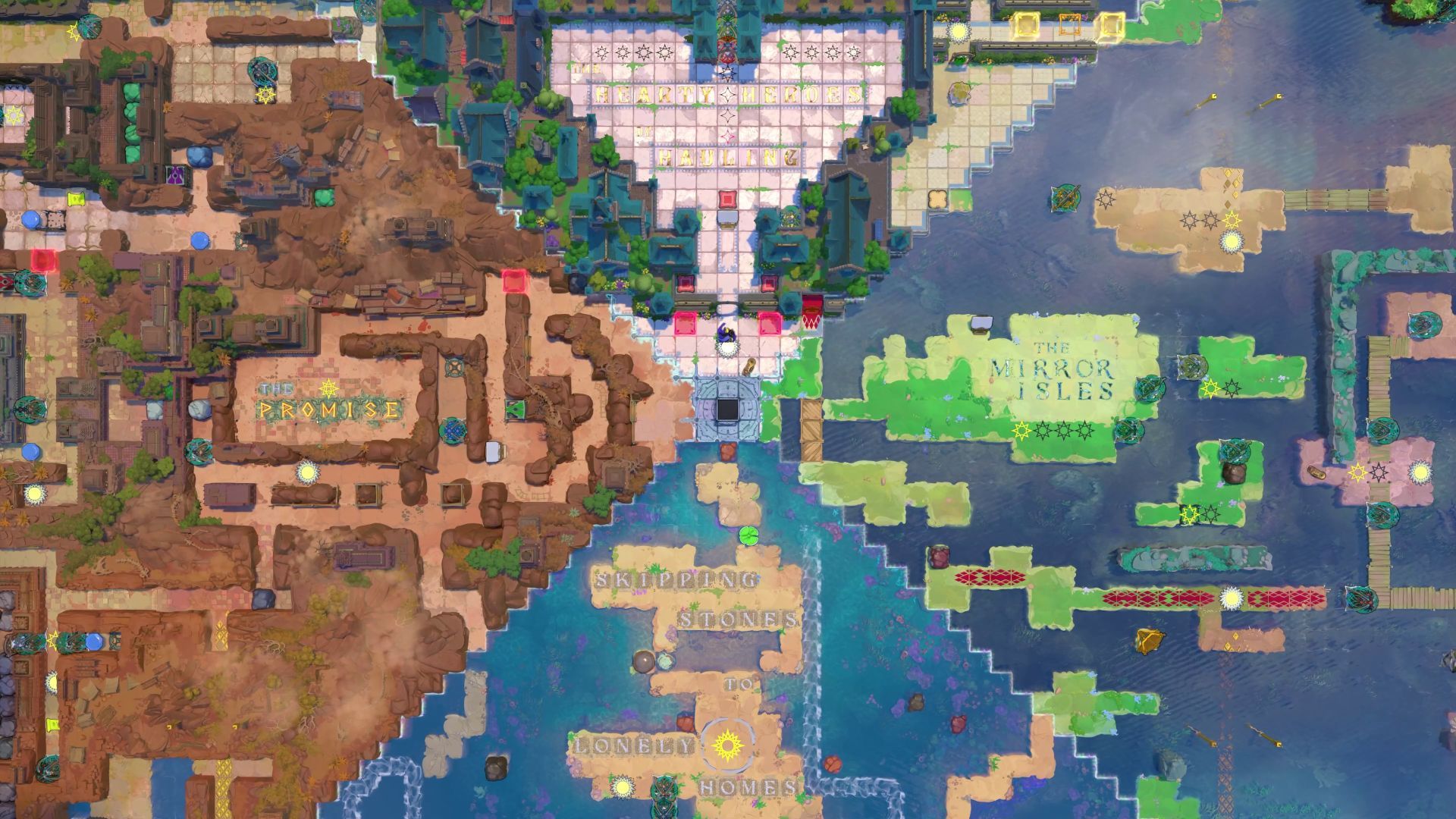
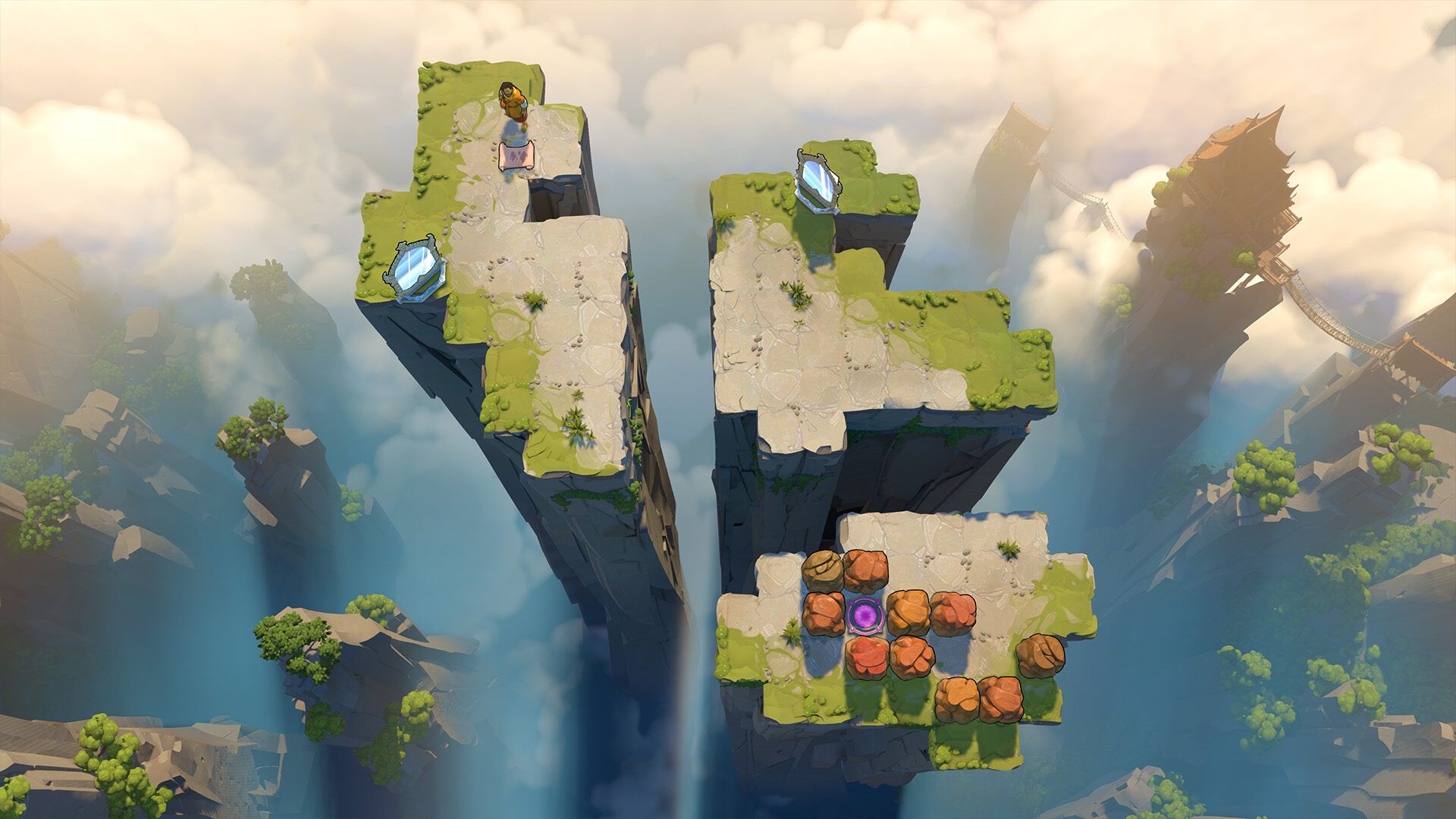
To the east lie The Mirror Isles, created by Alan Hazelden, where you traverse the archipelago by swapping places with your reflection. As multiple mirrors are introduced, things begin to get more complex. You can start to use perspective to manipulate and duplicate items, adding a truly unique twist to puzzles. Working out ways to multiply and then reduce the number of aspects in the environments is enthralling, leading to a series of satisfying lightbulb moments as you experiment with the environment, uncover clever solutions, and gradually untangle puzzles that initially seem impossible.
Connecting the Pieces
South is another Alan Hazelden project, Skipping Stones to Lonely Homes, where you must throw stones to create paths and direct streams to reach your destination. This relies heavily on planning your route. Seeing where lily pads lie and working out the path to get from A to B is wonderful and a true change of pace to the other puzzles in the games. Observation is key as you must learn the intricacies of each area to reach your desired location.
West is The Promise, an abstract puzzler by Sean Barrett. This centres around light beams that unlock different abilities to solve the array of puzzles at hand. Each conundrum teaches you about concepts, gradually building to create deeply complex, interconnected puzzles that reward experimentation.
Although these aspects are separate at first, worlds start to collide, creating hybrid puzzles that combine mechanics from two of the games. This fusion of rules creates a truly exhilarating experience that rewards curiosity. While puzzles grow in their complexity, they build on aspects previously established. Meaning that even when stuck, the solution never seems out of reach, encouraging you to toy with the multiple systems to overcome the problem at hand. With the ability to undo a single step at a time or completely reset the stage, the game never punishes you for a wrong step, supporting you to try again.
Due to the non-linear structure, you can venture in any direction. This level of freedom is wonderful for a puzzler because if you do hit a brick wall, there’s plenty of other conundrums to tackle. Often, that eureka moment happens while trying to decipher a different problem. Luckily, you can leap into another realm to quickly move across the map, progressing in different biomes at the same time.
A World of Wonder
The visuals have a cosy aura that invites you to delve deeper into the world. Each region differs and then merges with others to make areas feel distinct, yet part of the same universe. Calming music backs conundrums, helping to keep you focused and not distract from the experience. Unfortunately, there are some performance inconsistencies. The puzzles run smoothly, but the Overworld has a lower framerate, which takes another significant hit when leaping into the teleportation realm. In addition, odd bugs can halt your progress, forcing you to reset a puzzle. While the developers have already patched it, some may still crop up.

Order of the Sinking Star is a wonderful kaleidoscope of puzzles. Brimming with imagination, this is an essential title for fans of puzzle adventures. Each region is unique and offers distinct mechanics which then merge, creating something truly magical. Its willingness to let you experiment and discover its solutions for yourself makes every breakthrough feel rewarding, leaving a lasting impression long after you’ve put the controller down.
***A Nintendo Switch 2 code was provided by the publisher***
The Good
- Merging Mechanics
- Countless Well-Designed Puzzles
- Flexible Structure
- Over A Thousand Puzzles
The Bad
- Lots of Mechanics to Remember
- Gets Very Challenging