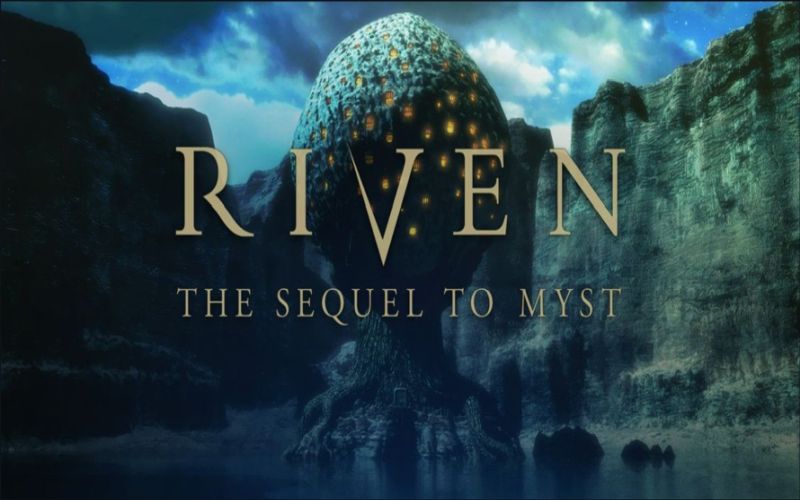
Riven Review
Given the runaway success of Myst, a sequel was inevitable. Riven is that sequel. It launched in 1997 for PC and Mac OS from game developer Cyan Worlds Inc. Though it did not reach the same sales heights as Myst, Riven still managed an impressive 4.5 million units in sales. Riven continues the Myst story and follows the same gameplay. It is a point-and-click adventure game played from a first-person perspective. Like Myst, Riven is also being released on the Xbox Series S/X and PlayStation 5 and PSVR 2, playable in both flat and VR modes.
Most of the game takes place in the new location of Riven. To distinguish Riven from Myst, production designer Richard Vander Wende joined the team. Visual differences aside, you once again explore environments looking for clues and operating objects. Like a true sequel, Riven is bigger than Myst. It has many more complex puzzles and is a much larger world.
Instead of the Myst Ages, in Riven, exploration takes place on five islands. Atrus, the father from the first game, returns. He has learned the craft of creating “linking books” that serve as portals to other worlds. Atrus needs your help once again to rescue his wife, Catherine. This time she is being held prisoner in her home, Age of Riven, which is slowly collapsing.
This time it’s Atrus’s father Gehn who plays the villain. Gehn has declared himself the ruler of Riven. Atrus and Catherine fled Riven thirty years ago, trapping Gehn there. For Atrus had taken all the linking books with him. The last book leads to the Age of Myst, but Atrus lost it in the Star Fissure. It is this book that the player finds in the intro movie of Myst.
Riven Brings More Family Feuding
The family troubles continue as her sons, Sirrus and Achenar, trick into returning to Riven. There she was captured by the vengeful Gehn and remained a hostage. Atrus enlists the player and gives them a trap book. It is a snare that acts like a one-man prison, even though it appears to be a linking book. Atrus also gives the player his diary, which provides the backstory for the events, detailing what led to the current situation.
It’s a risky gambit on several fronts. Atrus sends the player away before he can explain in person what is happening. Atrus is fully occupied writing a descriptive book of Riven to slow down its deterioration, so the diary must suffice. This necessity compounds the risk of sending the player without a linking book. Unless the player succeeds, there is no way for him to escape Riven.
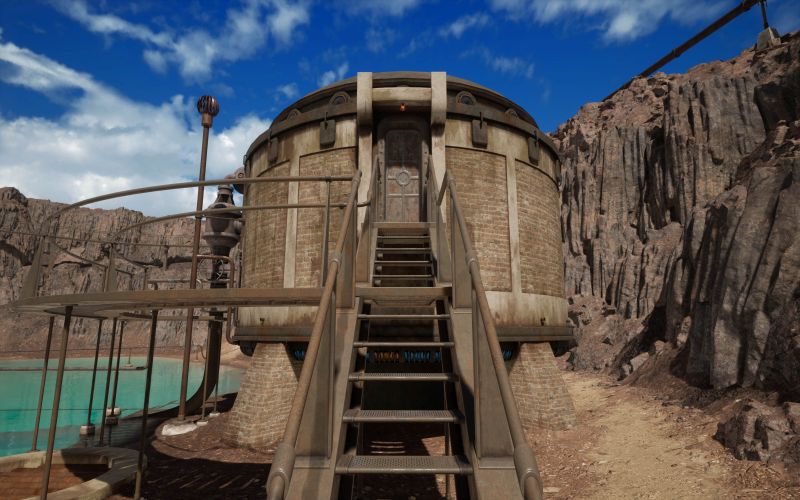
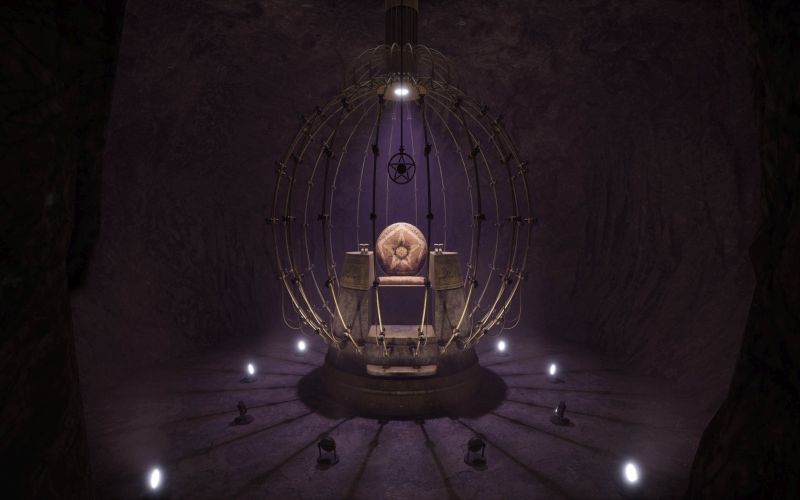
So the game begins with the player arriving at Riven on Temple Island. Your arrival is much more eventful this time. You appear in a locked cage. Outside the cage stands a strangely garbed person who speaks in a strange language and makes gestures towards you. You realize they are asking for the trap book, so hoping to be freed, you give the person the book. Just as soon as you do, another person outside your line of vision knocks out the first person and takes the book. Fortunately for you, they also free you from the cage. However, your hope of talking to them quickly vanishes as they set out to another via some form of sky train.
From here the player has to solve puzzles and learn to operate machinery and gadgets that will allow him to travel to the other islands. The other islands are: the Jungle, the Book Assembly, the Survey, and the Moiety. The Moeity are a race of native people taken advantage of by Gehn and the brothers. Critics often point out that Riven is far too similar to Myst. Yes, the game is bigger and features better cutscenes, but the basic gameplay template is the same.
Like Myst, Riven has several outcomes, with only one of them being optimal. Unlike Myst, in some endings, you can end up being killed. Riven employs the same game autosave function which creates an autosave before you make a major decision, allowing you to come back later and try different approaches.
Though the game is a few years newer than Myst, it is not far ahead of Myst technically. On the PS5, you can either play the game flat or in VR. The number of those who play the game via the PSVR 2 will be smaller than the flat gamers, but they will have a better experience. The immersion of VR is easily apparent when you switch between the two versions. Just can’t beat the fully surrounded visual and aural experience that VR provides. Given that Riven has better visuals, the immersion is slightly deeper in this game than in Myst.
Flat And PSVR 2 Visuals
Along with Myst, Riven received an HD upgrade in 2020. This brought the visuals up to a 1920 x 1080 presentation. It would have been great to see both games receive a 4K and HDR facelift to bring the visuals up to modern standards. Riven also runs at 60FPS in flat and VR modes. While fine for the flat version, this means the PSVR 2 version runs at the same framerate. That means reprojection, aka 60 FPS doubled to 120FPS by inserting a generated frame every other frame. While not an issue when standing still, there is a blurring effect when you are moving or turning in spot.
Riven shares the same gaming DNA as Myst. The stakes are higher, but the basics are the same. This is not a game to be rushed through. The pace is very laid back and meant to promote exploration. There’s a little less reading and a bit more cutscene videos in Riven.
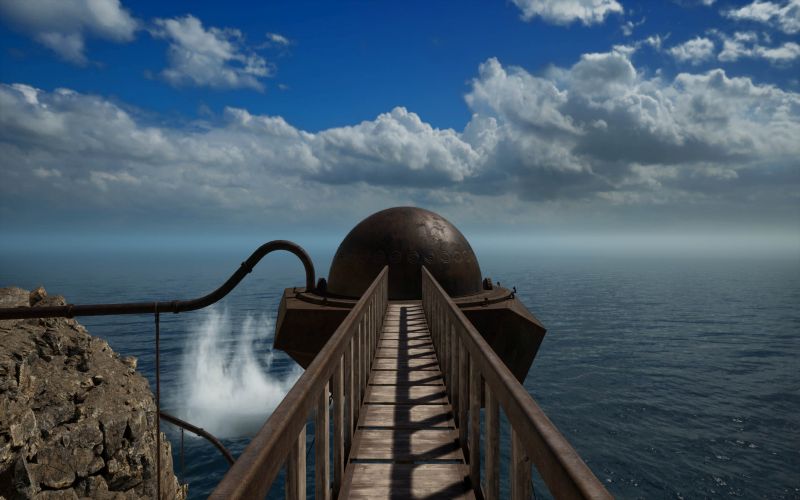
While Riven may stick closely to the formula established by Myst, it still delivers that same compelling blend of storytelling and exploration, only on a much larger scale. Combined with its improved technical presentation and an experience that’s every bit as captivating, Riven ultimately edges out Myst as the stronger overall game. Plus, on PlayStation, players get both the standard and VR versions in one package. Like Myst before it, the world of Riven is absolutely worth exploring.
***PlayStation 5 key provided by publisher***
The Good
- Compelling story
- Intriguing puzzles
- Lots of comfort/ease of use options
The Bad
- No 4K/HDR
- Reprojected image for PSVR 2