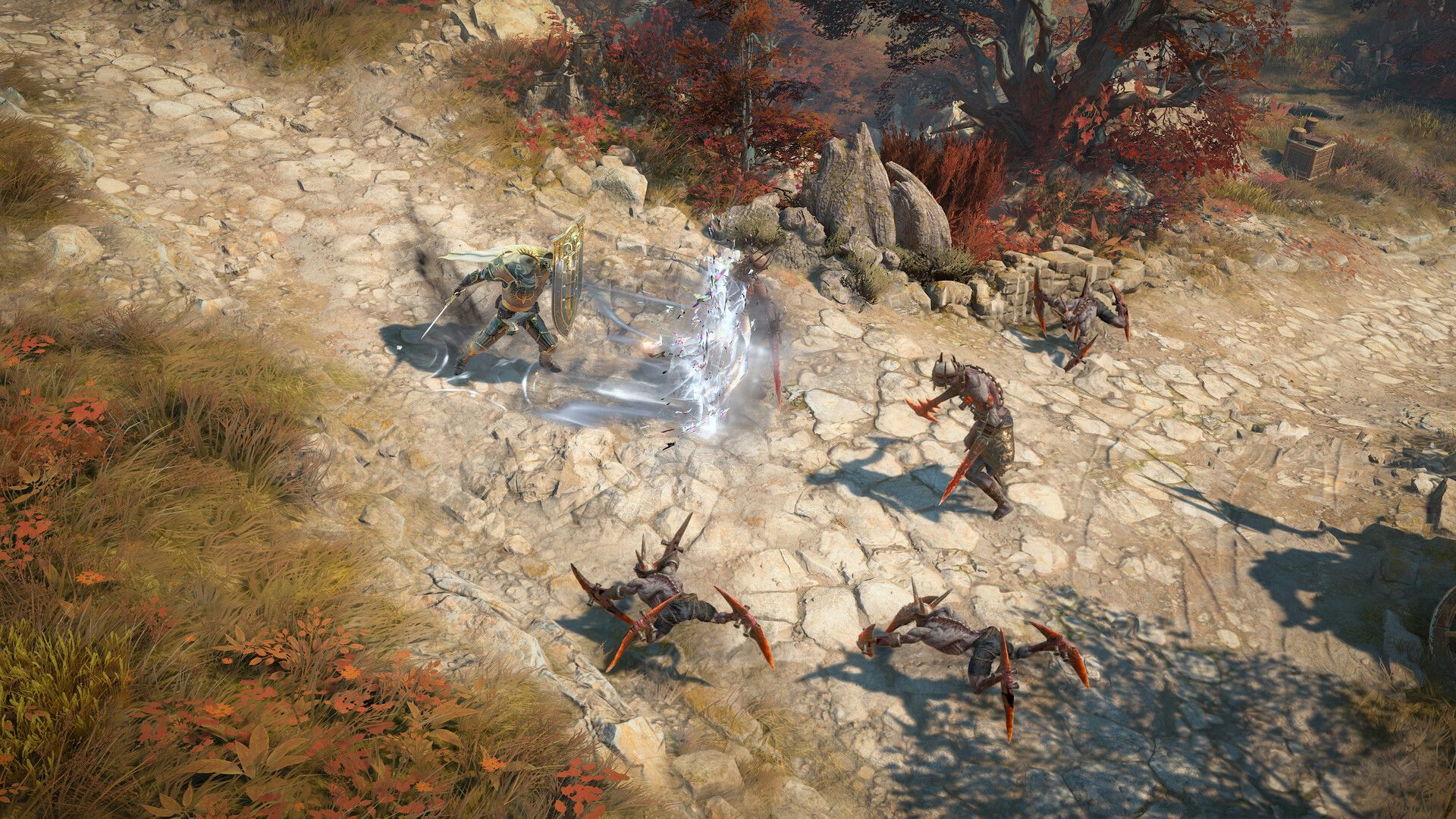
Diablo IV: Lord of Hatred launches on April 28, 2026, and it is already shaping up as the biggest structural overhaul the game has ever received. If you have been grinding through Season 12 and wondering why certain progression walls feel unfair, this piece is your map. Many players are turning to Diablo IV boosting not because they lack skill, but because the game stacks multiple gatekeeping systems on top of each other: each one reasonable in isolation, genuinely exhausting in combination. Below is a full breakdown of every bottleneck the expansion introduces or inherits, so you know exactly what you are up against.
What Is Lord of Hatred Actually Adding?
The expansion brings two new classes: the returning Paladin and the brand-new Warlock: alongside a new region called the Skovos Isles, a complete skill tree rework for all eight classes, the Horadric Cube crafting system, the Talisman set-bonus mechanic, a Loot Filter, and a revamped endgame called War Plans. That is a lot of systems launching simultaneously, and each one adds its own access conditions before you can meaningfully engage with it.
Key systems introduced with Lord of Hatred:
- The Paladin is available immediately upon pre-purchase, but the Warlock only unlocks on launch day, April 28.
- The Talisman system: which enables Set Bonuses via socketed Charms: only becomes active after completing the main Lord of Hatred campaign.
- The Horadric Cube is found inside Temis, the new endgame hub, meaning it is blocked behind finishing the story.
- Skill tree bonus variants: 20 additional options exclusive to expansion owners: are locked behind the purchase itself, leaving base-game players on a shorter build menu.
Grind Gates at a Glance
The table below maps each major bottleneck to its unlock condition and the approximate time investment a fresh character faces before hitting it.
| System | Unlock Condition | Est. Time Gate |
|---|---|---|
| Talisman & Set Charms | Complete Lord of Hatred campaign | 8–12 hrs story |
| Horadric Cube | Find it inside Temis post-campaign | 8–12 hrs + hub access |
| War Plans | Reach endgame after campaign | 10–15 hrs total |
| Echoing Hatred | Drop rare Trace of Echoes item | RNG: days to weeks |
| Bonus Skill Variants (20) | Own Lord of Hatred expansion | Immediate, paywall |
| Warlock Class | Launch day, April 28, 2026 | Timed release |
| Loot Filter | Available from launch for all | No gate: free update |
War Plans: The Endgame Loop You Have to Earn
War Plans is the centerpiece of Lord of Hatred’s endgame. The system lets you build a custom playlist of up to five activities: drawn from six modes including Helltides, Nightmare Dungeons, The Pit, Lair Bosses, Infernal Hordes, and Whispers of the Dead: and chain them together in a single session. Each activity in your plan has its own progression tree, which you unlock by repeatedly running that activity and spending accumulated progress. The modifiers you unlock change spawn density, reward types, and even allow elements of one activity to bleed into another (Duriel appearing during a Helltide, for instance).
What makes War Plans a grind gate rather than a grind solution:
- The activity trees require sustained repetition of a single mode before meaningful modifiers unlock, which means early War Plan sessions are barely different from standard endgame farming.
- Crafting an efficient playlist requires experimentation across multiple activities, costing time even before the optimization loop pays off.
- The best rewards scale only after modifiers are unlocked, so players who enter the system with fewer hours invested will consistently see worse loot.
- War Plans is locked entirely behind finishing the campaign: there is no shortcut into it from character select.
Echoing Hatred: The RNG Wall at the Top
Echoing Hatred functions as an infinite-wave horde mode where enemy difficulty scales continuously until your build collapses. It is positioned as the expansion’s ultimate proving ground: the activity where leaderboard potential and the best loot live. The access mechanism, however, is designed to keep the door mostly closed. You need a Trace of Echoes, described by Blizzard as “hyper-rare,” as a world drop. There is no crafting path, no vendor, no alternative acquisition. You find one or you wait.
The Talisman System and Why Itemization Gets Harder Before It Gets Better
Diablo IV has never had set bonuses: a deliberate departure from Diablo 3’s build-defining full-set meta. Lord of Hatred restores the concept through the Talisman, a separate UI slot that holds up to six Charms. Equipping two Charms from the same set triggers the first tier of a set bonus; more Charms from the same set unlock additional tiers. Charms drop in all rarities, but Set Charms: the ones that matter: are rare. The Horadric Cube can help reroll and upgrade Charms, but the Cube itself requires completing the campaign first. The practical result: players who finish the story earliest will iterate on Charm builds fastest, creating a progression gap between day-one completionists and everyone else that compounds over the first few weeks of the expansion.
The Skill Tree Rework: 100+ Changes Arriving at Once
Blizzard is introducing over 40 reworked skill choices and more than 80 additional options across all eight classes. This rework arrives for every player: expansion owners or not: but the 20 bonus skill variants are expansion-exclusive. According to the Diablo IV wiki, the expansion launched alongside Season 12 on April 28, consolidating all these changes into a single patch. For returning players, the effective grind gate here is relearning. Every existing build needs to be re-evaluated against the new skill landscape, and characters that were capped out before the patch may find their power budget has shifted in unexpected ways.
How Players Are Managing the Gates
The community’s practical responses to Lord of Hatred’s stacked bottlenecks fall into a few clear categories:
- Rushing the campaign on a single main character to unlock Temis, the Horadric Cube, and the Talisman system as fast as possible, then importing alts.
- Speccing into a single War Plan activity first and spending the initial grind deepening one tree before diversifying.
- Accepting that Echoing Hatred is a long-term lottery and farming loot-dense War Plan chains in the meantime.
- Using boosting services to skip campaign and early-endgame gates and land directly in War Plans content with gear that can support it.
Closing Thought
Lord of Hatred is not designed to be slow out of malice. The campaign lock on Talisman and Horadric Cube systems exists to give those mechanics context. The rarity of Traces of Echoes keeps Echoing Hatred from becoming a daily rotation. The War Plan activity trees reward sustained engagement rather than one-night sessions. The problem is that these gates pile onto each other: and unless you have dedicated time blocks each week, the gap between your progression and the content you actually want to play stays wide for longer than feels reasonable. Knowing exactly where each wall is, and what it asks of you, is already half the battle.