Mouse: P.I. for Hire Review
Film buffs and animation historians will tell you that 1928 marked an important milestone. That year saw the release of Disney’s animated short, Steamboat Willie, the very first cartoon with synchronized sound. It introduced the world to Mickey and Minnie Mouse and ushered in decades of quality animation. Steamboat Willie entered the public domain in 2024, which meant creators could copy the look of the iconic cartoon without worrying about the notoriously litigious Disney corporation ruining the fun. Which brings us to Mouse: P.I. for Hire.
Loose-Limbed Fun
Now, Mouse: P.I. for Hire doesn’t directly reference Disney’s beloved rodent, but its art style is certainly adjacent to the classic black-and-white cartoons from Disney, Looney Tunes, and others. It uses a style called “rubber hose” animation, where characters have jointless limbs that can fluidly bend and stretch. A few games have used this style before, most notably the 2D Metroidvania, Cuphead.
Mouse: P.I. for Hire isn’t a platformer but a fully 3D first-person shooter. More importantly, it’s a darkly satiric, hardboiled detective story inspired by classic noir movies and novels. Whether it’s a gimmick, a genius combination, or both, the mashup of classic animation, noir, and shooter works better than you might expect.
Mouse: P.I. for Hire is a familiar-feeling detective story with a lot of narrative surprises, mysteries, and plot twists, so I won’t spoil much of it. You play as Jack Pepper, a war veteran and ex-cop turned private investigator. Your beat is Mouseburg, a shadowy rodent-inhabited town filled with seedy dives, political corruption, and warring factions ala standard hardboiled fiction. When your friend and celebrity magician Steve Bandel goes missing, you investigate. Things get interesting fast, and pretty soon you’re diving deep into a dark and twisted tale of crime filled with literal rats, mice and other rodent characters.
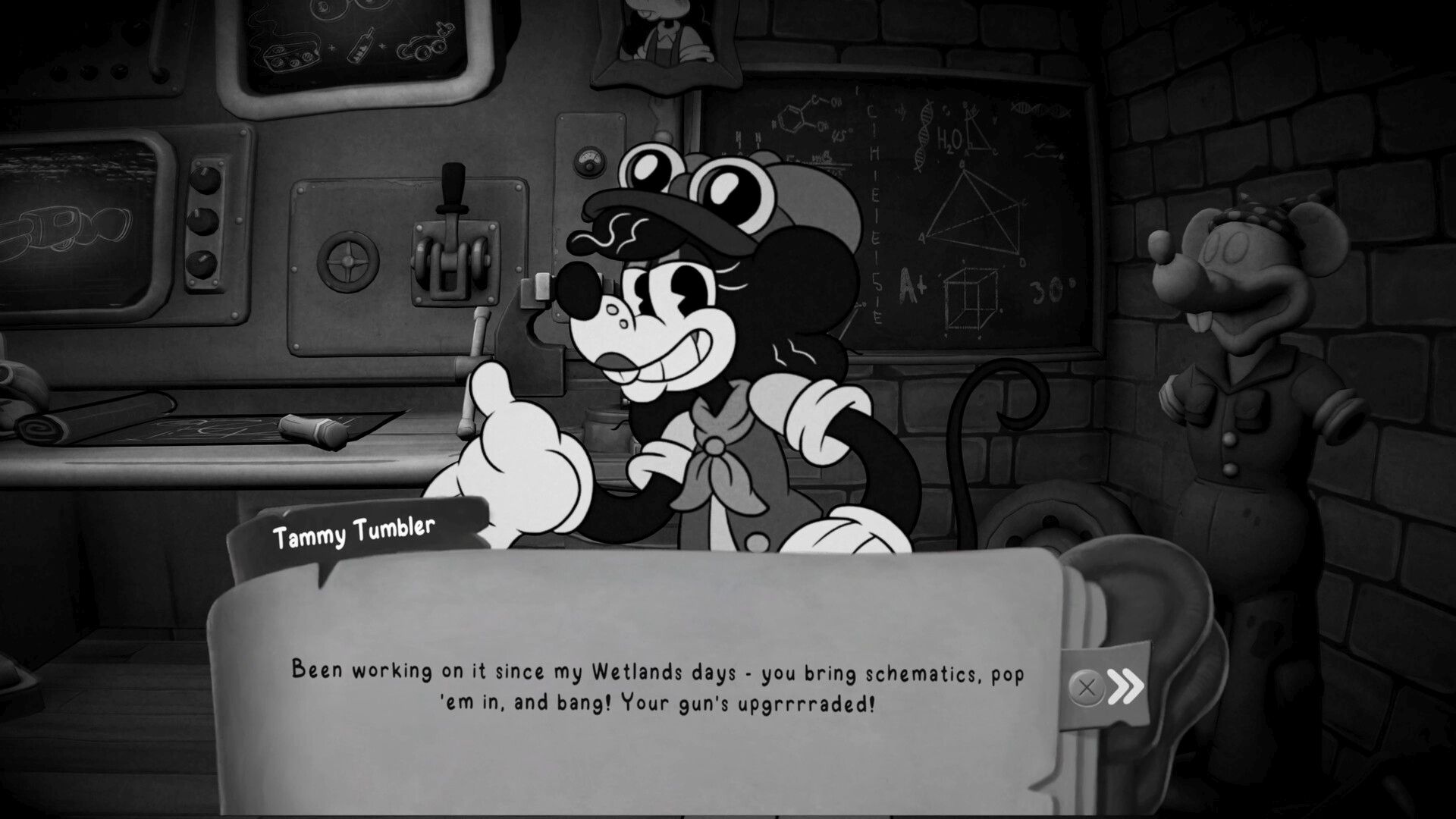
Jack is voiced by the reliably excellent Troy Baker, who sounds like he’s having a ton of fun with the Raymond Chandler-esque dialogue. The cast of principals is uniformly good. Some of them include mechanic Tammy Tumbler, reporter Wanda Fuller, and small-town politician Cornelius Stilton. Aside from their narrative role, the characters perform important game-related functions. For example, Tammy’s garage is where you go for weapon upgrades and new gear. The NPCs push Jack through the main story and provide a number of optional side quest activities.
Cheesy Combat
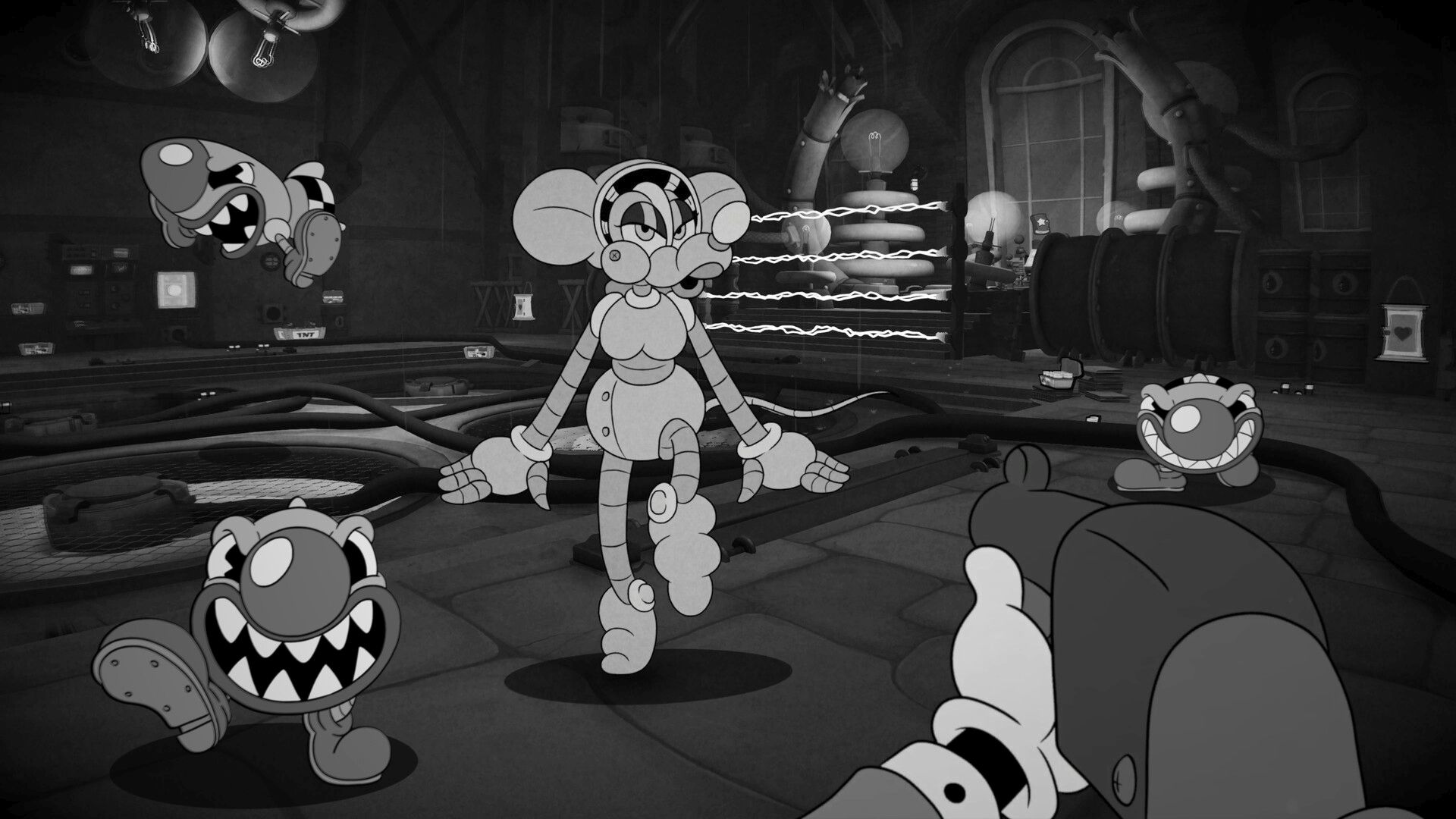
When it comes to combat, Mouse: P.I. for Hire is a combination platter of classic FPS mechanics, cartoon-inspired violence, and rodent-themed gear. Levels abound (depending on difficulty) with ammo and healing pickups. Key story points unlock new weapons, gadgets, and abilities. While Mouse: P.I. for Hire looks nothing like them, there’s more than a hint of Doom or BioShock in the level design. Jack is surprisingly mobile. It doesn’t take long before he’s fluidly double-jumping, air-dashing, and even wall-running around Mouseburg.
Then again, mice can be pretty agile.
There are quite a few shotguns, SMGs, pistols, and special effect weapons to collect. Many of these have a specific purpose, like freezing an enemy into shatterable ice. Mouse: P.I. for Hire has its share of fairly simple puzzles, a lot of secret areas, and a wealth of treasure-filled safes accessible through a lockpicking minigame. There’s a bit of looseness in the camera that can make aiming a bit imprecise. Overall, though, the weapons and gadgets are fun to use, and combat feels good. In keeping with the narrative, Jack will face off with some pretty challenging bosses, both rodent and mechanized. There’s quite a bit more repetition in the ordinary enemies. They’re pretty predictable and typical shooter fodder.
Where Mouse: P.I. for Hire is most clever is stealing classic cartoon-violence tropes, like using an X-ray weapon that turns an enemy into a glowing skeleton. Thematically, Mouse: P.I. for Hire can be dark in the way noir fiction often is. But the dialogue and violence are fairly tame, as shooters go.
The City that Never Sleeps
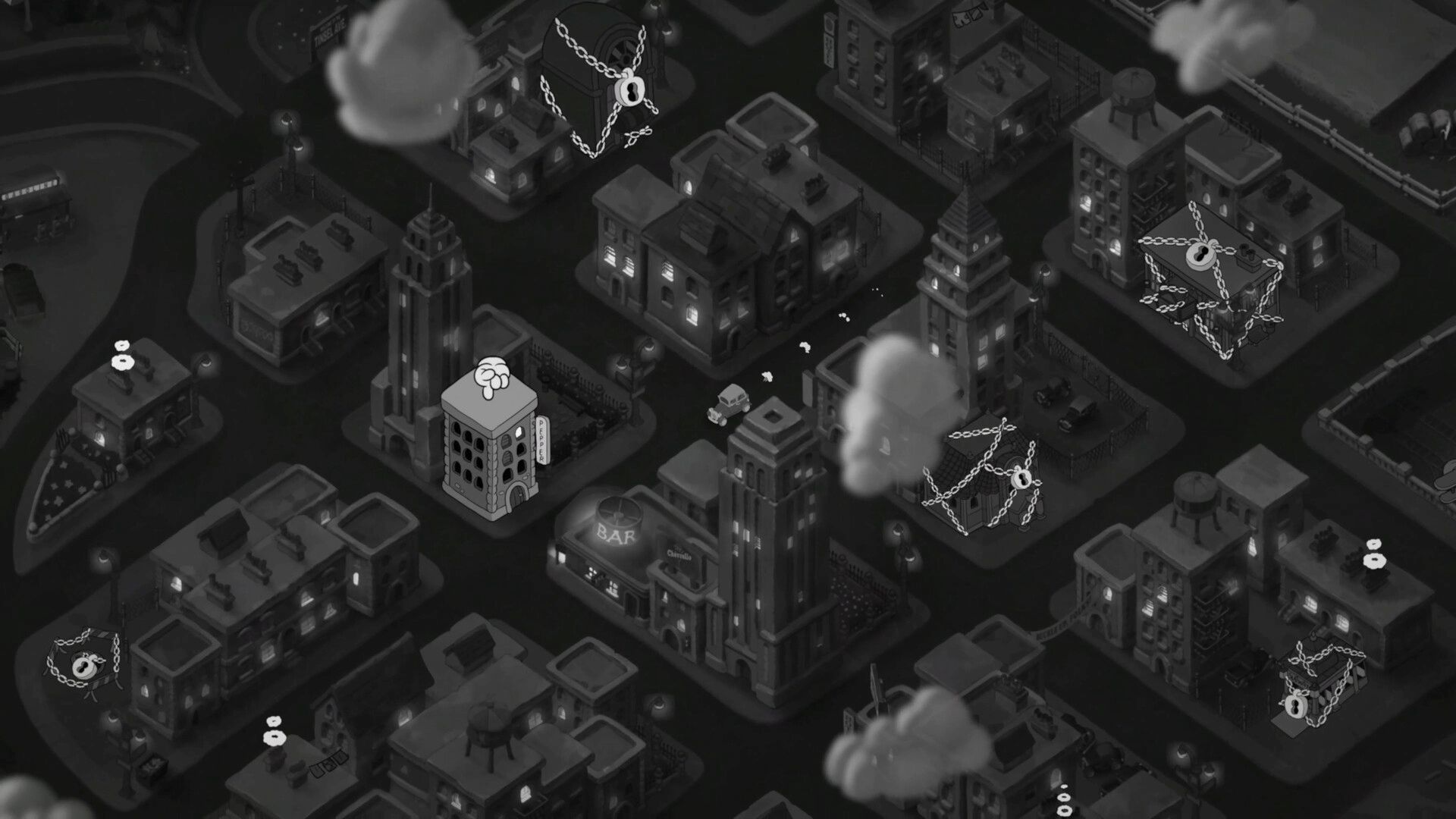
Mouse: P.I. for Hire takes place in three main phases. In one phase, you spend time at your office and immediate environment, piecing together clues and talking to NPCs. In the second phase, you drive your jalopy on a top-down-view overworld map to the next mission. The final phase is the mission itself. The animated overworld map does a good job of giving Mouseberg a specifically fog-shrouded and perpetually dark character.
Aside from its noir narrative structure, Mouse: P.I. for Hire’s art style is a standout feature. However, while some enemies and the main cast are distinctive enough, there’s a lot of visual repetition in character designs and environmental elements. Sometimes Mouse: P.I. for Hire strains to add another rodent-related visual pun or reference, and the jokes don’t always land. After a while, the mouse theme kind of fades into the background a little.
The black-and-white art direction certainly channels both noir films and early animation. But those early cartoons were only a few minutes long, not 12+ hours. I applaud the developers’ commitment to the vision, and it works quite well, but the limited palette can feel restrictive at times. The game’s music by Patryk Scelina perfectly channels classic jazz and big band swing. It’s a refreshing change from the typical testosterone-fueled score for most shooters.
Don’t Get Trapped
Mouse: P.I. for Hire’s combination of classic cartoon animation and hardboiled detective noir is original and expertly blended. Paired with familiar first-person shooter mechanics, it sounds high-concept, but the execution makes it feel perfectly natural. The combat mechanics, movement, and narrative are dialed in. The pacing is a little slow, especially in the first few hours, but Mouse: P.I. for Hire doesn’t take itself too seriously, and the overall energy and clever, fun concept carry it along.
***PC code provided by the publisher for review***
The Good
- Fantastic art direction
- Excellent voice work
- Engaging combat
The Bad
- A little slow to start
- Visually can be a bit repetitive