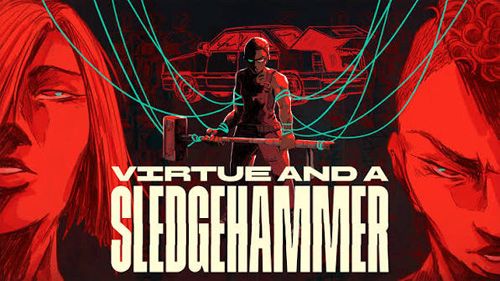
Virtue and a Sledgehammer Review
Millions of words have been written about the importance of making, building, and creating. The impulse for bringing something new into the world does more than result in art. It drives life towards the next generation. Equally important, and less celebrated, is the darker impulse for destruction. The library’s maker space might be full on Saturday morning. But the local Rage Room is booked solid for months. Taking a literal sledgehammer to the world might not be the whole point behind Virtue and a Sledgehammer, but it’s definitely the satisfying core mechanic.
No Spoilers=Short Review
Virtue and a Sledgehammer is an indie game from Deconstructeam. It’s probably best described as a walking simulator, or maybe a smashing simulator. The game’s narrative, tone, and themes are tightly bound with the game’s relatively small number of mechanics.
Because unfolding the narrative is one of the key elements to Virtue and a Sledgehammer, I’ll try to avoid any spoilers. The story premise is pretty simple — if pretty weird — on the surface. You play as Pratelle, a young woman who returns to her childhood home villiage with her dead mother. The village has been abandoned by its human residents and is now haunted by android ghosts, mechanical, block-headed replicas of her former neighbors. Some androids are openly hostile, but many are benign and peaceful and imploring Pratelle for mercy.

Pratelle, her mother, and her sister Nina have, as families often do, a complicated, trauma-filled relationship. As Pratelle smashes her way through the village, she comes across recorded scenes, memories and flashbacks of past and recent events, which I won’t spoil.
Primal Rage
Back in the 1970s, a fringe approach to psychological and emotional trauma was Primal Scream Therapy. The idea was that internalized rage over old trauma could be processed by cathartic screaming, crying, or hitting pillows. There was little evidence that Primal Scream Therapy had long-term benefits, but recently it has re-emerged in places like Rage Rooms. Now, the idea is simply emotional and physical relief and stress reduction. It’s fun to smash things.
And that’s what Virtue and a Sledgehammer is all about. Forget talk therapy. Pratelle finds comfort and emotional release through the act of smashing the hell out of the village and its android residents. However, it’s a little more complicated than that. It’s a no-brainer smashing the “bad” androids that attack her. But what about the androids that are cowering from her in a church? Or simply enjoying a cup of tea in a cafe? If Pratelle doesn’t smash every building, there’s a chance she’ll miss out on a narrative fragment.
So, that’s Virtue and a Sledgehammer in a nutshell. Smash through the town and its residents, reflect on past trauma, and use the cathartic action of destruction to heal.
Blockheads
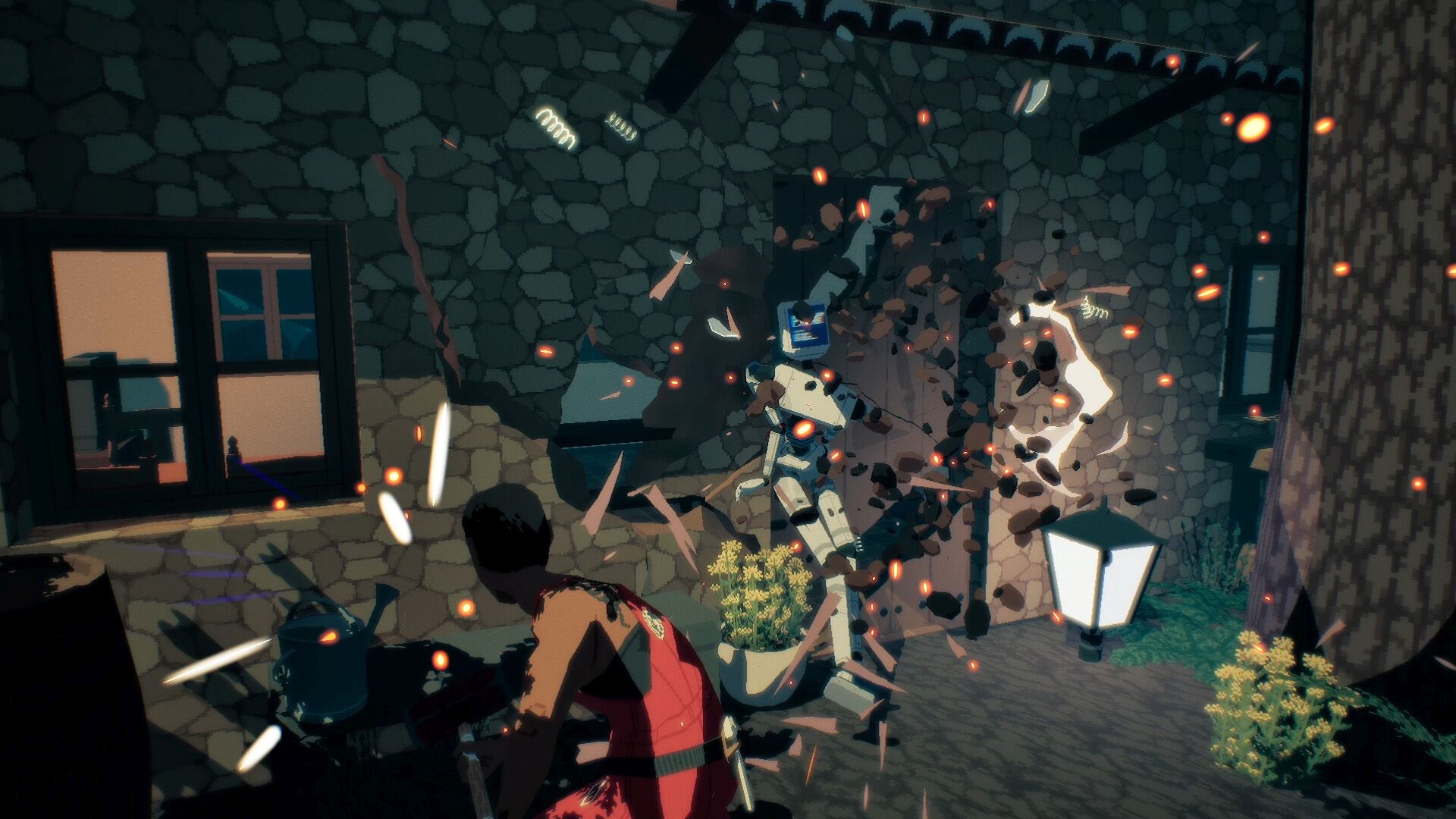
Virtue and a Sledgehammer uses a highly stylized, blocky art style with just enough detail to make its structures and figures emotionally and functionally readable. It took me a while to appreciate it, and I never really vibed with it, but the art is in synch with the story and tone. I can’t say that buildings deconstruct realistically, but there’s enough physics involved to make smashing things satisfying. At least for a while. For me, there came a point where smashing things became repetitive, and I did the least I could just to find the story beats. Who knows, this could be a thematic element. Maybe the therapy was working. As you might expect, the largely electronic score is uneasy and kind of tense much of the time.

Virtue and a Sledgehammer is unmistakably an art-house indie game. It has essentially one mechanic, a very specific art style and themes which games don’t often explore. Lots of games feature destruction, but few explicitly tie it to psychological catharsis and healing. Virtue and a Sledgehammer might be a game that many bounce off of, so I’d encourage anyone who’s intrigued to check out the demo first.
***PC code provided by the publisher for review***
The Good
- Smashing stuff
- Interesting premise
- Distinctive aesthetics
The Bad
- Smashing stuff gets repetitive
- Not much game play or variety
- Tonally stuck in one groove