Tides of Tomorrow Review
If you live anywhere near the ocean or a major body of water, you’ve seen it: floating plastic. It clogs the waterways, kills the marine life, and washes up on the shore, remnants of throwaway consumerism that never dies. Tides of Tomorrow is a first-person action adventure with a resonant message and a seriously intriguing and unique mechanic. The message isn’t subtle, but at least the world is colorful and less grim than it probably should be.
Something New
Before we talk about Tide of Tomorrow’s mechanical innovation, let’s establish the premise. It takes place in a post-apocalyptic world where a catastrophic flood has driven the remnants of civilization onto islands and platforms. Some are collections of traders and shops, others are ragtag amusement parks, and all are a little seedy and crime-infested. What’s left of the world is a dystopian free-for-all, a combination of desperation and end-of-the-world partying. There are several clans and cults with their own survival agendas.
Even worse, the oceans are choked by vast swaths of plastic refuse, and the profusion of microplastics in the world has created a deadly condition called Plastemia, which eventually turns living tissue into plastic. The cure for Plastemia is a drug called Ozin. The overarching goal of players is to secure a steady supply of Ozin to keep the Plastemia at bay. Oh, and the world is being destroyed by plastics, as if the theme wasn’t quite obvious enough. Tides of Tomorrow is not a subtle allegory.
Tidewalker Tales
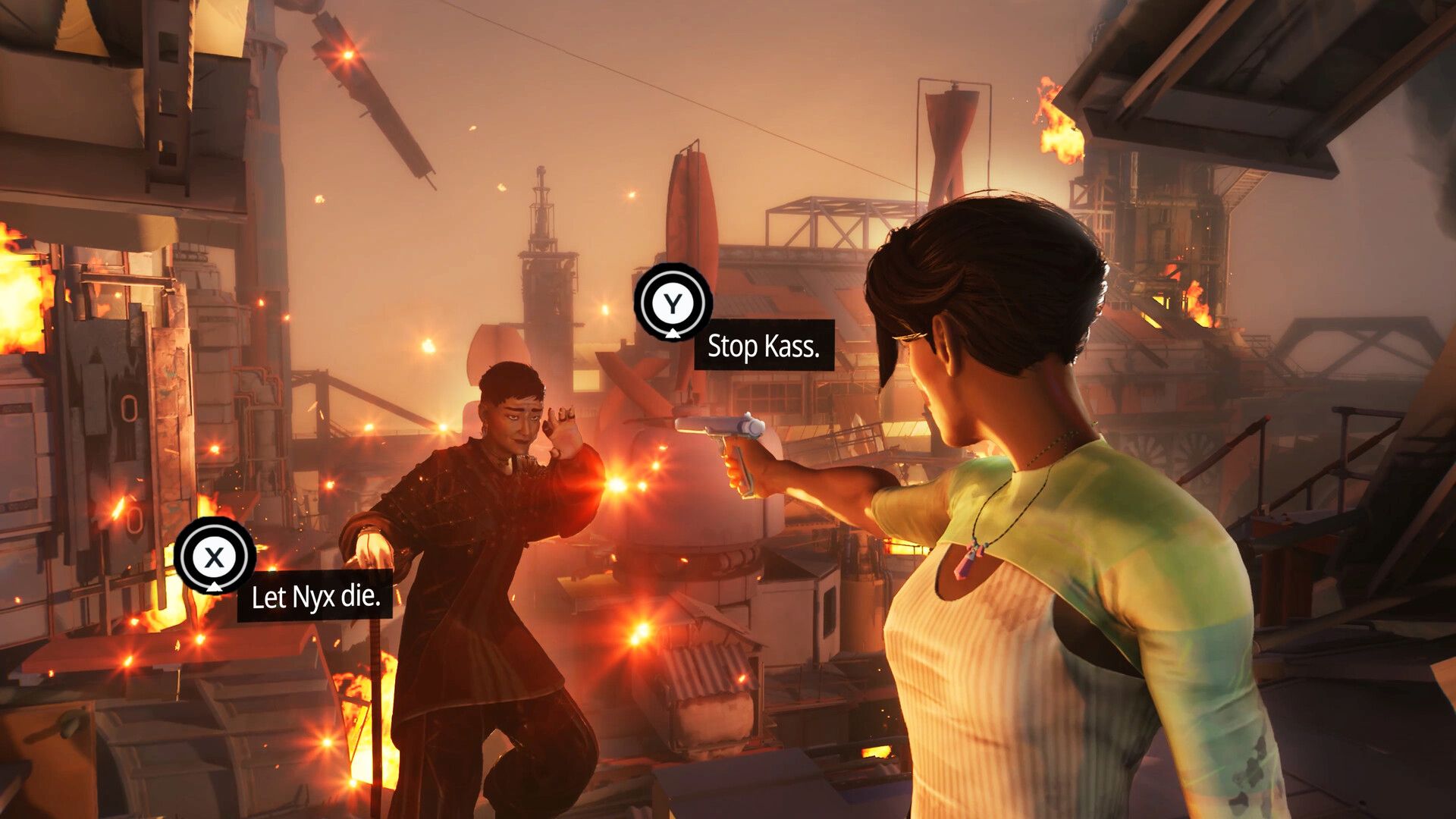
You play as an amnesiac Tidewalker, a person who has sort of psychic connections with other Tidewalkers. Using a special ability, you can see where other Tidewalkers have been and what they’ve done. Here’s where the gameplay hook comes in. At the start of the game you pick a previous human player to follow. The decisions and actions that a specific player has taken — and those that you will take — shape the world state. Their actions have consequences that you will need to adapt to. For example, if the player you follow has angered a guard, the guard will remember be hostile to you. If you choose to help a faction or character, it may have positive ripples for whoever follows you in another game. Your playthrough generates an 8-digit story link seed code that you can share. At points in the game, you can divert from one followed player to another.
While the critical path remains largely the same for everyone, the story link system has a huge impact on side quests and how easy or difficult the experience can be. If the followed player stashed a cache of Ozin, for instance, it can really help you out. It’s a bit like a far more dynamic version of Dark Souls’ player messages. It takes both jolly cooperation and trolling to new and more sophisticated levels. It all works pretty well, but I can’t help but feel Tides of Tomorrow serves mostly as a proof-of-concept for a more sophisticated implementation down the line.
Ghosts in the Machine
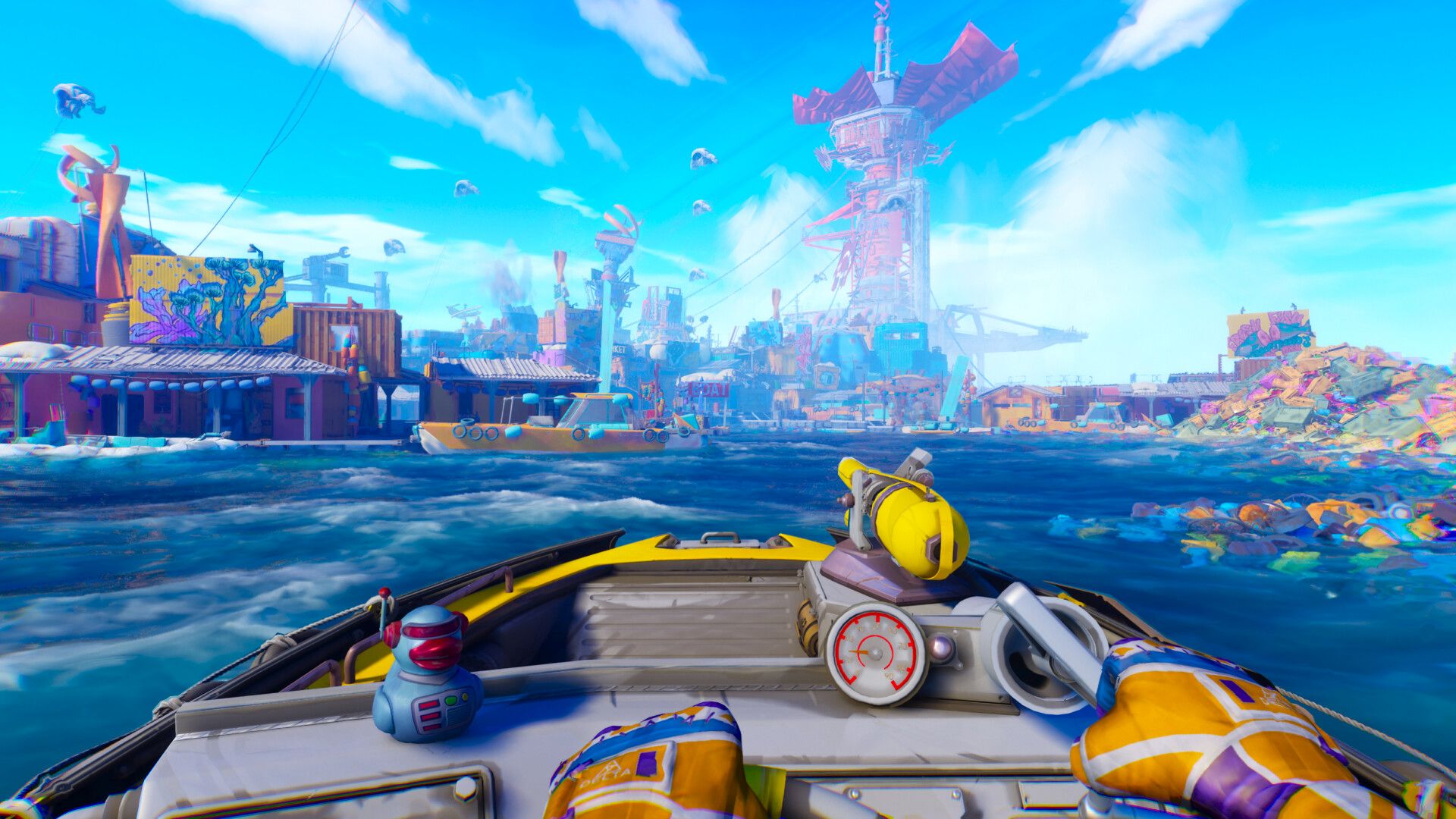
Decouple the story link mechanic, and Tides of Tomorrow is a familiar-feeling first-person action survival shooter game. You have an upgradable boat that serves as home base. Resource gathering, crafting, and performing the usual types of NPC quests work as expected. There’s quite a bit of stealthing around and a few mini-games like power boat racing that tie into the narrative.
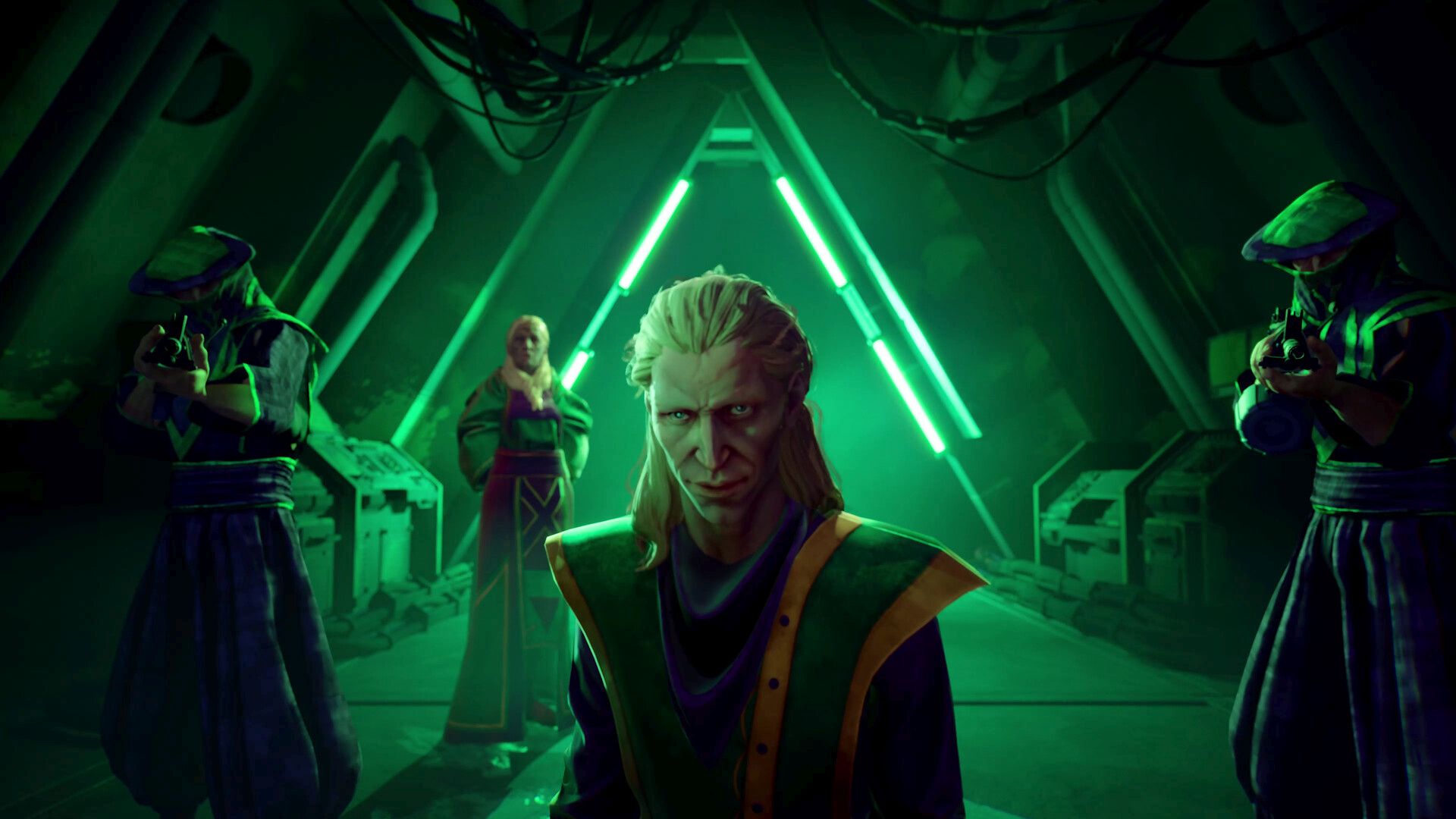
DigixArt was the developer behind Road 96, and the studio obviously has the ability to create memorable characters and dialogue. You’ll meet a handful of standout NPCs that represent different factions or add context to the world and narrative. For example, there’s Nyx, whom you meet in the Pleasureland zone, a collection of diversions, clubs and nightlife. Like all the NPCs, Nyx’s relationship to the player is transactional. She’ll push you closer to a supply of Ozin, but you need to win a speedboat race so she can pay off a gambling debt. To win, you have to beat the time of the Tidewalker player you’re following.
I bring up this example because it highlights one of Tides of Tomorrow’s weakest points: the controls. In moving from Road 96’s narrative-driven design to a more action-focused title, DigixArt has ventured into less assured territory. Generally, movement and controls feel pretty clunky. The speedboat controls with a twin-stick sort of mechanism that’s maddenly imprecise. There’s a clear need for more refinement.
Day-Glo Oceans
Tides of Tomorrow world is described by the developers as Plasticpunk. Floating islands of plastic and cast-off refuse are everywhere, but the environments are bright and colorful, thinly disguising that the world is drowning in plastic waste. Level designs do a good job of emphasizing the claustropbic necessity of building little sanctuaries of commerce and entertainment in a flooded world.
However, I’m a little less sold on the game’s stylized and somewhat distorted character designs. It’s an intentional choice and aesthetically consistent with the world, but there’s quite a bit of copy/paste in the crowd scenes and animations are on the choppy side. Ultimately, Tides of Tomorrow can’t entirely escape its small-team lack of polish.

Sinking or Sunk?
Tides of Tomorrow has a clever multiplayer mechanic that literally and metaphorically demonstrates how our actions, and those of others, send ripples into the world. It has a strong narrative hook and interesting characters, but it can’t quite stick the landing when it comes to gameplay, controls, and polish. I’m looking forward to seeing the story link system further developed in a more refined experience.
***PC code provided by the publisher for review***
The Good
- Unique multiplayer mechanics
- Interesting fiction and premise
- Generally well written and acted
- Good level design
The Bad
- Action elements feel unrefined
- Some awkward controls
- Story link is very dependent on others