Relic: The First Guardian Review
When I was a much younger person and a novice carpenter, I built a chair. Given my lack of skills and appropriate tools, this was a major overreach. The result was functionally a chair-like object. You could sit on it, and it had a back and armrests. But it was also a collection of odd angles, poor decisions, and unfinished surfaces. Relic: The First Guardian is a much better game than my misguided chair was a piece of furniture. That said, it has a lot of rough edges, misguided mechanics, and unpolished surfaces. Like my chair, it’s uncomfortable to spend extended time with.
The Stuff of Legends
Let’s start with Relic: The First Guardian’s narrative. On one hand, the premise is utterly generic, as is the player character. You play a nameless hero in the land of Arsiltus, where a Great Relic has been destroyed, plunging the world into monster-filled chaos. Your task is to explore, fight, and gather the fragments of the Great Relic in order to bring the world back to order. There’s no character creator and the pre-rolled dude could have been an uncredited extra in a thousand other RPGs.
What’s interesting is that while the narrative frame is generic, the quests are often based on Korean folklore, almost always with an added dark twist. For example, a benign fairy tale about a fairy having her wings hidden by a lovestruck woodcutter turns into a story of abuse and torture. In the end, the fairy becomes one of the game’s moster bosses. There are a lot of these dark variants, which have changed direction due to the shattering of the Great Relic. I guess.
Completing any of the game’s quests almost always means following a trail of narrative breadcrumbs. They’re short snippets of story, which is good. But they’re also often poorly translated, an issue that pops up everywhere. One last thing about the story and characters: the NPCs. The exact same NPCs — a blacksmith, a vendor, etc — show up in every camp. If the game explains this, I missed it. Unfortunately, the game uses a mixture of human voice actors and generative AI voices, and the former are only marginally better than the latter.
A Swing of the Axe and a Miss
Relic: The First Guardian is an action RPG. This means that, whatever weakness there are in the story or characters, the game can be redeemed in combat and exploration. It doesn’t quite entirely get there, but comes close.
Credit to Korean developer Project Cloud Games for making some bold choices when it comes to the game’s mechanics. This is not a Soulslike. You do rest and refill at checkpoints, but there’s no death penalty and no recovering dropped anything. The world does not reset when you rest. Enemies don’t respawn — except, weirdly, when they do — so there’s no grinding to earn souls or the leveling the currency du jour. In fact, there is no character leveling at all, nor are there character classes.
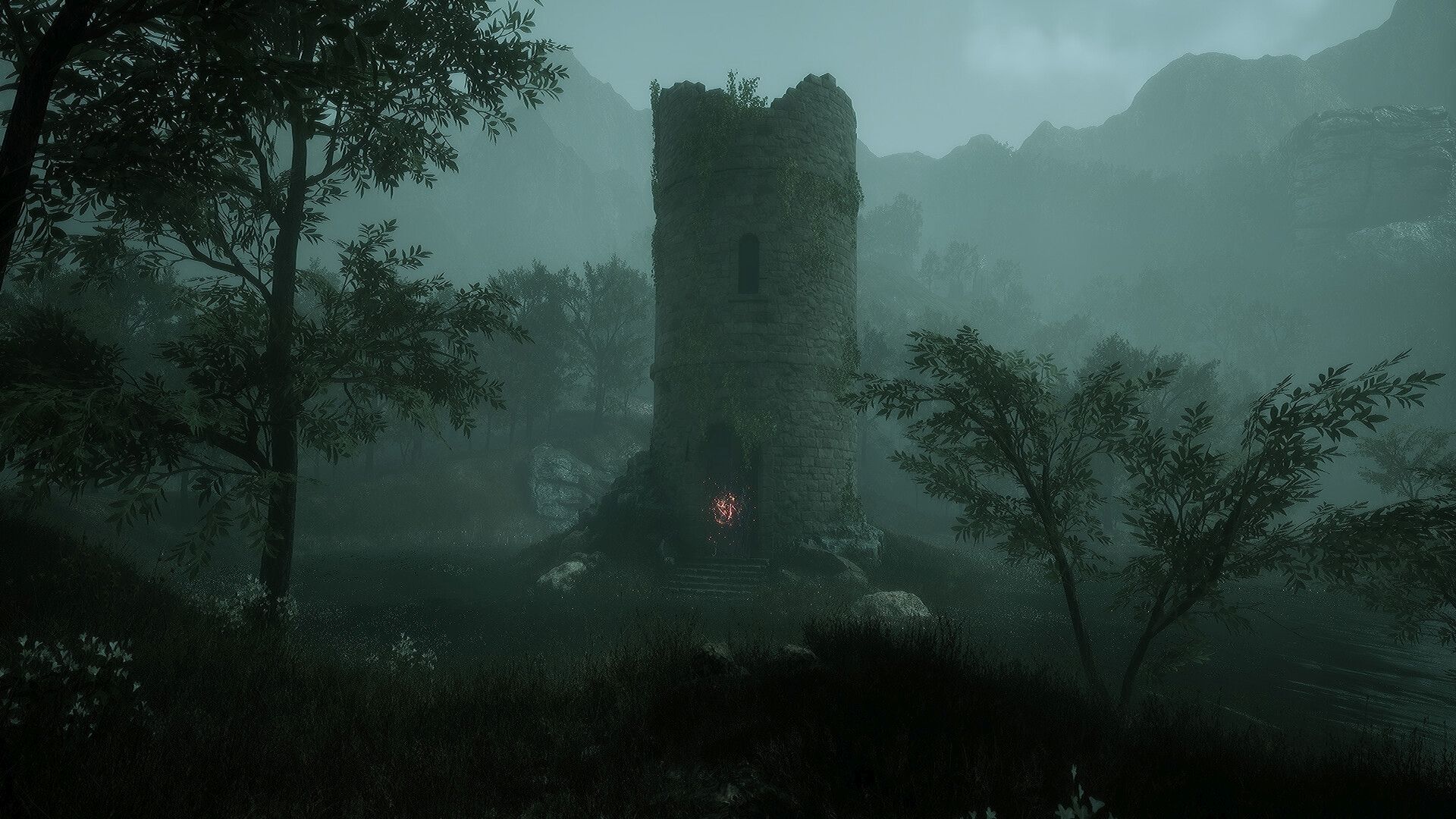
There are only five melee weapons in the game, plus a magic staff, doled out in very widely spaced increments. Each weapon has an upgrade path and a special attacks on cooldowns. Also on cooldown — a very long cooldown — is the character’s basic magic attack. Various elemental spells are picked up along the way — the usual stuff like fire, frost, and poison to start with.
Of course, many players come to the ARPG genre because they want to craft a unique character. Relic: The First Guardian largely takes this away, at least for several hours. If you’re not into sword-and-board combat, you’re out of luck for a long time. All those negatives aside, combat can at times be very satisfying. Both spells and melee feel punchy and rewarding when they connect. In fact, when it clicks, combat is good enough to keep you going when everything else falls apart.
The Boss Problem
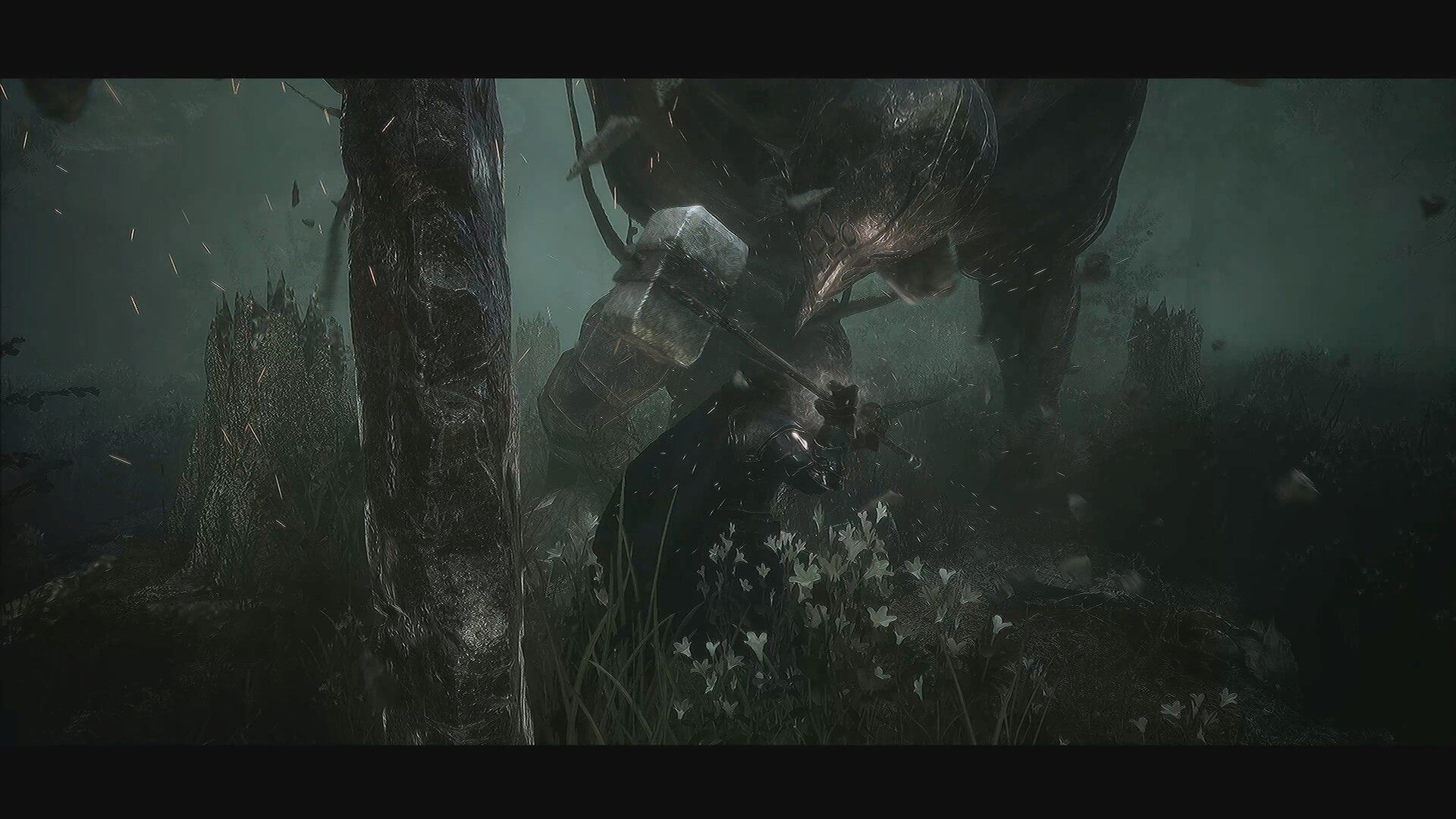
There’s nothing in an ARPG or Soulslike quite so frustrating as an unfair boss, where skill doesn’t enter into the equation. Relic: The First Guardian has a lot of bosses in small rooms or areas, where the camera has a freakout and every other nook and cranny has some sort of health-draining status effect. While you have a fire spell on a literally minutes-long cooldown, the bosses have no problem with spamming them. In a Soulslike, you’d go grind and level up or search for better gear. In Relic: The First Guardian you can buy protective potions in limited quantities, but they aren’t especially effective.
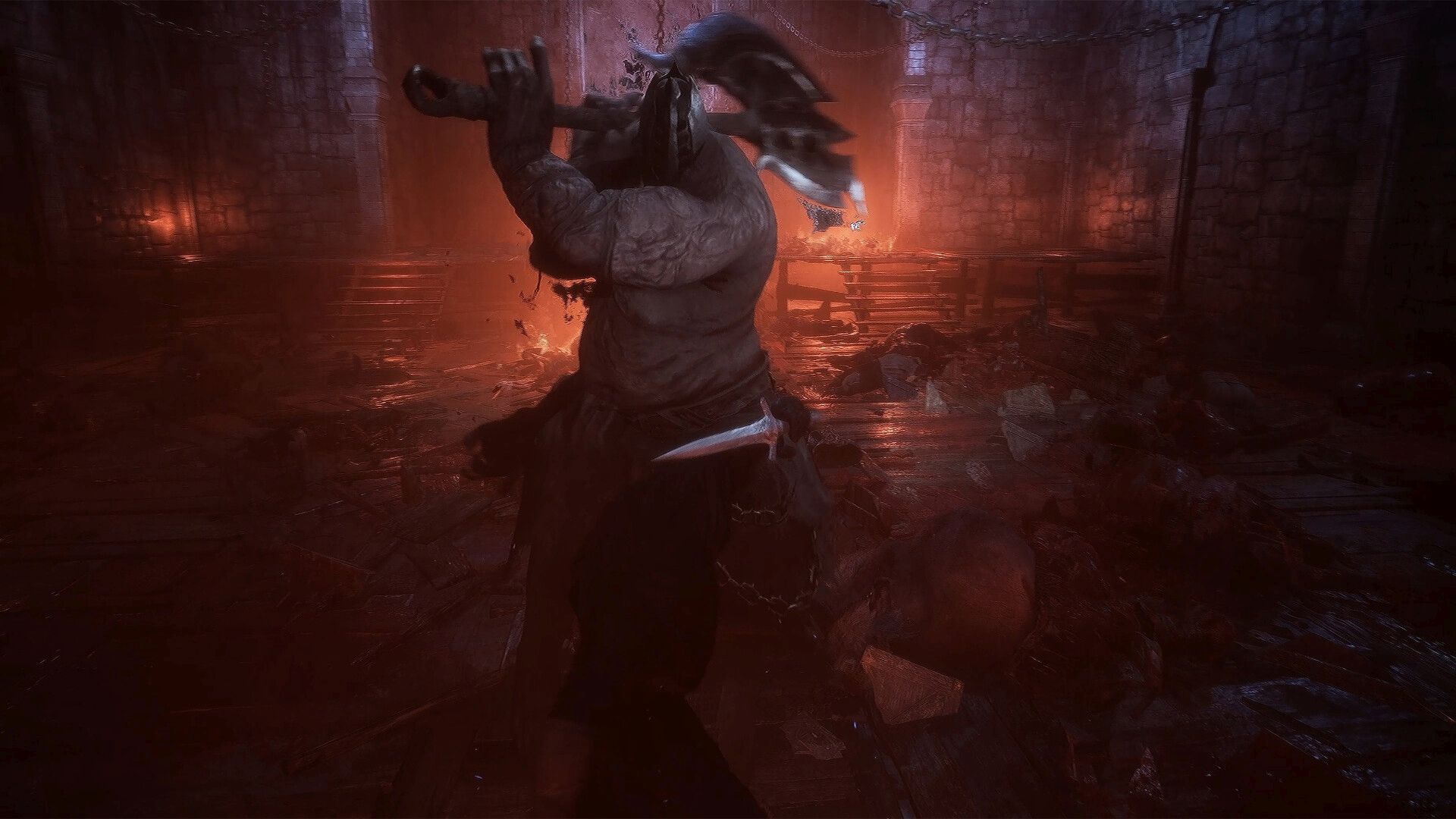
On the other hand, there are an equal number of broken bosses, whose technical issues can be exploited. One ape-like boss just randomly ran around the room. Since his attack was a one-shot swipe, I just watched him try to find me and lobbed spells at him every few minutes. Was it fun? No, no it wasn’t. But it was more fun than being one-shotted and trekking back to his room.
There are quite a few rest points out in world, but unfortunately, fast travel is only available between camps, which are widely spaced. Since enemies don’t respawn, moving around the map eventually just means hitting the run button and zoning out.
Pile On
Relic: The First Guardian isn’t open world, but “open zone,” with three large explorable areas with distinct geography, flora and fauna. Although character models are a few degrees behind the curve the world itself is often attractive. The same can’t be said about the game’s sometimes atrocious sound design. Bugged loops that fade in and out in weird places, spatial placement that actually misleads the player and poor mixing all make an appearance.
Relic: The First Guardian is not so messy as to be unplayable. In fact, the game’s combat can be excellent at times, and the use of Korean folklore twisted into a dark narrative is an interesting idea. But the devil is in the details, and Relic: The First Guardian is bedeviled by issues with balancing, character progression, bugs and some questionable design choices. I think it’s redeemable. If the developers address some of the problems, it’s a game I’d be happy to return to.
***PC code provided by the publisher for review***
The Good
- Interesting quests
- Occasionally fun combat
- Attractive world design
The Bad
- Balancing issues
- Bugged bosses and general bugs
- Slow progression
- Audio problems