Reanimal Review
Here’s the challenge: writing a spoiler-free review of a game that pretty much depends on moment-to-moment surprises. Let’s give it a try. Reanimal is a game that’s built on atmosphere, an unfolding narrative that’s unsettling from start to finish and tried-and-true puzzle mechanics. Whether alone or with another player, Reanimal will work its way under your skin and burrow in your brain.
The Barest of Bones Story Description
The game starts with a lonely image of a boy in a boat, eventually joined by his sister, landing on a desolate beach. It’s a dark, moody landscape seemingly empty of life. Eventually, the pair reach the crumbling remains of a factory and rail yard and the story starts to kick in. The opening moments are both tutorial and narrative premise and they waste no time.
It doesn’t take long for a shadowy figure to slip in and out of frame. The siblings follow it into a restroom where they find a grotesque monster slumped lifeless on the floor with a gaping hole where its chest used to be. The boy finds a toilet plunger and extracts the limp husk of what was maybe a human from the plumbing. Disturbing and a little bit funny, that image is the game in a microcosm.
Every new environment is surreal and discomforting. The questions start to queue up: who are the siblings, where are they and why have they come to this place? What happened to the people? Why are there monsters?
Some Answers but Mostly Questions
I won’t spoil the terrifying adventure much beyond what’s already generally known. Two orphaned siblings have come to the island to rescue three others and to escape from both the landscape and some disturbing events of their past. The monsters take many shapes — sometimes vaguely human, sometimes more animal — but always hunt the pair with deadly intent. Mistakes often mean perishing in the maw of a hungry beast. Reanimal is much more explicitly violent — though not gory — than the developers’ Little Nightmares games.
While the environments suggest industrial decay, the monsters and their menacing pursuit are solidly the stuff of childhood nightmares. Towering father figures and stuffed animal-like creatures combine with the feeling of being alone and lost. Reanimal is like a greatest hits of childhood fears. Which, of course, most people never really outgrow.

As the narrative deepens and the story arc widens, the linear nature of the game’s opening hours begins to offer alternative side-paths and emotional cul-de-sacs to explore. The developers have hinted at additional content down the line. Reanimal is a fairly compact experience, but it is in scale with its story, mechanics and world.
Puzzles and Solutions
Reanimal doesn’t stray far from the mechanics and aesthetics that defined the Little Nightmares series. There’s no UI, controls and action prompts are minimal, the color palette is nearly monochromatic and the sound design is subtle. Stealth is still incredibly important. Puzzle design is generally made from familiar ingredients, like finding and using objects to open doors or move further through the environment. Unlike some puzzle games, the tasks in Reanimal rarely seem arbitrary over over-gamified. In other words, the puzzles aren’t there simply to pad out the time and give the player something to do.
Two big changes help define Reanimal from Little Nightmares 1 and 2. First, it’s a proper co-op game, with two players taking control of the dual protagonists. But this change is more than mechanical. After all, what’s better than watching a horror movie in a crowded theatre where the jump scares are a shared experience? Reanimal can be played solo, with AI controlling the other character, and it works just fine. However, it’s a lonelier few hours with no one to share the terror with.

The other change is that the camera is now always centered on the characters, restricting the view of the environment. On the positive side, this further creates a feeling of claustrophobia and unease, since you often don’t know where the monsters are coming from. More negatively, it also makes reacting and escaping more awkward.
Fear and Frustration
My biggest complaint about Reanimal was that, while I knew what I needed to do, sometimes the game made it frustrating to carry out those actions. Many monster escapes depend on fast escapes, made difficult because controlling the characters to run in a straight line seems doomed to failure. This can be — literally — doubly annoying in co-op. Maybe that jankiness is a feature, not a bug. If so, I think it was misguided. Awkward controls don’t add to the terror or tension.
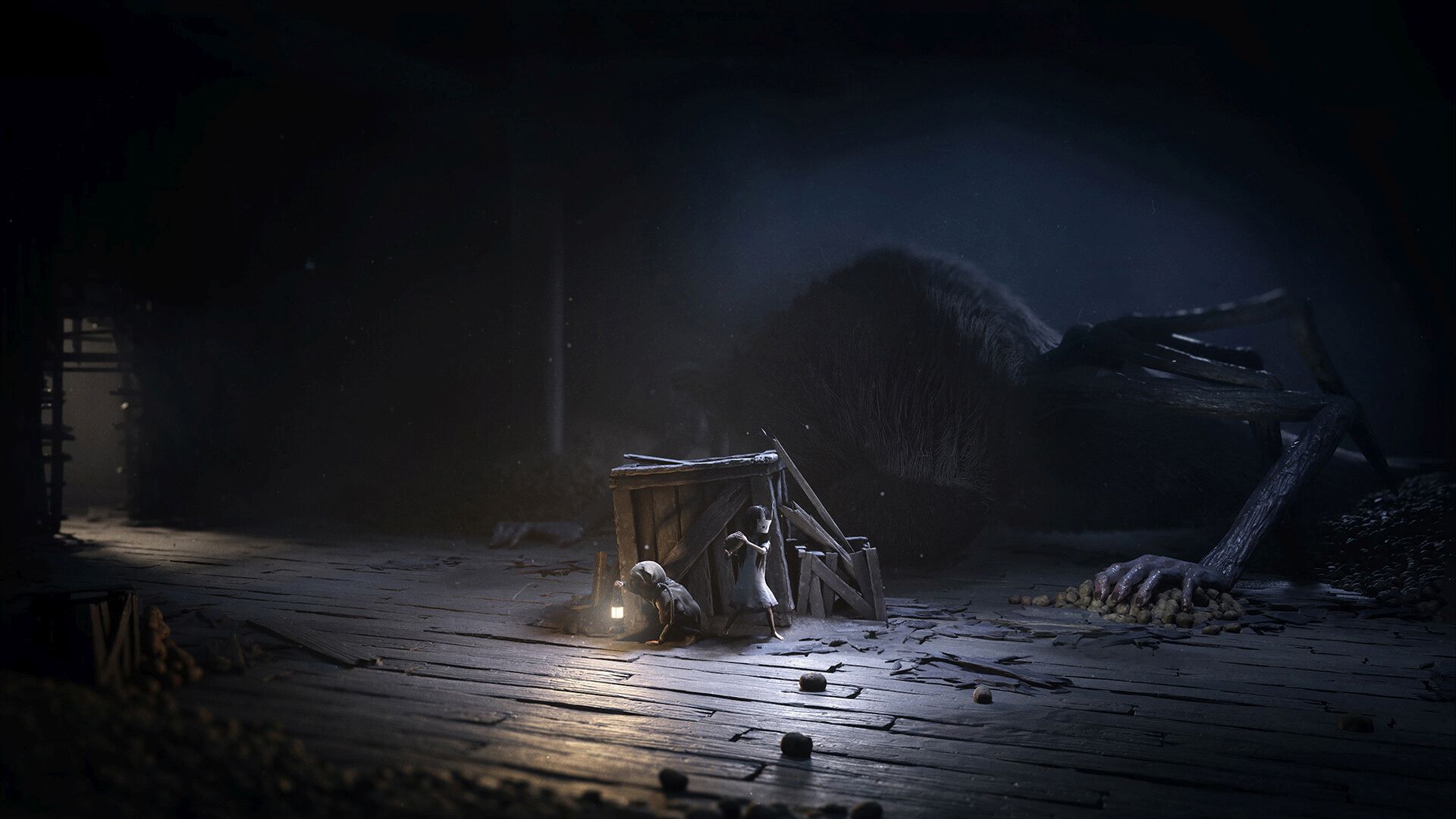
Reanimal takes its cues from primal childhood trauma and the deep-seated fears that most people carry through life. It adds layers of familiar-feeling puzzles and terrifying monsters to a game that looks a lot like a Little Nightmares sibling. With the ability to play the game with another terrified human, Reanimal is all the more scary and memorable.
***PC code provided by the publisher for review***
The Good
- Effectively disturbing world and monsters
- Beautiful art
- Logical puzzles
- Co-op works well
- Resonant themes and images
The Bad
- Frustrating controls
- Purposely narrow camera framing
- Tonally a little monotonous