Kiln Review
When it comes to game genres, none has been more recently popular with developers than 4×4 multiplayer pottery brawlers. This is, of course, a phrase no one has ever said. Tim Schafer and the always-clever folks at Double Fine Productions hope to get the ball — or jug — rolling with Kiln.
Kiln is a game with a wacky premise. Your job is to craft a vessel for a little spirit to inhabit. Spirit-contained pot then battles alongside three other ceramic containers to try and douse the kiln of an opposing team with water. It sounds like something scribbled on the back of a bar napkin after a long day at a game convention. Improbably, the core concept works pretty well.
Throw Down
After an entertaining tutorial that introduces the player to some basic pottery-related physics and game mechanics, they find themselves in The Wedge. The Wedge is the game’s hub area, a social center and the location where players craft new pots and add upgrades. If you’ve done any kind of work with pottery, you’re already noticing that there are a lot of ceramic-making puns in the game.

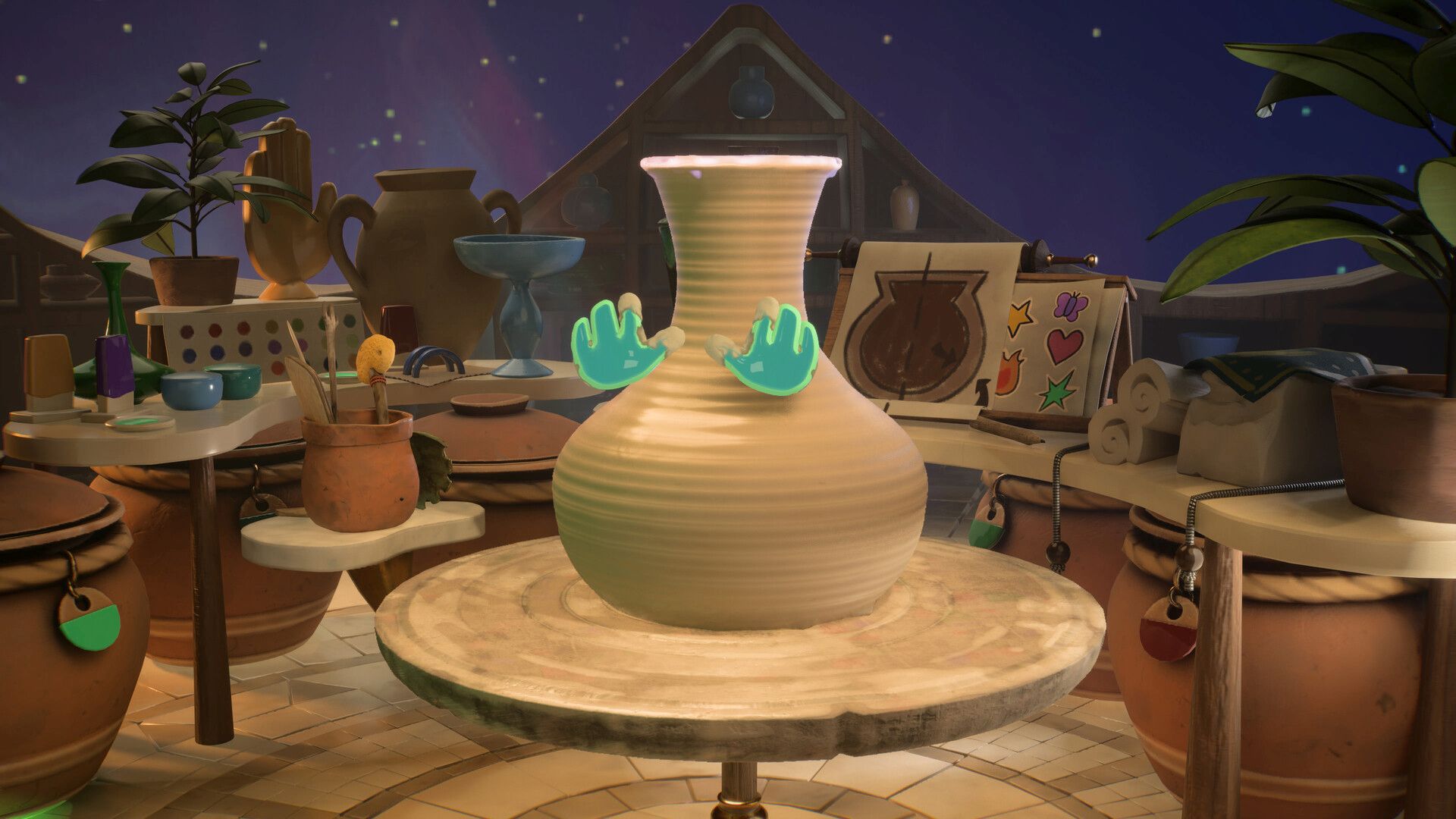
I’m sure there’s already a pottery-making sim, but if there isn’t, Kiln should be it. Kiln has a surprisingly deep and relatively accurate set of pot throwing tools and techniques. You start with a ball of clay on a wheel and use virtual hands to pull, push, and prod the material into a recognizable pot, plate, jug, bottle or cylinder, the game’s archetypes. In case you’re wondering, yes, it’s possible to create some anatomically inspired pottery as well as unholy abominations.
Even the weirdest pot will be sorted into an archetype, which gives it specific starting attributes and functions. For example, plates can perform hockey puck-like ricochet attacks, and cylinders turn into heavy weapons. Cups can launch scrapnel-like popcorn. Additionally, players can upgrade their pots with add-ons like handles, different glazes, and hats, all of which impact performance or add special abilities. The game has a leveling system that increases the versatility of the player’s ball of clay.
Drenched in Fun
All that pottery making is fun, but of course it’s a means to an end, which is the 4×4 ceramics-based brawling. The five themed starting maps are relatively compact but each have a wealth of strategic features to master. Dionysus’ Boogie Lounge, for example, as a number of side paths that allow for sneak attacks on the enemy kiln. The maps have obviously been influenced by MOBAs, as they often include lane-type structures that are obviously built for a particular type of pot.
Teams consist of four players and the winning strategy is to vary the types of containers. During battle, pots can be damaged in all sort of ways, including enemy attacks and environmental hazards. There are health pickups and crack-mending items. When a pot is completely shattered, players can choose to respawn in any pot they’ve crafted. This adds a nice strategic wrinkle.
Not Quite Baked
Although the developers have promised new maps, stickers and other items, Kiln launches with only a single mode called Quench. It’s fun as far as it goes and the game’s mechanics and premise are clever, but it doesn’t take long for matches to grow familiar. It’s not always easy to fill in the ranks for a full team.

I like Kiln’s cheeky humor and colorful style. I’m frankly amazed the game is more than just a wacky premise. The pottery-making sim aspect isn’t half bad. Unfortunately, Kiln feels constrained by a lack of alternative modes and maps, with systems and mechanics that could be deeper. In its present state Kiln is engaging for a while, but the fun doesn’t last long enough.
***Xbox code provided by the publisher for review***
The Good
- Original premise
- Colorful, lighthearted presentation
- Battles can be fun
- Well-done pottery making sim
The Bad
- Not many maps or modes
- Matchmaking is difficult
- Gets repetitive pretty fast