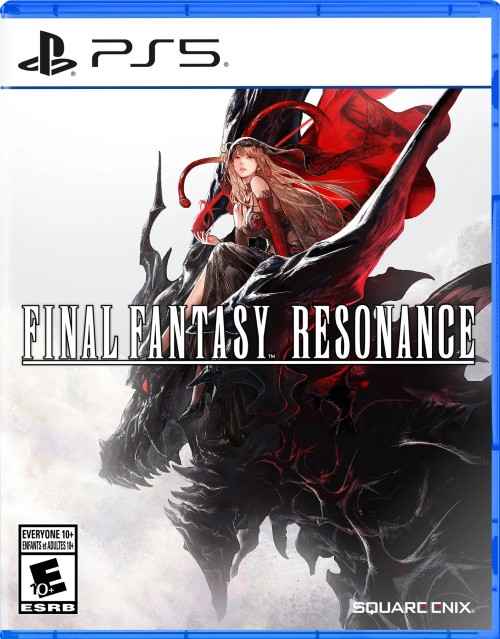
Final Fantasy: Resonance Review
When Final Fantasy: Resonance was announced, I was overjoyed. It was a traditional, turn-based Final Fantasy game, with HD-2D visuals! This felt like a long time coming, and seemed too good to be true. After all, Square Enix just admitted, after the success of Clair Obscur: Expedition 33, that there’s room in the world for new turn-based JRPGs. Then my heart sank when I found out Final Fantasy: Resonance was a console version of the Final Fantasy: Brave Exvius mobile game. Mobile JRPGs have a gatcha stink that makes me not even consider them an option. But then news came out that the game was actually a massive reworking, in the same vein as Octopath Traveler 0 and Fantasian Neo Dimension. We’re about to find out if Final Fantasy: Resonance is a Square Enix return to form, a cheap cash-in, or something in between…
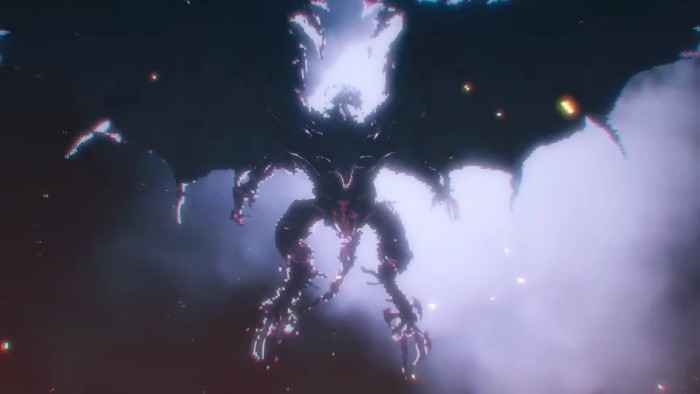
Final Fantasy: Resonance’s story is about Rain and Lasswell, Knights of the Kingdom of Grandshelt. They meet a mysterious girl named Fina who guides and heals them, but has no memory of her past. But the game begins like Final Fantasy VI, with the player in control of a powerful sorceress. It’s hard to tell if she’s good or evil. She has an encounter with a group called The Sworn Six. They’re led by Umbra, Veritas of the Dark. Even though Umbra has shades of classic Final Fantasy villains Garland and Chaos in his design, The Sworn Six also look like they could be classic series Heroes of Light. At the end of the opening sequence, Umbra destroys the Earth Crystal.
A Tale for the Fans
Final Fantasy fans will know about the series trope of the world having elemental Crystals that act as life force to the planet, and often give powers to heroes. The people of Final Fantasy: Resonance’s world believe that if all the Crystals are destroyed, so will the world be. The story is about Rain, Laswell, and Fina’s quest to protect the Crystals. It does a great job of setting up mysteries by incorporating series terminology. There’s a looming threat to the world could create “a world of ruin”. Early on, Rain says, “I know that the Crystals are special, but… I just can’t get my head around how they could be related to that level of chaos”. These potential allusions to major plot points of past Final Fantasy games enrich the narrative even more for series veterans.
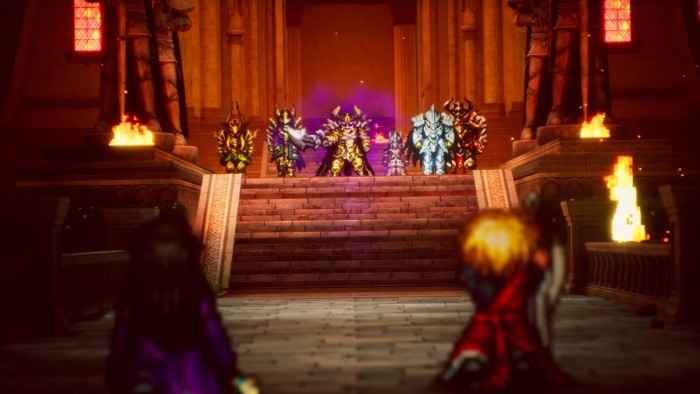
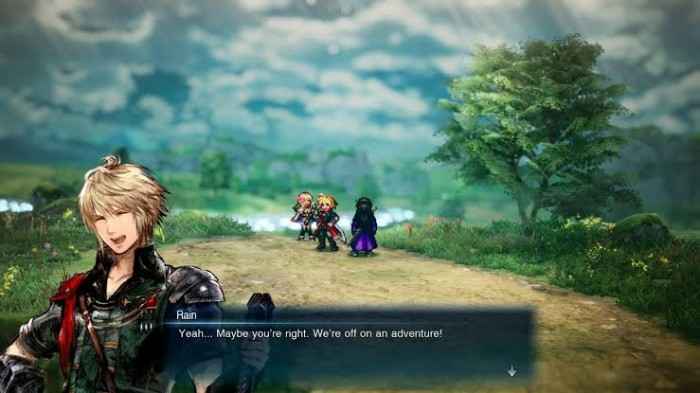
I love the way that Final Fantasy: Resonance’s story is presented. Cutscenes don’t have the static overhead POV of old school JRPGs. They have dramatic camera direction like the battles in PS1-era Final Fantasy titles. Some environments have fixed camera angles that make the game feel thematic during important moments. These also harken back to Square Enix’s PS1 days of pre-rendered background staging and direction. The pixelated sprites are incredibly detailed and are expressively animated during dialogue sequences.
Pre-ATB Final Fantasy Combat
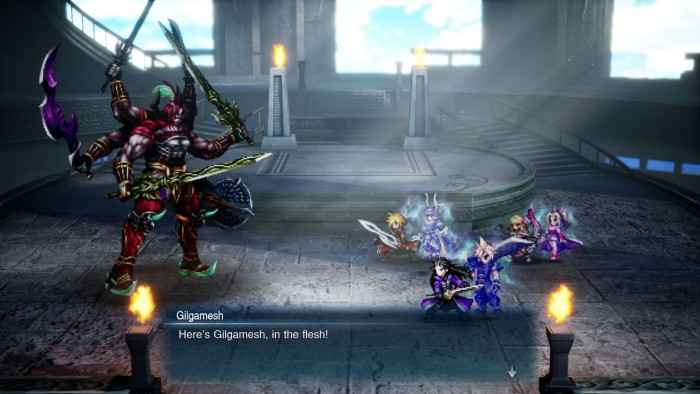
Final Fantasy: Resonance’s combat is turn-based. There’s no ATB system in play. While it would have been appropriate, and I miss it, the game’s turn-based battle system functions wonderfully without it. Turn order is displayed in the top left of the screen. Characters have the actions: attack, skill, defend, items, and escape. Skills are character-specific abilities. These include all kinds of magic, special physical attacks, buffs, debuffs, etc. Skills are different for each character, and are automatically gained at predetermined levels. This makes each character feel unique and carefully crafted. Characters have a limit meter, which activates a powerful limit burst attack. These can be used at any time after the meter fills.
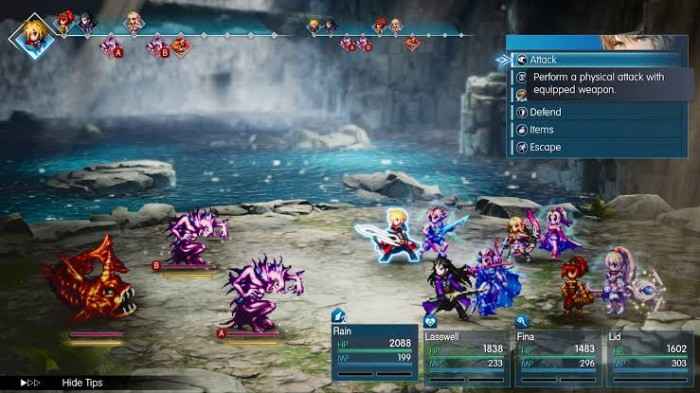
Enemies have elemental weaknesses, which appear as question marks until the weakness has been hit. After being hit, enemies will be marked with their weaknesses, so players can easily keep track. It’s a simple system, but it encourages experimentation and use of all skills. Enemies have stagger gauges, which are greatly affected by elemental weaknesses. When they’re depleted the enemy will be temporarily unable to act, and it will take more damage. Some attacks don’t deal great damage, but will deal great stagger damage. Characters who stagger enemies are granted an extra action. If all enemies are staggered in one turn, including single enemies, a sweeping stagger gets triggered, which grants all party members an extra action. This can also be a Vision action. The player can also strategically time staggering enemies to prevent powerful telegraphed incoming attacks.
Vision Job System
Visions are Final Fantasy: Resonance’s version of summons. They stay out in battle and have special attacks. They also function like Espers in Final Fantasy VI, in that they grant additional abilities to characters who have them equipped. Battles grant MRP, mastery points, in addition to experience points. These level up Visions, which unlock abilities. Not only are Visions summon attacks, but they act as Final Fantasy: Resonance’s version of job classes. Abilities levelled up on Visions usually have to have the Visions equipped, but stat increases are usually permanent. The earliest Visions are basically generic job class characters like white and black mages, but eventually they become classic summons and major Final Fantasy franchise characters. This is an elegant and addictive addition to the game’s systems.
Battles are random encounters that don’t appear on the dungeon map. But there’s a radar on top of the minimap that turns from blue, to yellow, to red as the player is about to enter an encounter. This strikes a nice balance of feeling like an old Final Fantasy game, without upsetting modern players who hate random encounters.
A World Map!
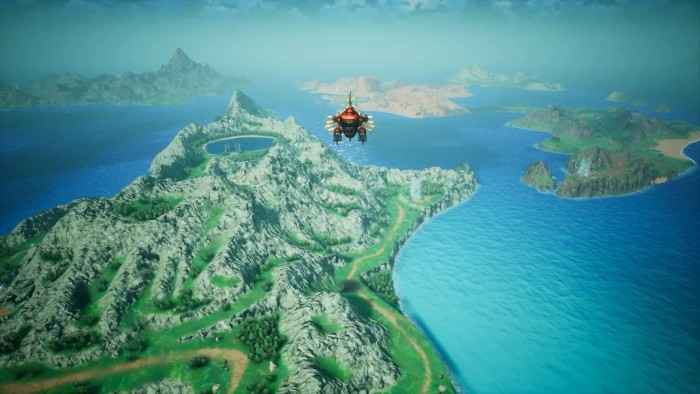
I was so happy to find out that Final Fantasy: Resonance has a world map! It’s a gorgeous HD-2D world map with treasure, secrets, and encounters! Dragon Quest, the very first JRPG, was 90% world map. As JRPGs have modernized, there have been less and less world maps. This is a real shame because for some players, they’re tied to the core of what makes a JRPG. I don’t think all JRPGs have to have them, but only a tiny fraction still do. World maps are a real treat in a post-Final Fantasy X world.
Final Fantasy: Resonance’s difficulty can be changed at any time outside of battle. The harder the difficulty, the greater the player rewards are. I’m the kind of player that likes to play everything on normal difficulty to get the intended, balanced experience. But I love the idea of hard difficulty giving more mastery points, because the player can increase it in an area where the basic battles get too easy, in order to level up more. This streamlines the need for level grinding.
The Most Gorgeous Visuals Ever
In general, Final Fantasy: Resonance’s presentation is incredible. The HD-2D graphics style is one of my favorite trends in modern video games. The cutscenes have next-level stunning pixel art. It’s so impressive that it almost looks like rotoscoped CG cutscenes. The stunning character portraits strike a balance between Yoshitaka Amano’s art, and modern anime aesthetics. But they’re also different from both, and have an identity of their own. I don’t claim this lightly: Final Fantasy: Resonance, for my taste, might be the most visually gorgeous video game of all time.
Final Fantasy: Resonance’s score is fantastic. It mixes classical fantasy music, with pieces that have more exotic flair. Some songs sound like they could have been composed by Howard Shore, while others sound like they could have been composed by Nobuo Uematsu. There’s even occasional experimentation with sounds that bring uniqueness to different melodies, such as Celtic instruments. The game begins with Nobuo Uematsu’s Final Fantasy series theme. There are different bits of music from across the Final Fantasy series peppered throughout the game in appropriate moments. The music is a treat that really adds to the game’s celebration of the Final Fantasy series as a whole.
The Only Blemish
Maybe the only blemish on this near-perfect game is that the English voiceacting is hit and miss. Some of it is excellent; most of the main characters sound good. But there is a crop of actors from the bad anime dub regulars that make some characters sound really disingenuous. It bothers me how many modern anime voice actors sound really breathy, or like they’re doing an impression. But this is a pretty minor nitpick in the grand scheme of this game.
I was shocked by how much I loved Final Fantasy: Resonance. I loved the game so much that I was regularly, randomly getting emotional at the realization that this was something I wanted so badly. To some people, including myself, Final Fantasy: Resonance is going to be a dream come true that fills a void for new traditional JRPGs. It’s not a strategy JRPG, and it’s not an action JRPG; Final Fantasy: Resonance is a perfection of classic story-driven turn-based JRPG tropes. It has plenty of quality-of-life features, but it’s not trying to experiment or evolve the genre. The game is a much-needed and much-desired back-to-basics, made by the giant company that created the genre. Final Fantasy: Resonance is my game of the year right now and is a must-play for all JRPG and Final Fantasy fans.
***PS5 code provided by the publisher***
The Good
- Maybe the most gorgeous pixel graphics ever
- Perfect traditional JRPG story and gameplay
- Celebration of Final Fantasy series tradition
The Bad
- Hit and miss voiceacting
- For JRPG fans only
- ATB system is missed