Civilization 7 – Test of Time
Firaxis released the latest installment of the venerable Civilization series a little over a year ago on February 11th, 2025. It was one of the most divisive entries in the series. I generally liked it and gave it a warm review, but the game has struggled to find the same audience as the last few entries in the series. The Firaxis dev team has been hard at work that entire time, trying to figure out changes that would entice players to return to the game via a major new update, the Test of Time. The changes are sweeping, and I find myself playing Civilization 7 with a fervor that had never grabbed me before.
The Dawn of Man
At its foundation, a lot of Civilization 7 remains the same. The roster has grown a bit, but we have the same roster of leaders. You still use settlers to found towns, which you can upgrade into cities and use those cities to build units, buildings, and wonders. There are a handful of set victory paths, allowing you to focus on military, economics, culture, science, or getting the highest score in the game.
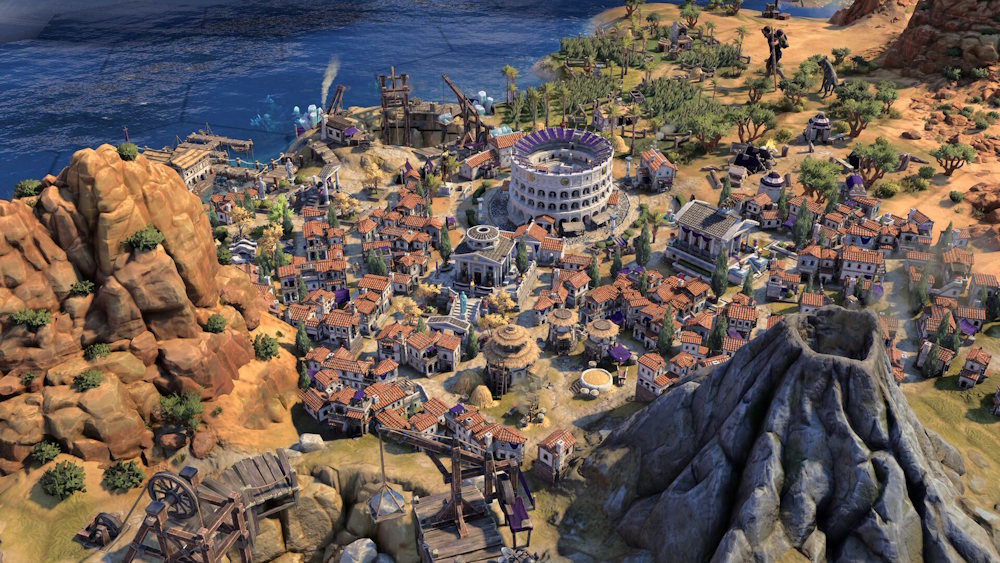
New rules, big and small, are innumerable. I encourage long-time fans to check out the Firaxis patch notes for the full roundup of changes. I will try to hit on the big auditions as Firaxis would tell it, but I will also try to highlight a couple of small changes that had a major impact. Suffice to say, the changes are positive and I think allow Civilization 7 to better realize its original vision, which was always bold and enticing.
Mayans on the Moon
The headline feature is the ability to play as one Civilization for your entire run of the game. This is slightly inaccurate- there is now a lot of flexibility in how you play, and keeping your culture throughout the ages is one viable option. The truth is, you can now play any Civ, from any era, with any leader, at any time. This can lead to some truly gonzo combinations, like Harriet Tubman leading Iceland in the Modern Age or new leader Alexander the Great in charge of ancient Mexico. This doesn’t mean you can fly fighter jets in ancient times, but if you are a minmaxing fiend, there are more options than ever to build a complex strategy.
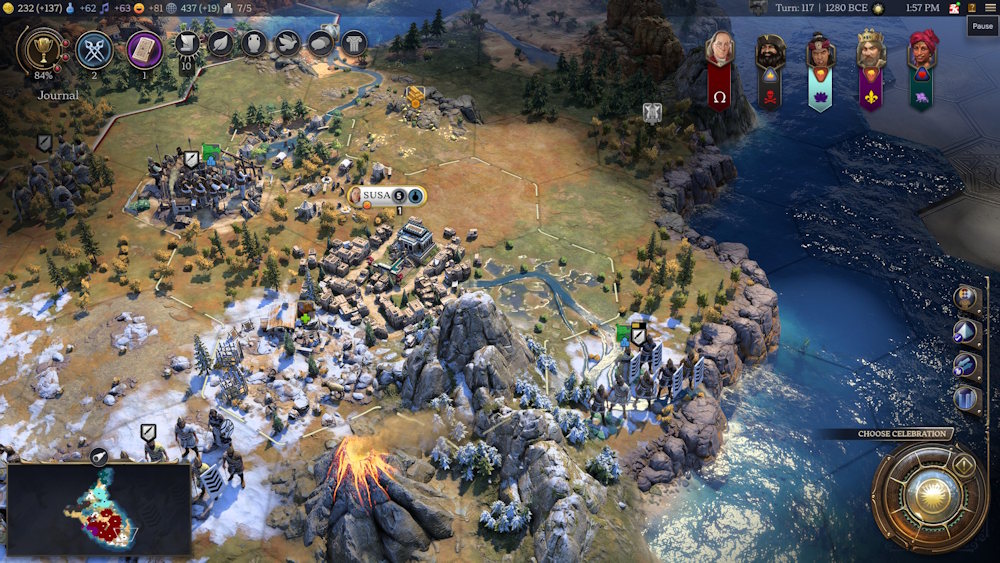
There are a bunch of supporting balance changes to make the new system fun to play. There is a new civic called Syncretism, which allows you to further complicate things by borrowing an era-appropriate unique unit from another Civ. Ancient Americans can’t field marines in the Stone Age but if you go down the research tree, you may have a Greek phalanx to compensate.
To be perfectly honest, this was the touted new feature I touched the least. I include it early on because this is the most requested feature by players, I’ve tested it, and it’s fun to play. More fun though (for me anyway) is playing the game according to the original vision and swapping civs twice throughout your game at the end of a major era. Customization is so much deeper, and I felt like I had a lot of tools to take my nation in a lot of different directions.
An Utter Triumph
My favorite new feature? That would be the new Triumph system. Ironically, this was the feature I was most cautious about. Once I got my hands on it, I realized it was a more sophisticated version of the Eureka and Inspiration system. Basically, you get little mini mission objectives throughout your game, with the opportunity for bonuses and progress towards your victory. Improving on 6, you are never limited to two missions. There is an entire menu for objectives now, some of them obvious (build seven wonders) and some of them more difficult (max out a commander’s promotions). You can tag these challenges to track them as you play. You can also try your luck at ignoring this system (or turning it off, the whole game is now very modular).
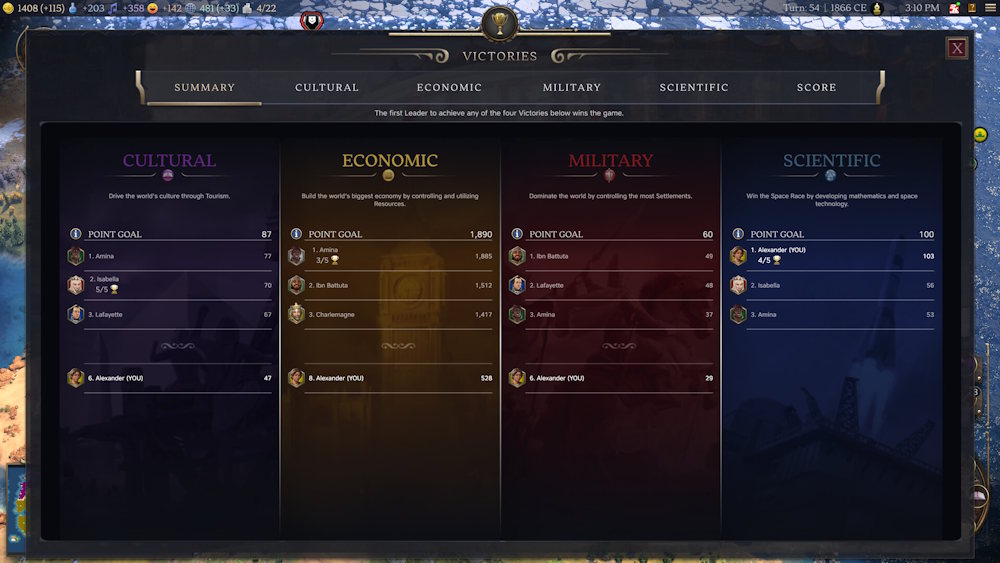
This is exactly the kind of innovation I am thrilled to see after the success of Civilization 6. Not only is it nice to have direction, and even nicer to earn juicy bonuses, it greatly increases the replay value. I found myself pursuing different objectives in different games not just because I wanted to see them all, but because it is impossible to get all those rewards in a single playthrough.
Thinking Outside the Box
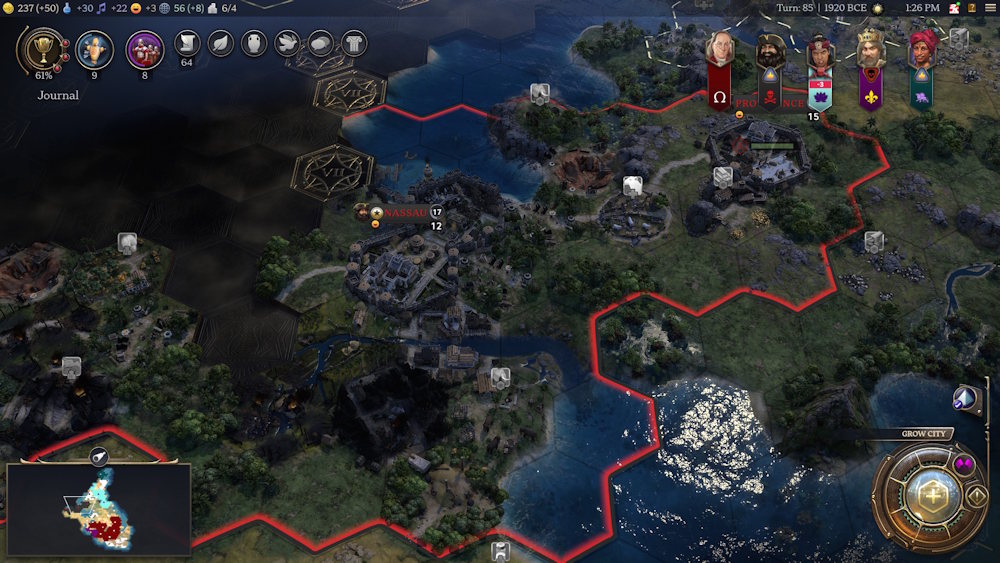
Some changes are immediately apparent. The UI is miles better. The mostly grey-box UI was my least favorite aspect of Civ 7 as it originally shipped. The menus don’t have as obvious a theme as art deco, but they are now pleasant to read. I can find most of the information I want to find (still not quite all, but missing information is by far the exception rather than the rule). Diplomacy has been made much clearer, and I think this may be the strongest the AI has ever felt to me in a Civ game. I (mostly) understood why the computer was doing what it was doing and even once got outfoxed when Genghis Khan started sending multiple incursions up and down my coast.
Firaxis had a lot to say about the music, and I do want to give the soundtrack some love. The music is just about the only element to never be controversial in a Civ game, and 7 has added hours of excellent new tracks. I especially like the New Orleans jazz vibes that came with the addition of Blackbeard. I haven’t heard every iteration of every track, but if you play an anachronistic civ, your theme music will adjust to be more appropriate to the instruments of the era. That’s super cool!
Frequent Fractals
Map generation was something I got a chance to talk to the developers about. They said that this was an area they were most eager to improve on. Apparently, it was a member of the graphics team who perfected the map-making algorithms. Maps feel organic now. In fact, they can totally change. I love when a blizzard rolls down from the poles and dumps snow on the tiles south of the permanent tundra. The map is a living thing, and natural occurrences can force you to rethink a strategy.
I played the most on the new map, Fractal Continents. This did not get me Earth-like maps, but I had one awesome game on a sort of trident-shaped continent. Three different Civs battled me on three fronts. The geography led to some really interesting politics. And at the end of the day, isn’t that what Civilization is all about?
History, In Layers
There’s a lot of pressure on Firaxis to turn the Civilization 7 conversation around. Their last game (Marvel Midnight Suns, also excellent) did not sell as well as they would have liked. It’s tough to make a game in today’s world! There is not a lot of margin for error in bold artistic swings. And isn’t it kind of cool that is what Civilization is trying to do? We aren’t talking about microtransactions and season passes; this game wasn’t mismanaged into the ground. But it was not a perfect execution of the original vision. Test of Time is much closer to the mark.
Is It Good Now?
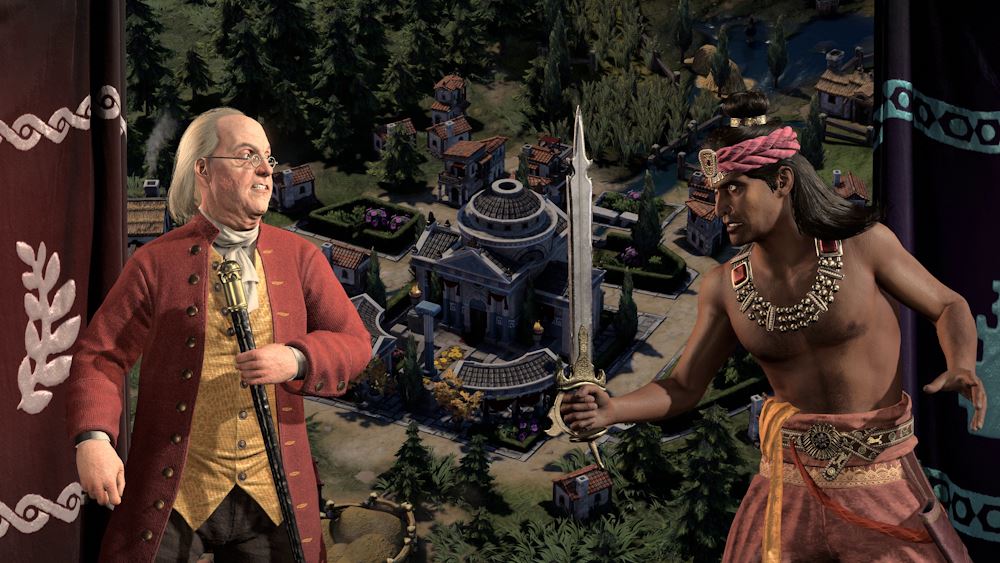
If you are waiting for someone to say “Civilization 7 is good now, you should finally play it,” then I am happy to oblige. Civilization 7 is good now, you should finally play it. Admittedly, I have always liked the idea of playing history in layers. I want every Civ installment to experiment! Get weird with it. Firaxis emphasized how much they have been listening to the community, but I walked away from Test of Time thinking not that they had followed the wisdom of the crowd. Instead, they figured out how to express their original ideas. Test of Time is not a compromised vision for the future of Civilization but a refinement of all its best features.
Sure, I thought the earlier version of the game had its merits, but I need to confess to you an incontrovertible fact. In the first year and a half that Civilization 7 has been out, I played the game for a bit more than 70 hours. Since getting the Test of Time update, that number has become 211 hours in less than a month. I’m losing sleep. My fingertips hurt. I can’t stop playing just one more turn. Feels to me, in my gut, like Civilization is returning to form.