Bellwright Preview
Bellwright is a medieval survival/crafting/building RPG that’s been in early access on PC for almost exactly two years. It has just made its way to consoles. Technically, the game is still in early access, and the console version is essentially what’s available so far on PC. Here at COGconnected, our policy is to preview – but not review – early access titles.
In the case of Bellwright, that’s probably a good thing. Bellright is an ambitious game with lots of interconnected systems. It’s one of those AA games with more heart than polish, the kind of game you’ll find charmingly quirky or annoyingly janky. On PS5, at least, the jank is a little more serious, with a lot of crash bugs and other technical issues. That said, Bellwright is still a work-in-progress.
Serf’s Up
Bellwright doesn’t invent new systems. Instead, it attempts to connect and layer familiar systems and mechanics, with the hope that the sum will be greater than the parts. If a synthesis of RPG progression, settlement expansion, gathering, survival, worker recruitment and combat sounds like Crimson Desert, well, the two games do share some goals.
You play as an unlikely bystander to a royal murder. Accused of killing the Prince in a medieval province called Karvenia, you flee. Years later, you return, but the new Crown is oppressive and corrupt. The narrative arc drives the action, which involves you liberating oppressed villages, recruiting workers and fomenting rebellion. One of the things Bellwright does well is mesh its story with player actions. It isn’t a game heavy with expository cutscenes. Instead, the NPCs fill in the gaps and point you towards new story beats.
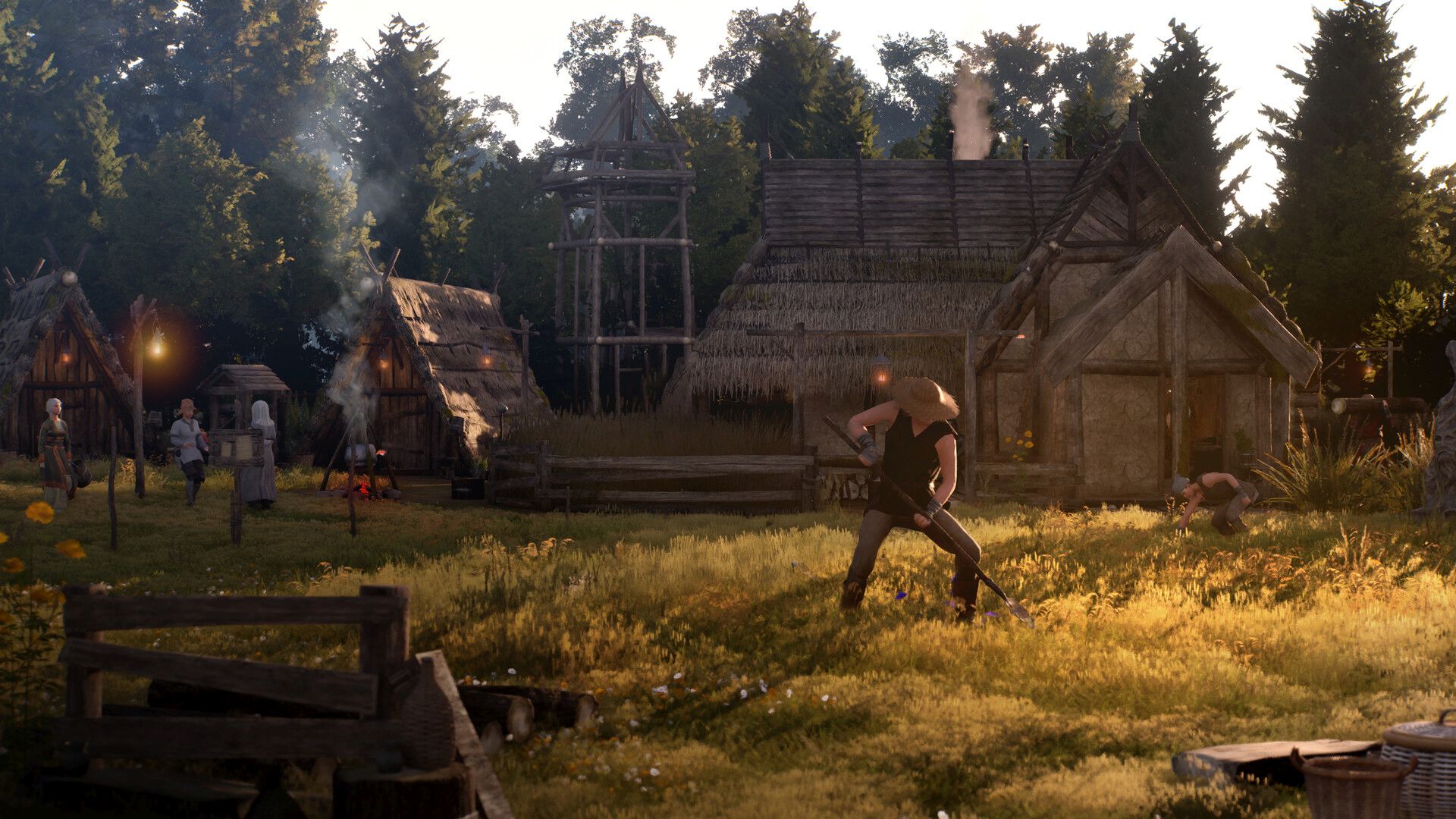
While your character’s motivations and quests clearly tie in to the unfolding story, the presentation leaves much to be desired. Aside from the decent character creator, there’s zero preamble or context aside from some pop ups. Character models and animations significantly trail behind the curve. Dialogue quality is all over the map. For every sort-of humorous aside or charming character, there are many more pages of dull writing, filled with weird translations and mismatched captioning. Most egregious of all, clankers (AI generated voices, for the uninitiated) abound and they’re awfully immersion-breaking.
To-Do List
The game begins with your character strolling into a village with a mysteriously-symboled coin. You meet the elder, and he sends you on your first quest chain, to meet a former village citizen who has exiled himself from the community. He becomes your new pal, and together you build your first little hut.
This encounter is an introduction to Bellwright’s central loops: making tools, learning recipes, building more elaborate shelters and workshops, recruiting workers and soldiers. There’s an absolutely massive and intimidating tech tree where you can get an overview of where you’re headed and what you need.
Your journey to creating a “semi-autonomous worker collective” (nod to Monty Python) eventually includes setting up self-managed chains of production. At least in theory, because a lot of the workers still need regular micromanagement and direction. It’s hard not to be impressed by Bellwright’s vision and ambition, but it includes a lot of grinding in the recipe.
Combat Strength
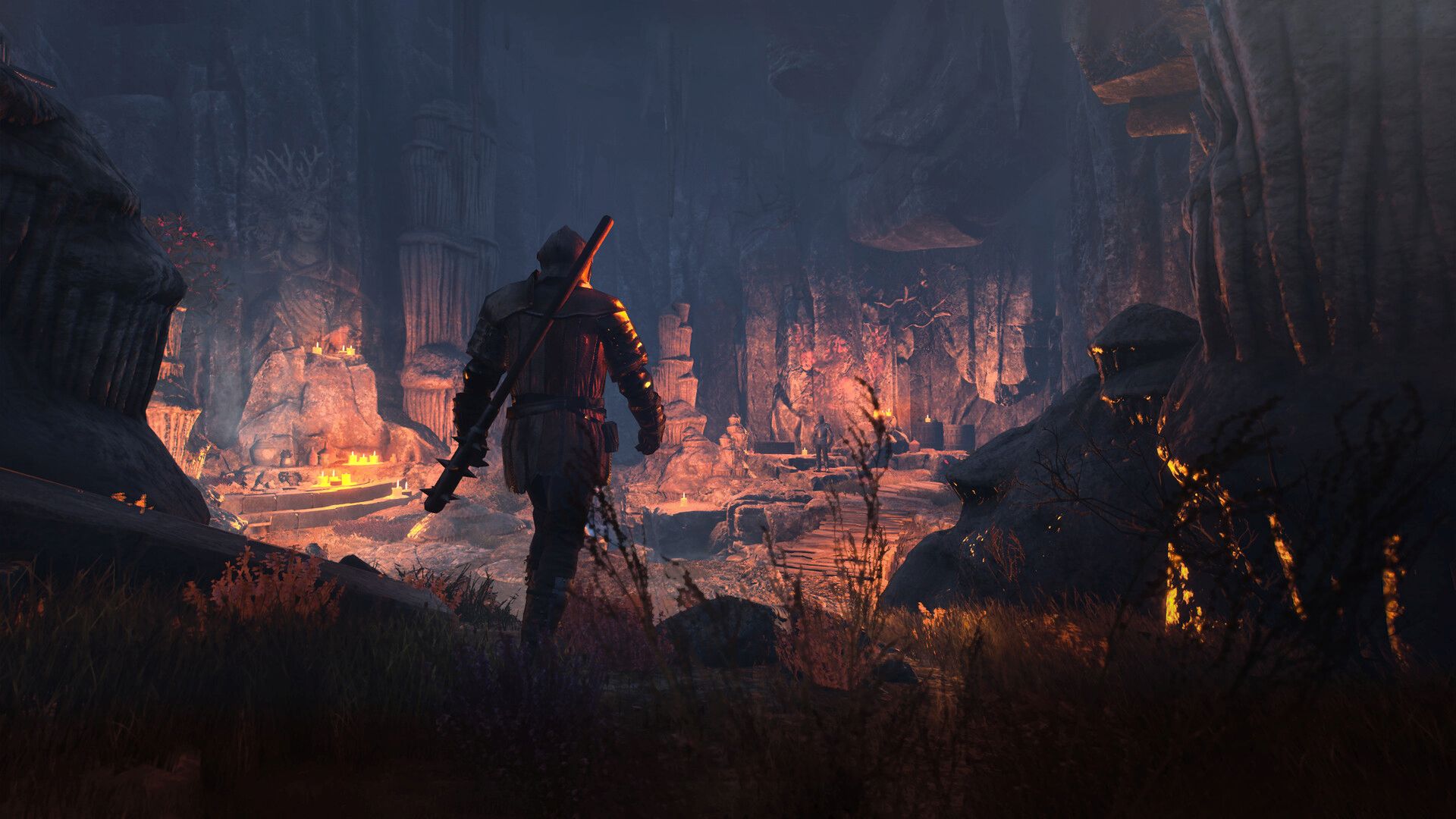
Like much of Bellwright, combat is a blend of ideas with strengths and deficits. Combat begins simply enough, with your character using melee and ranged weapons in solo or small group encounters. As the game progresses, you recruit squads of soldiers and combat shifts to a squad-command mechanic similar to games like Mount and Blade.
It’s hard not to feel like, while it has some depth, combat is not Bellwright’s focus or strength. It feels clunky and floaty, with a decided lack of weight or impact. However, you can make adjustments to many aspects of combat in the game’s menu. In fact, the wide range of game modifiers help the player shape the experience into a less challenging or more exacting simulation. It’s clear that the developer was keen on letting players craft their version of the game.
Since entering early access on Steam two years ago, Bellwright has gone through a significant series of changes that have refocused the game. In addition to vastly expanding the map, changes and improvements have been made to nearly every aspect of gameplay. PS5 and Xbox players come to a more seasoned and full-featured version of the game than early PC players experienced. Although controller support is well done and all the content is there, the PS5 version launches with quite a few bugs and graphical hiccups. More than once, I lost hours of progress thanks to crashes.

Loveable or Laughable
Bellwright requires a lot of patience and tolerance to enjoy. Aside from its tech issues, it can be slow, grindy, and too complicated for its own good. At the same time, its ambitious combination of systems and genres offers an immersive, unique experience. For some, the AA-production values and bugs will be a dealbreaker. For others, there’s more than enough quirky charm and depth to keep playing and discovering new things to see, make, and do.
***PS5 code provided by the publisher for preview***