
“Don’t bother, wait for 27.” That advice has become the default response in the Madden franchise community whenever someone asks about picking up Madden NFL 26 nine months into its lifecycle. And it is not the haters saying it. The most coherent voices in that conversation are people running multi-season franchises on Madden 25 — some of them deep into fictional seasons a decade beyond the current NFL calendar — who have looked at what 26 offers and concluded the emotional weight of their existing save is worth more than anything the new release brings. That is a strange thing to hear about a sports sim. It points at something the launch-week bug reports were too close to see.
Madden 26 was designed to be played for longer than a year. The evidence is in the systems EA actually built. Wear-and-tear is not a cosmetic addition; it functions as a deep substitution mechanic that addresses a decade-old complaint about unrealistic RB carry distribution. Players using it report something close to real NFL workload patterns — a primary back carrying the bulk of the load, a backup absorbing a meaningful share, a third option getting situational work — which is exactly what the standard auto-sub system has never reliably produced. Coaching skills function as a multi-season progression tree, not a one-game gimmick. Superstar mode’s relationship system, which the community has taken to calling the Sphere of Influence, tracks the player’s standing across teammates, agents, and other figures in a player’s career orbit — a design clearly built in response to NBA 2K’s MyCareer story-driven model, and one that only pays off across a long career. The halftime show, the weekly recap, the in-stadium video packages, the team-specific intros: the strongest design emphasis sits on systems that compound value the longer a single save file lives.
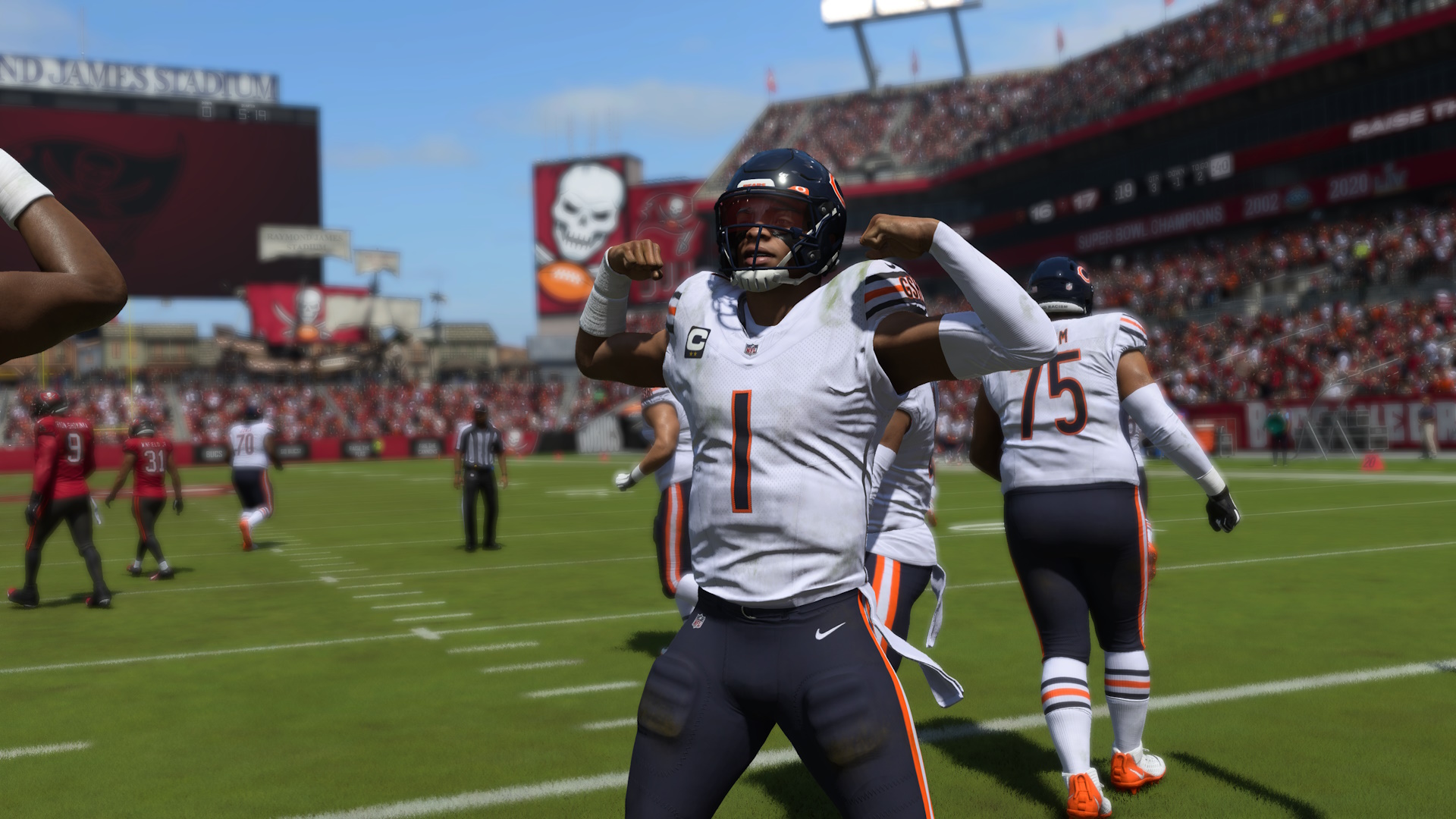
Madden has been a churn product for twenty years. Buy in August, play through the Super Bowl, trade in for next year’s roster. The systems supporting that pattern were thin on purpose. Madden 26’s design philosophy reads as the opposite: build mechanics that reward a user who stays inside one save for two or three seasons. That is a long-overdue shift in thinking and arguably the most coherent strategic move the franchise has made since the early 2010s. EA wasn’t building a worse Madden. It was building a Madden that wanted to keep you.
The problem is that the annual release cycle is structurally hostile to that goal. Madden 27 is expected to begin its reveal cycle in the coming months and ship around the start of the new NFL season, following the cadence the franchise has held for over a decade. Every retention mechanic in 26 — every coaching skill point invested, every Sphere of Influence relationship built, every snowflake-deep franchise save — faces a hard expiration date the moment EA Sports’ marketing department starts the next cycle. The wear-and-tear system that took the design team a year to integrate is being asked to convince a user to switch off a 2036-season save eleven seasons deep into Madden 25, knowing that the same user will face the same switching decision again within months. The competition for that user’s hours is also broader than the next Madden release — fantasy platforms, prop markets, and Dogecoin betting sites tied to the actual NFL season are all building retention loops around the same audience the simulation needs to keep. The math doesn’t work for the user, and it especially doesn’t work for the design team, who built systems whose payoff requires the user to ignore the next release.
Some of this is also user error. A significant share of the loudest complaints come from users on All-Madden difficulty — a tier that has been deliberately punishing for fifteen years and that adjusts CPU aggression rather than executing scripted comebacks. The “rubber-banding” accusation is not evidence of a story engine working against the player; it is the documented behaviour of the difficulty curve under the hood. Most of the bug reports are accurate. Some of the frustration is users discovering that elite difficulty is hard and pattern-matching the experience to a broader narrative about EA cynicism. Disentangling the two matters because the patchable problems are different from the user-error problems.
Superstar mode is where the retention bet shows up most clearly. It is also where it most clearly fails. The Sphere of Influence is conceptually right — careers in real professional sports are shaped by relationships as much as on-field performance, and a mode that models that is overdue. But the system reportedly shipped tied to position-specific scoring logic that breaks when a user demands a trade. Players who switch teams in-season have described catches at the TE position no longer counting toward their progression because the depth chart didn’t update, and relationships with teammates from the previous franchise persisting as active green nodes on the new team’s social map. The mechanic is the right idea executed against the same depth-chart and roster-state architecture that has produced strange edge cases in Madden franchise mode for the last five years. The new system is good. The plumbing isn’t.
Madden 26 is a more interesting failure than Madden 25 was a forgettable success. The launch build had real bugs. The run game regressed. The auto-sub × wear-and-tear interaction produced failure states that should not have shipped. But the design ambition underneath is the most coherent statement the franchise has made in a decade, and the reason nobody can quite articulate it on the discussion boards is that the ambition is being eaten by the release calendar before any save file has time to demonstrate it. EA spent a year building retention systems for a product its own publishing schedule will obsolete in August. The deeper structural issue with annual sports sims is that the studios making them have, in the case of their better-tuned cousins on the same platform, started to recognise that a one-year shelf life is not where the genre’s future lies. Madden 26 reads as the design team’s argument from inside the building. Nobody above them is acting on it.