The Killing Stone Review
I think card battle/deck building games are sort of in a genre sweet spot. There’s a new one every once in a while, arriving at a pace that fans can keep up with. Best of all, most of them are pretty good and quite often, excellent. Keeping the percentage high, The Killing Stone is a delightfully macabre deck-builder that’s just crept out of Early Access.
Shakespearian Drama-ish
Remember the last time a game gave you a choice between slightly formal modern English and period Shakespearian English? Me neither. But that option is entirely in keeping with The Killing Stone’s 17th century setting and tone. The sweet spot — for me, anyway — was having modern English subtitles and period English dialogue. Either way, the voice acting for the lead characters is excellent. Unfortunately, the minor characters are not voiced.
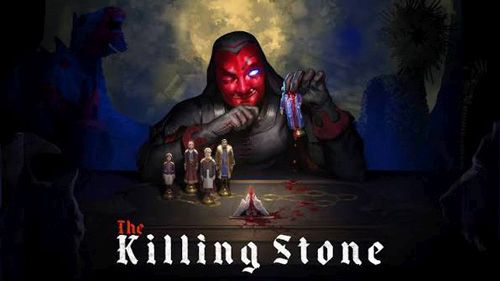
Well, that tells us precisely nothing about the story. Following the death of a powerful witch named Mariken, you discover she has gambled away not only her own soul but the souls of the entire Svangård family in a deal with a red-masked devil, One Eye. Thanks to your skill in the dark arts (and contract law), you must journey to a macabre mansion, wager your own soul, and outwit a series of demons at a supernatural table-top card game called Fanghella. Each series of 5 matches helps regain the soul of a Svangård family member, and moves you closer to defeating One Eye for good.
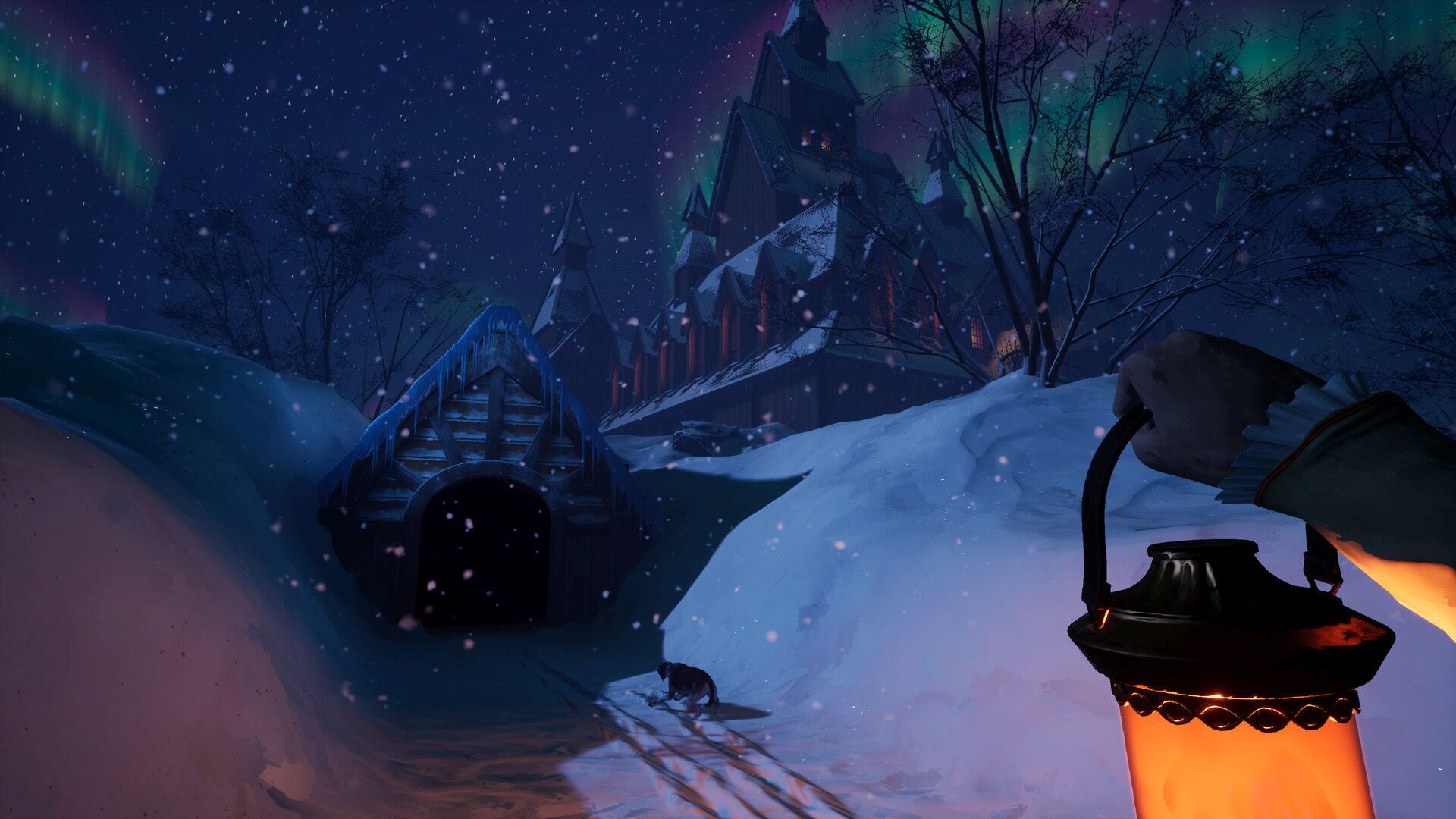
There are a lot of card-battle games where you build out a town or proceed, roguelike, over an overworld map to the next match. Uniquely, The Killing Stone’s action outside of Fanghella is in first person, as you explore in and around the mansion. There’s quite a bit of narrative and exploration, and it gives real context and tension to the gameplay.
Diabolical Mechanics
Speaking of tension, The Killing Stone’s gameplay is built around a 40-hour in-game timer. You have 40 hours to defeat One Eye, and each match — win or lose — ticks off another three hours from the clock. Dawdling too long during a match also takes away in-game time, and side missions sacrifice additional hours, though they reward the player with significant upgrades and new cards. It’s a similar mechanic to The Blood of Dawnwalker, where combat and other activities burn up your time and you need to plan and play wisely.
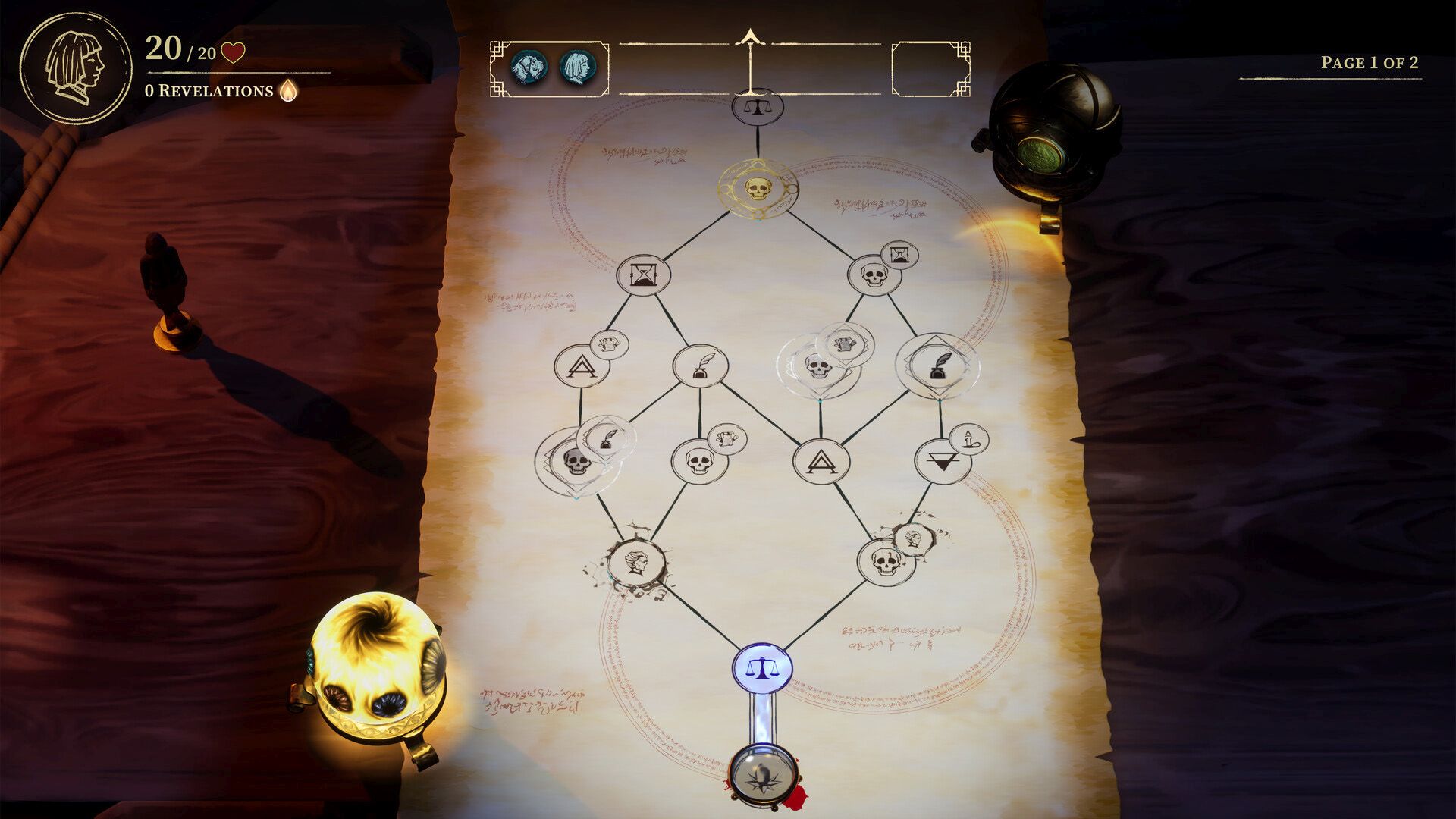
During the course of gameplay, you will meet and employ supernatural animal familiars. Much more than cute companions, familiars play a key role in your success. Sending familiars into the mansion’s hidden crawlspaces, attics, and locked rooms uncovers lost memories, forbidden law texts, and hidden clauses. These discoveries award Revelation Points, the currency used to modify your deck. Finally, familiars are part of Fanghella, by providing passive perks, altering the Devil’s rules, or absorbing curse damage.
The card battle system distinguishes itself through several unique mechanics. For example, your main line of battle units is limited to three, but you have a secondary line of reserves that drop in when main units fall. Rounds are divided into a placement phase and a resolve phase, and you can preview the damage your units will take. This allows you an additional chance to rearrange your line before ending your turn.
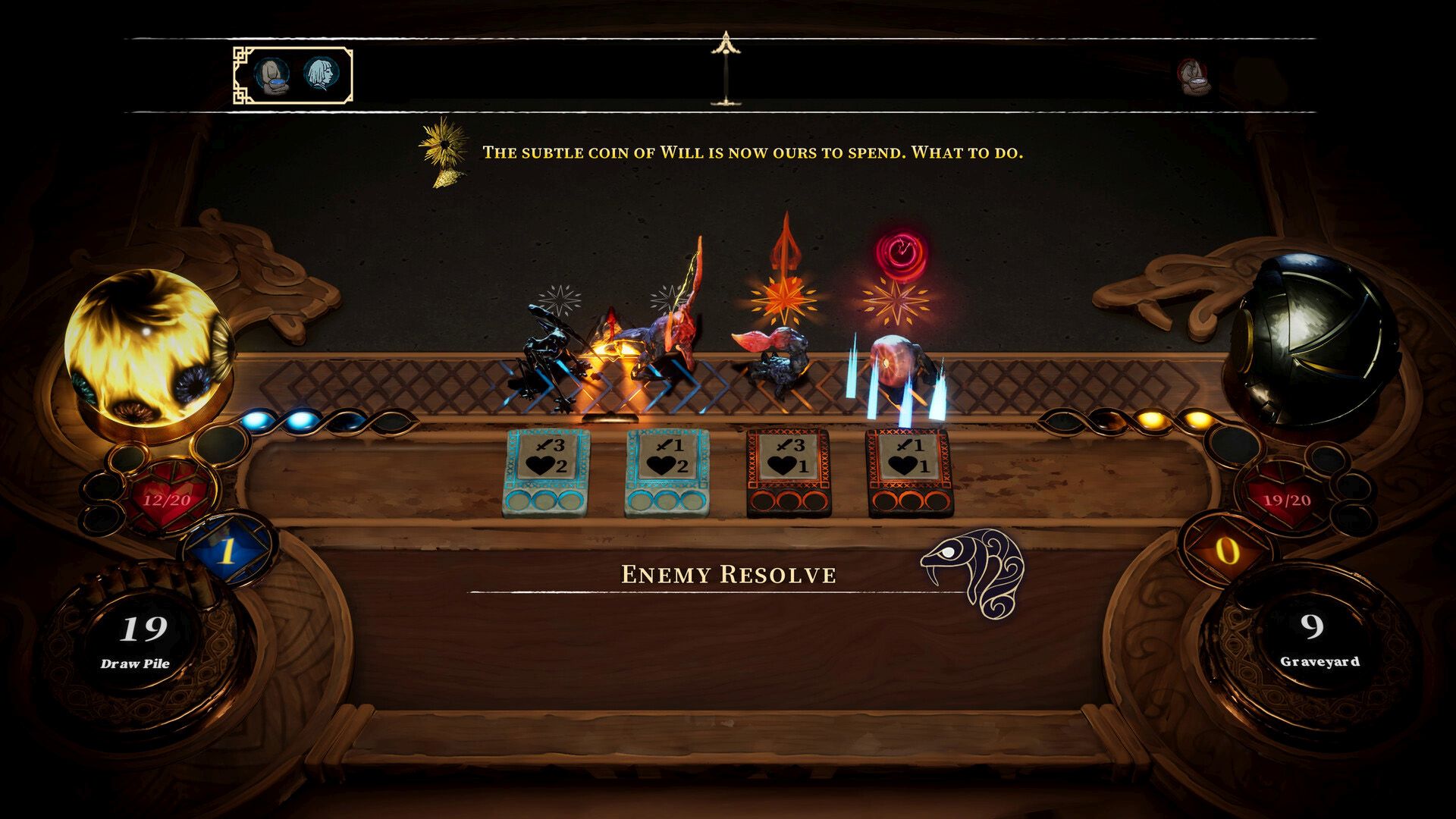
Naturally, there are buffs and damage dealers in the form of Invocations. Chants, on the other hand, must be placed onto a host unit inside the Reserve line. When that host unit steps into active battle, the Chant grants massive temporary stat boosts. This is all really a surface level description of The Killing Stone’s deeply layered mechanics.
Dark Magic
The heart of The Killing Stone is combat, and the board and units are darkly beautiful and well animated, with engaging combat and spell effects. Some of the animated units and monster designs are just a little hard to visually parse on the board, though their image info on the card is clear. Outside of the game, first-person exploration flips between free roaming the environment and static dialogue scenes.
The Killing Stone has a lot of mechanics and jargon to learn. The tutorial match does a pretty good of easing players into the basics. However, when you hit your first real boss battle you discover how woefully underpowered your resources are. It will take several chapters and a number of side quests before your deck really starts to take shape. There are two difficulty options. At the regular setting, The Killing Stone can be exceptionally challenging.
Thanks to its engaging narrative, excellent voice acting, and layered mechanics, The Killing Stone easily stands apart from recent card-battle/deck builder games. I enjoyed the game’s dark, supernatural ambiance and tone. Most important, the game’s endlessly replayable combat had me hooked from start to finish. If this is your go-to genre, The Killing Stone makes a unique and challenging addition to your playlist.
***PC code provided by the publisher for review***
The Good
- Effective atmosphere and setting
- Well voiced narrative
- Deep mechanics
- Lots of replay value
- Good music
The Bad
- Needs balancing in the early hours
- Can be a little obtuse