MIO: Memories in Orbit Review
Metroidvanias continue to evolve, experimenting with the formula to deliver fresh experiences. While the core pillars of discovery and backtracking across a large, interconnected map remain intact, how players engage with them varies from game to game. MIO: Memories in Orbit builds on this legacy, introducing a creative approach to traversal, challenging combat, and stunning art direction. Could it be the next essential entry in the genre, or will it get lost in the crowd?
You play as MIO, a robot with no memories of the past and lost on a dilapidated, overgrown ship. With no direction, you are left to explore the ruins as you aim to repair other robots, steadily bringing them back online. As you do, each memory provides further insight into the past, gradually building a picture and supplying the much-needed backstory to the adventure. The drip-fed story intertwines with the notion of discovery as you aim to decipher the reason behind the ship’s demise and your origins.
A Living, Breathing Painting
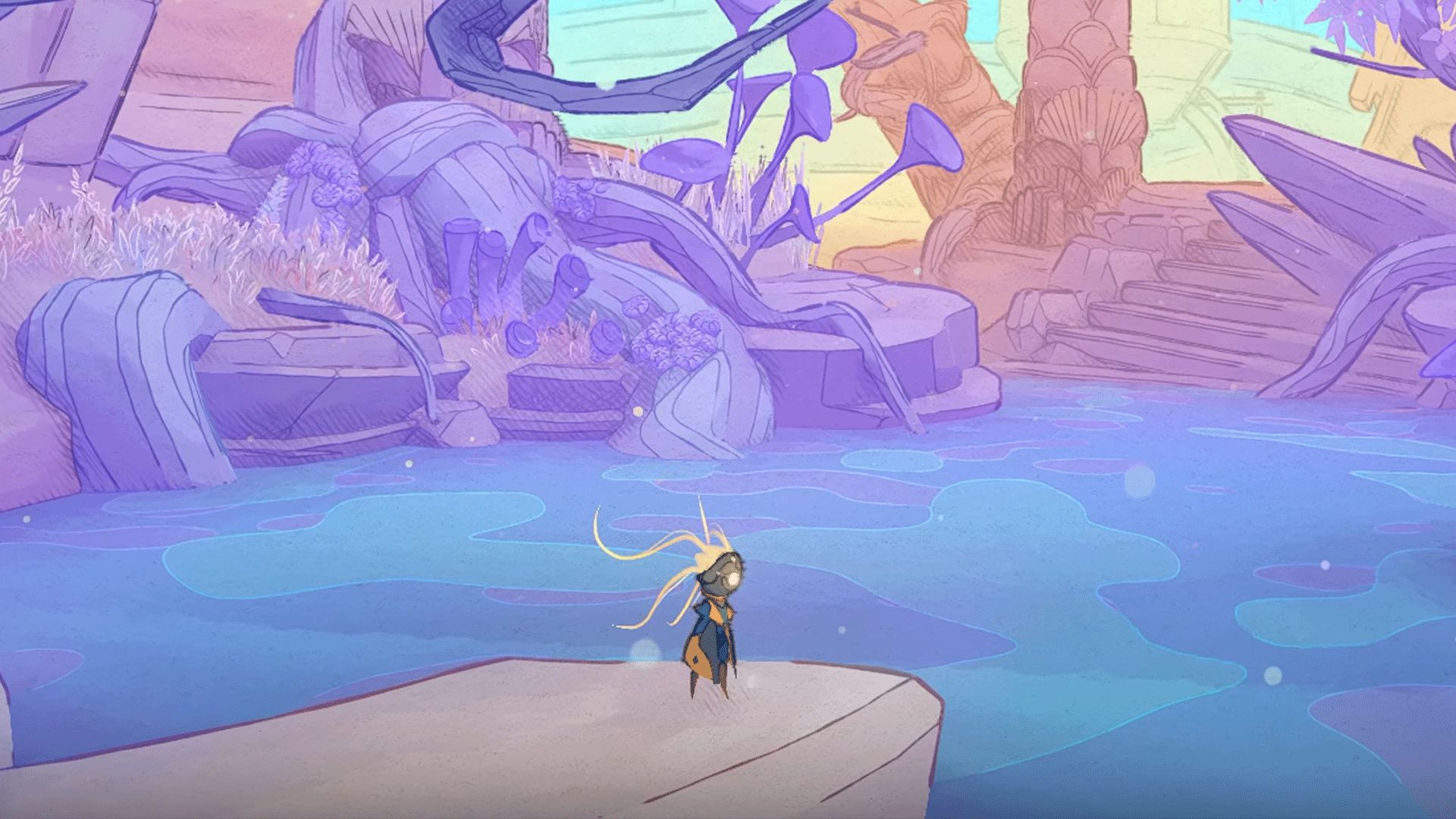
The characters you meet on your journey add to the game’s personality and identity. Their designs are impeccable, filled with subtle nuances that accentuate each individual’s disposition. This is further enhanced by the overall presentation, which is instantly striking. Every backdrop resembles a living, breathing painting, making it easy to lose yourself in this gorgeous world. Each room, section, and area is meticulously crafted to create an ambiance unique to MIO: Memories in Orbit, encouraging exploration to see what other wonders lie down each path. The influences of Miyazaki and French animations, such as Ernest & Celestine, are evident and add to the charm that imbues the adventure. While there’s a certain warmth to its design, the colours add an ethereal quality that beckons you further into its universe.

There’s a wonderful flow to the movement. You can bounce off the terrain, boost through lanterns, and slide at speed across the ice. Combining these elements is a delight, allowing you to build momentum and leap through the environment to reach otherwise inaccessible ledges. Platforming challenges put these mechanics to the test, requiring you to juggle each skill in quick succession while reading and reacting to hazards as you progress. Every strike resets your energy, granting an extra jump so that you can continue to bounce from one item to another. This results in a thoughtfully designed platforming experience that feels right at home alongside the genre’s classics.
Finding a Path
Exploration is at the heart of any Metroidvania, and this remains the same with MIO. You can freely roam in any direction until you reach a point where you cannot progress. However, with every ability you gain, a new path opens up, allowing you to venture further down each avenue. As you’d expect, there’s a lot of backtracking to reach those previously inaccessible areas, but shortcuts, fast travel and the free-flowing traversal make this an enjoyable task.
Enemies pose a threat, but each attack includes a cue allowing you to dodge or counter their strike. As health stations are few and far between, it can be quite difficult to survive, making each encounter more intense. In addition to standard attacks, you can use your Hairpin to hook onto areas of the environment or enemies, helping you avoid danger. This becomes vital during boss battles, due to their unique movement, attack patterns and design. As each imposing fight features an enemy whose arsenal is large and vast, this challenges you to use all your skills to overcome the threat and emerge victorious.
As you progress, you’ll collect Nacre, which you can use to purchase and equip modifiers. If you die, you lose all of these, so you should deposit them at specific locations whenever you find them. As health is a precious commodity, you can stack all upgrades on protective points or even take risks by selecting upgrades that also include a negative effect. This leads to an intriguing system that allows you to fiddle with builds. As you can only have a certain number equipped, this allows you to experiment with different loadouts to suit your playstyle.
A Test of Skill
It is tough and upgrades help make things a little earlier. If you’re still struggling, then you can turn on features that tweak the gameplay further. If you’re struggling with a boss battle, then you can make subsequent attempts easier as their health decreases with each attempt when this option is active. In addition, you can also include shield regeneration and passive enemies to further support you on your adventure.
MIO: Memories in Orbit is a beautiful Metroidvania that features wonderful platforming segments alongside challenging encounters. The world encourages exploration, with each route rewarding you, further incentivising you to venture into the unknown. Although the game follows conventions, it delivers a fascinating adventure that fans of the genre will adore.
***PS5 code provided by the publisher***
The Good
- Stunning Visuals
- Well-designed Platforming Segments
- Challenging Boss Fights
The Bad
- Bland Narrative
- Follows Conventions of the Genre
- Some Bosses Can Be Frustrating