Minos Review
If you know your Greek mythology — and of course you do — you’re aware that King Minos was the son of Zeus and Europa. Minos was a powerful King of Crete and created a labyrinth to contain the monstrous bull-man, the Minotaur. (aka Asterion). The history lesson is now over. That little background is enough to tell you that the new strategy game Minos has one cloven hoof in mythology. Here’s the hook: the game’s point of view is that of the Minotaur, protecting his labyrinth from outsiders. Both in visual style and concept, it’s definitely reminiscent of the Dungeon Keeper games.
Go Get Lost
Minos cleverly combines two genres, tower defense and roguelike. They seem like a natural fit. All strategy games, including tower defense games, have an inherent chess-like element. You need to plan several moves ahead of the enemy and be ready with countermeasures. In Minos, you have the advantage of knowing the path your enemies will take, and even some of the types of foes you’ll encounter.
The basic game loop isn’t hard to understand. You start with a simple maze, and your goal is to move walls and position traps along the path the enemy will take as they attempt to reach the Minotaur. Once everything is in place, you “start the hunt” and hope you placed everything effectively. If you eliminate the enemies, you move on to the next level maze. If you fail, you start over but with some XP, coin and potential gear dropped by enemies. Between runs, you can upgrade your traps and give the Minotaur better offensive and defensive capabilities.
Following the tower defense template, each round increases the maze in size and complexity. You get new types of traps and other defensive elements, but the maze adds new puzzle-like restrictions like immovable walls. Of course, each round also introduces new enemy types like archers or magic users. Smart construction means that you can handle them all. It doesn’t take many rounds for the maze to grow from basic to mind-bending. Luckily, there’s no timer on the preparation and building phase.
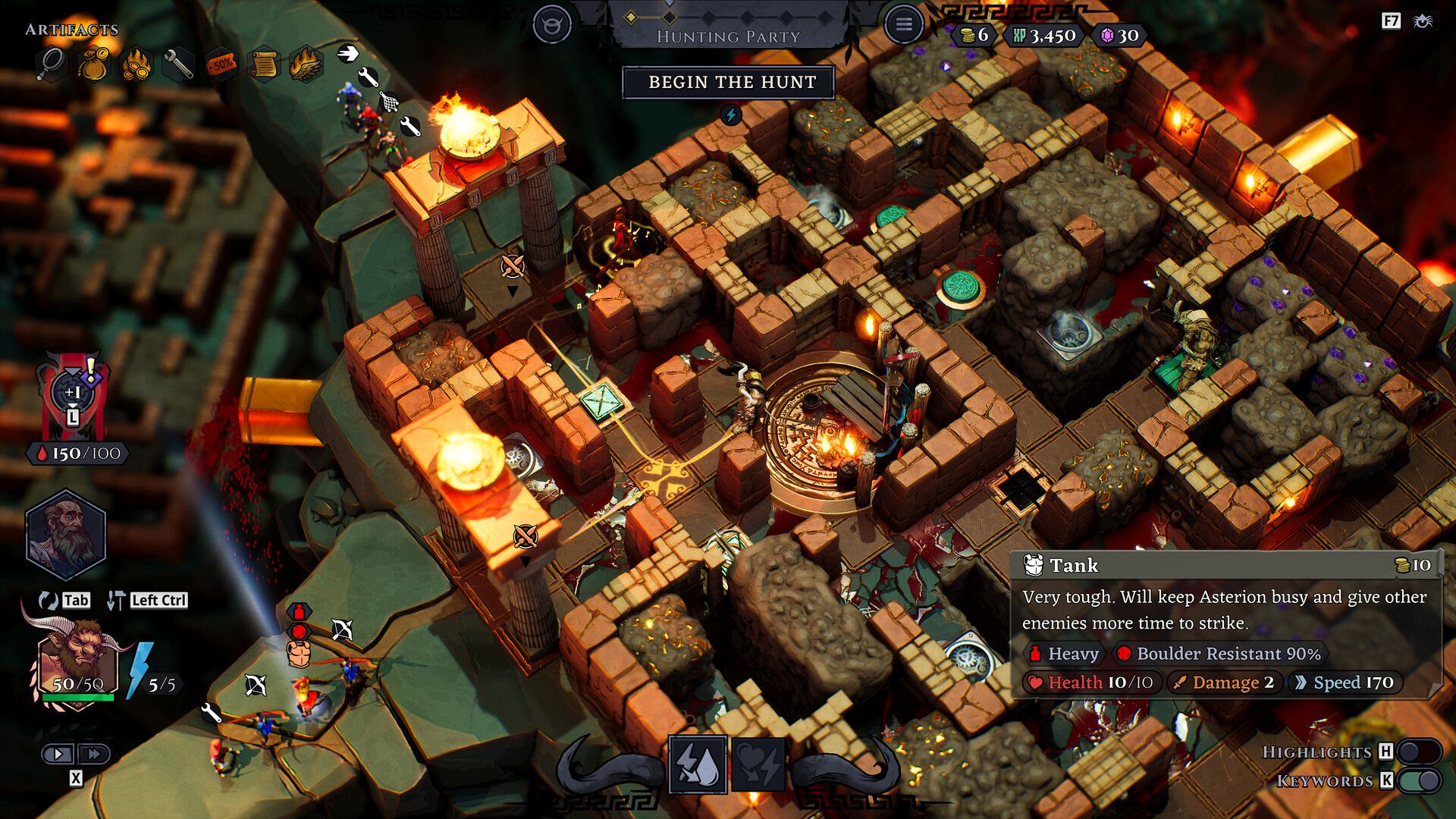
Round and Round
One of the things I enjoy about tower defense games is their inherent structural simplicity and the gleeful fun of seeing your diabolical series of traps and defenses in action. Minos doesn’t stray too far from the formula but adds a bit of welcome depth.
Minos’ game play can be broken down into three phases. The first phase takes place in the hub — itself a maze — here players can spend different forms of currency on purchasing new traps, upgrading heroes, and interacting with a growing cast of NPCs. From the hub, players can select between various available missions/labyrinths.
In the second phase, players can configure the labyrinth, placing doors, walls, and traps in anticipation of an enemy wave. Successfully defeating the enemy moves the player onto the next, more challenging labyrinth of the run. Failure means a return to the hub.
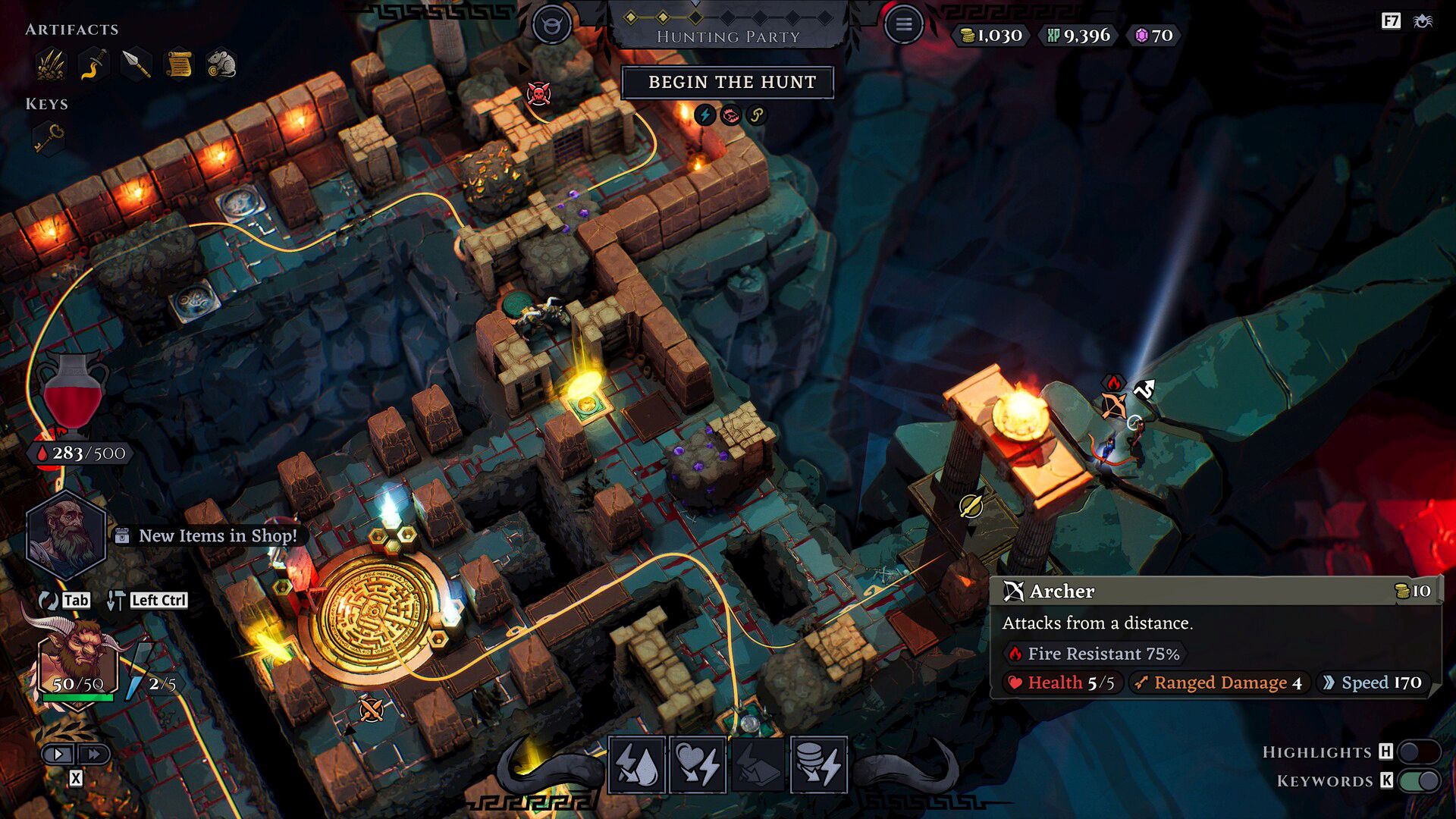
Steep Ramps
Some tower defense games are pretty liberal in the way they allow the placement of units. Minos is far more exacting, adding a puzzle-like element to every level. Most of the traps have a very specific limiting condition. Some are single-use only, and others might only attack the last enemy in a group. Add to this restrictions on where traps can be placed and which walls can be moved, and levels can quickly become head-scratchers. Additionally, players can’t block the Minotaur’s access to the enemies, either.
One of Minos’ minor frustrations is that the difficulty of the levels/puzzles jumps pretty quickly during a run. By the second or third labyrinth, enemies are attacking from multiple directions, and there are an ever-increasing number of special conditions to consider. With patience and perseverance, players can build up a greater range of offensive and defensive units, but that’s usually balanced by the game’s increasing difficulty. In other words, the player rarely feels overpowered.
Controller Clunk
As interesting as Minos’ gameplay can often be, there are a few immovable walls between the game and its potential for pure fun. Using a controller is perfectly functional, but a little janky, and the exact placement of traps is not as easy as it could be. For instance, selecting a trap means going to a build menu, clicking on the trap, then clicking again to confirm its selection before placing it. It sounds like a minor annoyance — and it is — but it adds a small bit of inconvenience many times over.
The game’s camera can be rotated, but not zoomed in to get a close look at the action. That might be for the better because up close, the game’s enemies aren’t particularly detailed or interesting outside their offensive functions. The labyrinths themselves become increasingly busy with action, moving parts, and colorful effects, but overall, they are a bit visually repetitive, outside of the environments in which they’re placed.
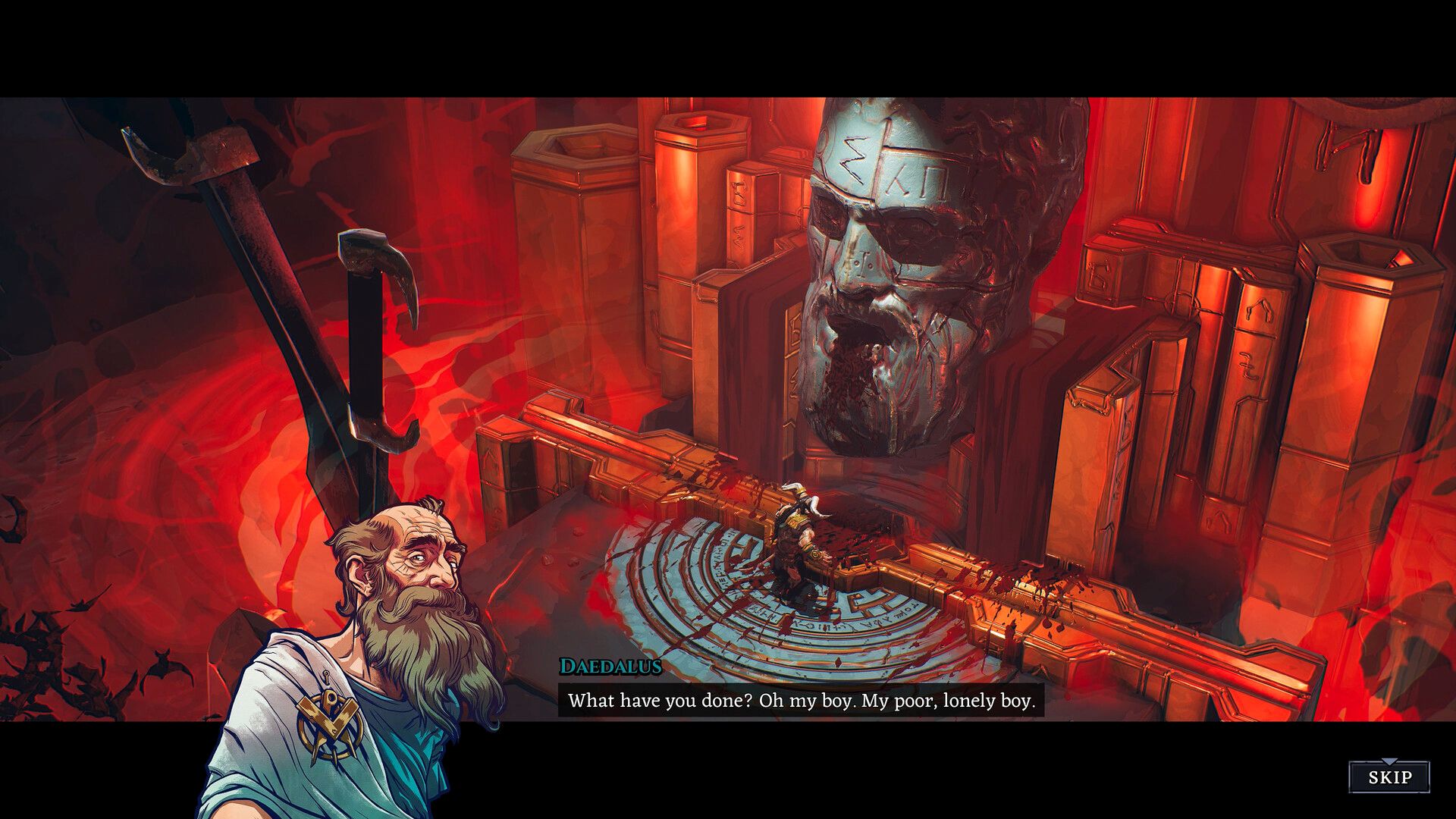
Minos reminded me of playing one of those wooden ball-in-a-labyrinth toys, where you tilt the maze just so to guide the ball to the end. In this case, gravity is replaced by scores of devious traps, and the goal is to stop the progress of enemies before they can defeat the Minotaur. Minos brings a lot of interesting ideas to the tower defense genre. If you have patience for increasingly challenging puzzles and a bit of jank, Minos can be a lot of fun.
***PC code provided by the publisher for review***
The Good
- Interesting mechanics
- Challenging levels
- Game play depth
The Bad
- Difficulty spikes
- Visually repetitive
- Some awkward controls