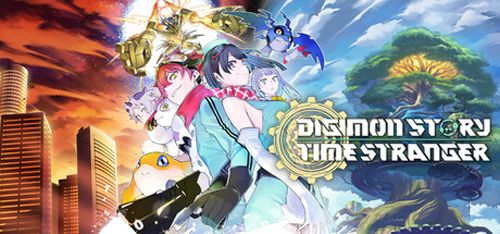
Digimon Story: Time Stranger (Nintendo Switch 2) Review
Back in October of 2025, I had the chance to play and review Digimon Story: Time Stranger on PS5. Now the game has arrived on the Nintendo Switch and Switch 2, so I spent some quality time reacquainting myself with the game in its newest version. Given Digimon Story: Time Stranger’s relatively low-demand graphics and bite-sized missions, I assumed it would be a perfect fit for a handheld device. Largely, my initial impressions remain the same.
Point of Entry
Taking almost eight years to develop, Time Stranger is the seventh game in the Digimon Story series. Like Pokémon, Digimon games are monster-fighting-and-collecting, turn-based action titles. Digimon Story: Time Stranger moves the series closer to being a fully-realized JRPG, with a relatively deep and slightly obtuse combat system.
The narrative is pretty straightforward: a digital monster anomaly has broken out of a parallel dimension and is wreaking havoc on Tokyo. You’re an agent, a part of an organization investigating these shadowy anomalies. You get sucked into a time vortex, and come out 8 years earlier. Your tasks are to investigate what happened, find a way back home fight a lot of Digimon and maybe change the future. There are a number of complications, of course. NPCs are voice acted, but unfortunately the player character is silent. As monster-battle stories go, it gets the job done.

One negative that I noted in my review — and it’s still true — is that Digimon Story: Time Stranger takes its sweet time in getting to the fun. Generally, the game’s pacing is uneven, either dwelling too long on bland dialogue and exposition, or getting mired in repetitive low-level combat. Being able to bypass low-stakes battles does eventually help move things along.
Battle It Out
Aside from a slightly more mature narrative and characters, Digimon Story: Time Stranger’s combat hooks you in. You don’t add new Digimon to your roster by catching them a la Pokémon, but by fighting and scanning them. At 100% scan rate, they can be added to your team, but waiting until 200% gives them added abilities from the start. Digimon get stronger by using them in combat, but their development is also tied to player agent level and a well-known mechanic called Digivolution, where traits of various Digimon are combined to form a new species.
With an astounding 450 Digimon, it’s unlikely that players will run out of possible combinations. Unfortunately, the Switch and Switch 2 version’s don’t add to the roster of Digimon (at least for free). However, a new Terriermon Assistant mechanic allows players to convert a Digimon to a teammate. There are a lot of additional elements to combat and evolving your fighters, like the Digifarm, the 16 Personality Traits and synergy of human and Digimon abilities.
New Consoles, New Stuff
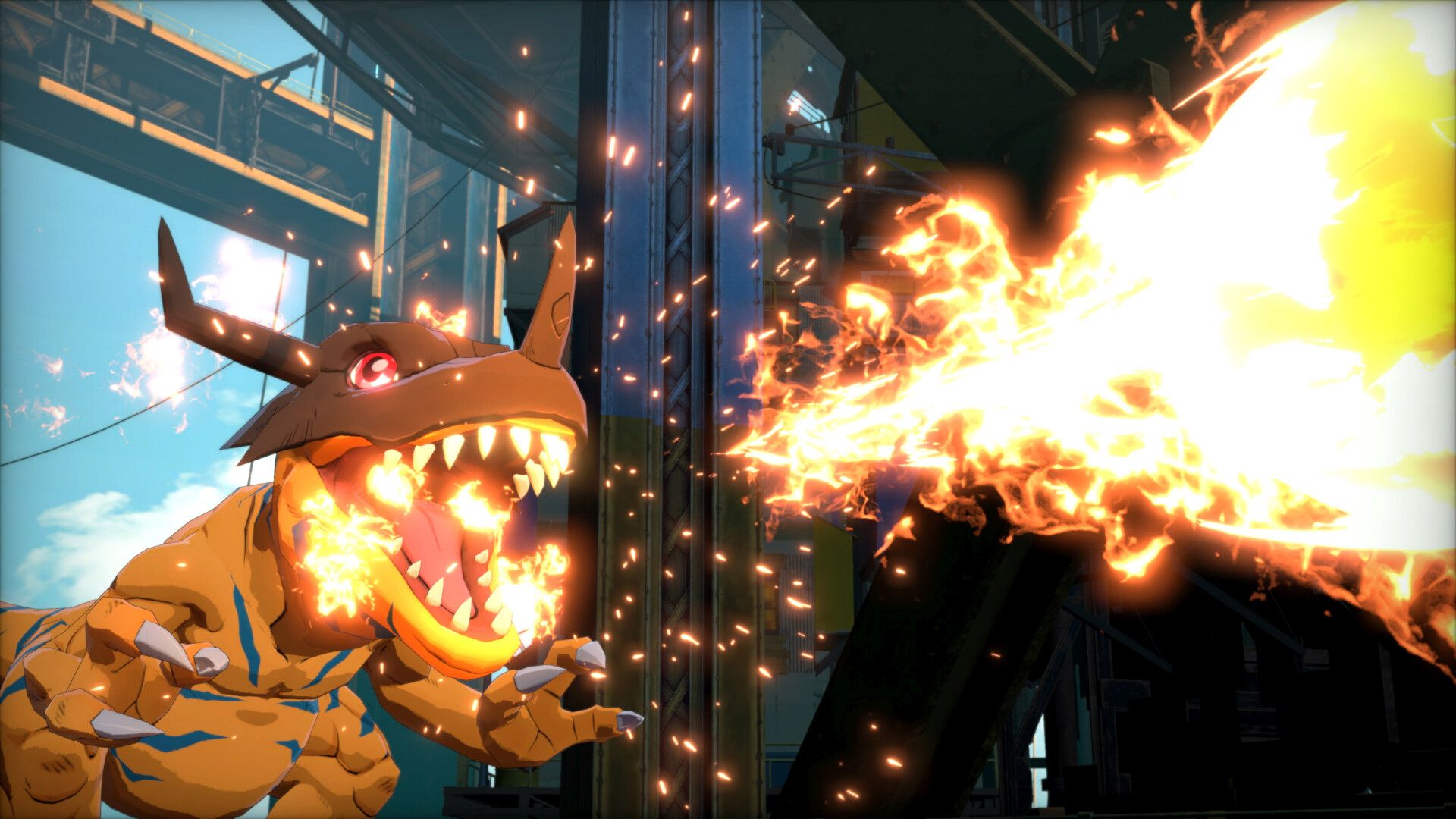
Digimon Story: Time Stranger has a clean and simple anime visual style. That’s code for: textures are undeniably kind of basic. Playing it again, I was reminded that the level design gets a little repetitive over time, too. While the human characters could drop in and out of a dozen other JRPGs, the monster designs fare much better.
The Switch 2 provides a choice of a 30fps 4K Quality Mode and a 60 fps Performance Mode, which pulls back some of the more demanding visual effects like dynamic shadows. Digimon Story: Time Stranger does not depend on wow-factor graphics. It looks great in handheld mode, which might be the perfect way to play.
Usually, ports released nine months later than the original bundle-in DLC or special content. Digimon Story: Time Stranger releases with access to the $29.99 Season Pass. This includes three already-released additional chapters. Each DLC introduces a handful of new Digimon.

Intro to Digimon
For gamers only familiar with Pokémon, Digimon Story: Time Stranger might be a revelation. Turns out there are other high-quality monster battlers after all. Digimon Story: Time Stranger is an excellent introduction to the franchise. It isn’t a game that depends on bleeding-edge graphics, so the Switch 2 visuals look just fine. It’s a shame that the release didn’t include the DLC as an extra incentive. Still, the base game offers a lot of content and replayability.
***Switch 2 code provided by the publisher for review***
The Good
- Fun combat
- Decent narrative
- A slightly more “mature” approach than Pokémon
The Bad
- Pacing hiccups and a slow start
- Bland level design
- Some primitive textures
- No new content included