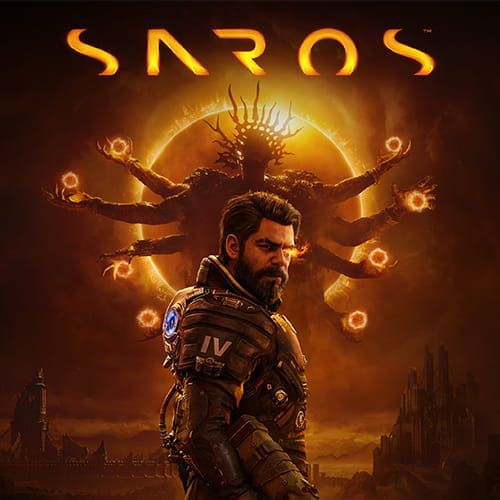
Saros Review
After the success of Returnal, Housemarque established itself as one of PlayStation’s pillars. In a first-party lineup defined by cinematic, narrative-driven adventures, the Finnish studio carved out a niche. Combining arcade sensibilities with blockbuster ambition, the company places gameplay at the forefront, creating addictive experiences centred on mechanical precision. Their latest effort, Saros, builds on its predecessor, but can it evolve the formula without losing the intensity that made it compelling?
You play as Arjun, a soldier sent to Carcosa, an alien planet, to collect a valuable resource known as Lucenite. Though deployed by Soltari to cultivate and colonise, your mission is far more personal. Previous crews have been sent, but contact with each has been lost. Among them was a loved one, and her disappearance fuels your determination to push deeper into this unique, ever-changing world.
Searching For Answers
The story unfolds in a fractured manner, allowing you to piece together its threads for a deeper understanding. Each time you awake on The Passage, a hub area between runs, you can speak with the crew, learning more about their backgrounds and gradually witnessing the toll this world takes on their psyche. While not the main focus, the narrative is an improvement over the studio’s previous effort, delivering a story that weaves grounded, relatable themes with a surreal and hostile alien world.
Delving into the twisted landscape is an absolute thrill, partly due to Arjun’s slick and fluid movement. As bullets flood the area, you can weave between them and dash through walls of projectiles to carve a path through the chaos unscathed. Whereas in Returnal, avoidance is key, Saros includes a system that rewards aggression. With your shield, you can absorb blue bullets, morphing the energy into a blast to deliver serious damage. Yellow projectiles corrupt your maximum health, making them a priority to avoid, while lethal red blasts can’t be dashed through, forcing you to dodge them or parry the attack back. These additions alter the flow of combat, encouraging a more assertive, risk-reward approach.
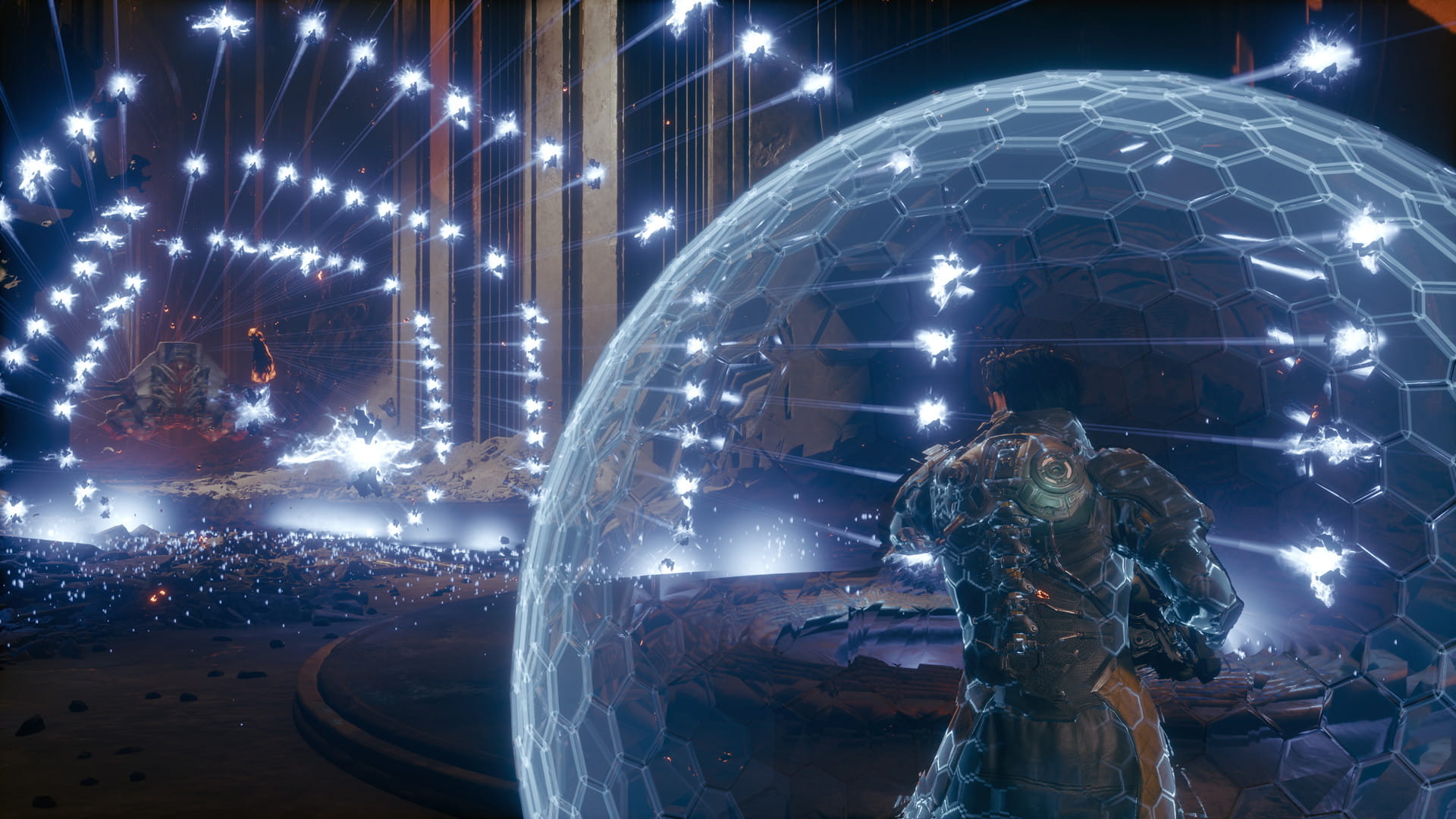
The screen quickly fills with orbs of varying colours, demanding quick thinking and expertise to survive. While runs feature intense battles and larger foes, it’s the boss fights that cap each area that represent the pinnacle of this deadly dance. Each imposing encounter includes complex attack patterns that you must learn and counter to overcome. Waves of projectiles swarm towards you, requiring you to use all the skills and weapons in your arsenal to survive. Although it can take time to adapt to this new approach to combat, it results in tense battles that reward aggression and mastery.
The Sky Turns
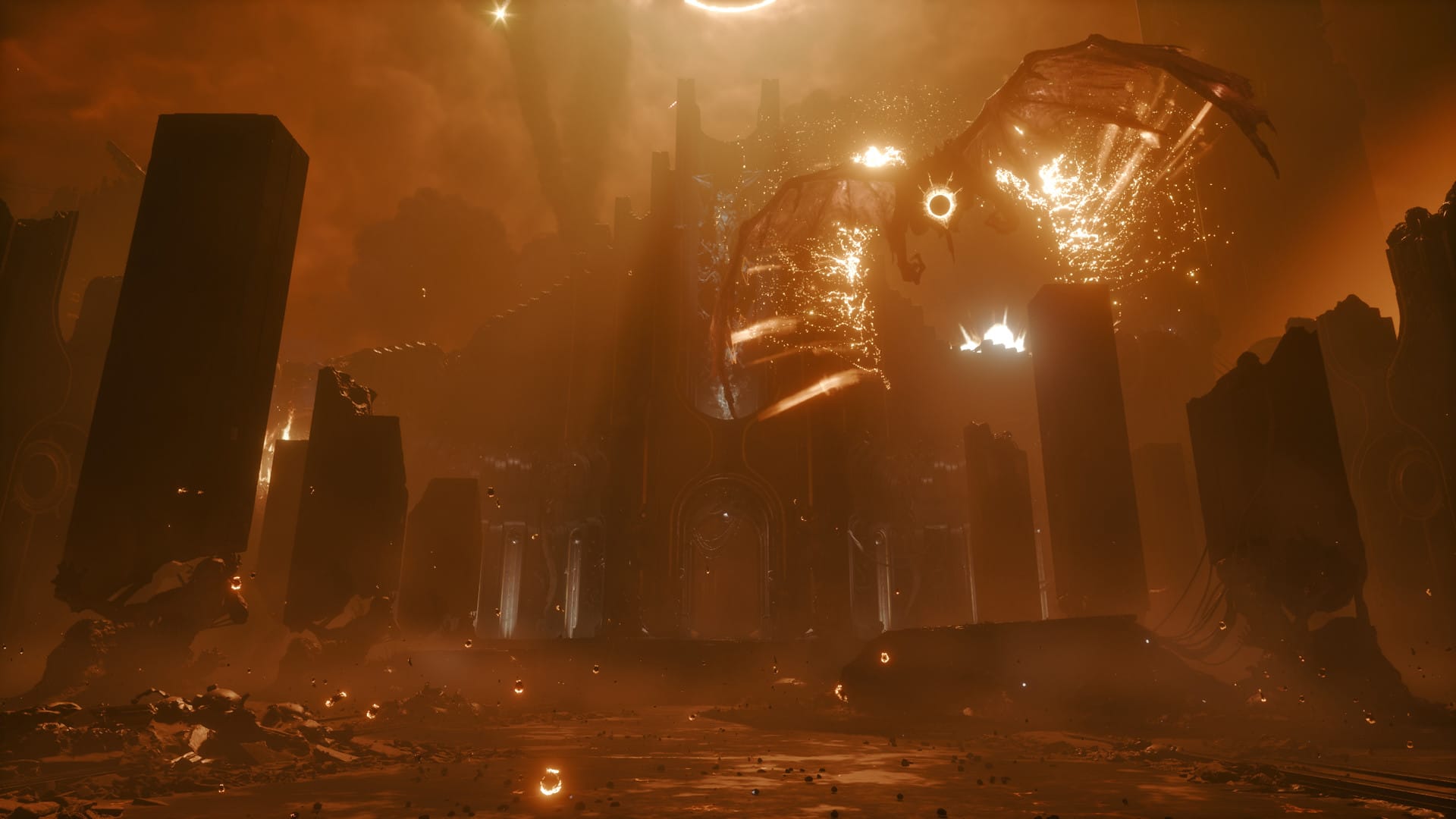
The difficulty increases when you initiate the eclipse. Biomes shift, casting an orange hue over the sky, while creatures become enraged, creating a more hostile environment. Enemy attacks can corrupt your health, and the only way to cleanse it is by using your special attack. This leads to frantic encounters where you must avoid corrupted projectiles while absorbing blue bullets to purge the infection. The environment adds another layer of danger. Acid pools emerge, draining your health with every step, forcing you to grapple across gaps and dash over gaps. Items also come with positive and negative effects, requiring you to constantly make micro-decisions, which will affect your build. Together, these elements create a tense, high-octane shooter that constantly pushes you to stay aggressive while maintaining precise control.
Death is inevitable; however, an upgrade tree allows you to come back stronger, making each run feel like progress rather than defeat. When you awake at your base, you can spend the Lucenite you gained on permanent upgrades to improve your chances of survival. These include additional health, a stronger shield and much more. Combining these with the items you collect on each expedition and the ever-changing world creates an enthralling adventure in which each journey feels unique.
Come Back Stronger
Housemarque has made numerous changes that support engagement and accessibility. Runs are shorter as you no longer need to start from a particular biome. Once you have opened a new location, you can teleport directly to its location, supporting your progress through the shape-shifting world. Modifiers also allow you to personalize the experience, tweaking the difficulty to suit your requirements. You can’t simply knock down the challenge completely, as alterations are tied to a number and this must remain within a tolerance to power the portal. However, you can increase the difficulty as much as you like, making each dash through the nightmare world much more difficult. Not only does this improve accessibility, but it also adds longevity, allowing you to experiment with modifiers to create new ways to play.
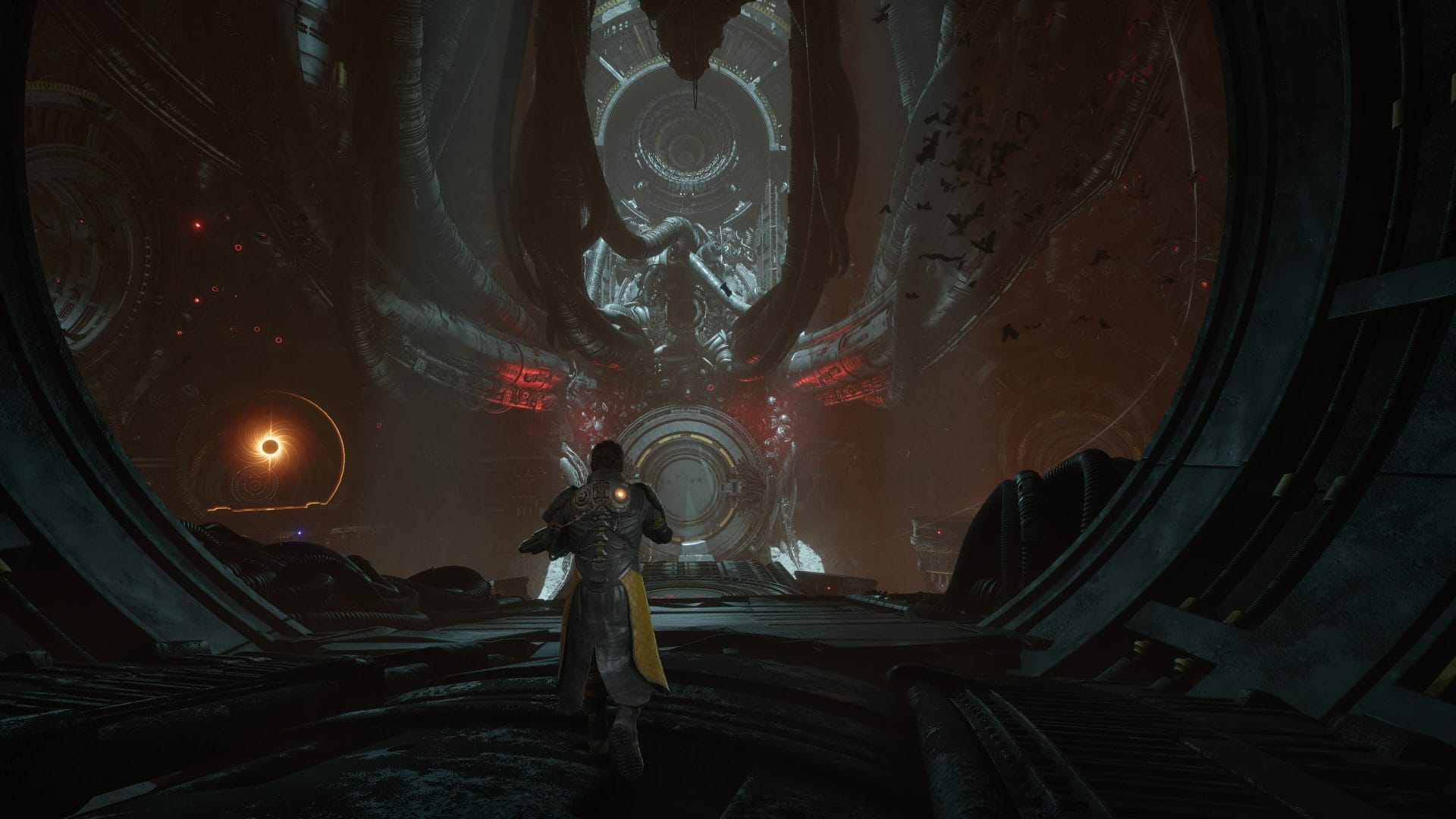
The art direction is simply superb. Environments contain a suffocating atmosphere, adding a sense of dread to each step through the nightmarish world. Alien flora reaches like tentacles, adding to the feeling of insecurity as you tentatively approach your next battle. The Lovecraftian influence magnifies the threat of creatures that dwell in the universe. Each possesses a futuristic, mechanical design, combined with cosmic horror to create an unsettling presence. The sound design further accentuates this notion. Deep drones build into otherworldly soundscapes, adding to the sci-fi horror ambiance, ensuring each step is steeped in tension.
An Evolution
Saros is a masterpiece. Not only does Housemarque successfully build on the foundations of Returnal, but it refines them to create a more accessible experience without losing its core principles. The combat system encourages aggression, making each encounter a tense and enthralling battle where risk-taking is rewarded. While the story is much more present than its predecessor, it never interrupts the action, complementing the deep and complex systems. With more options to personalise your adventure, this is not just a Game of the Year contender, but one of the defining games of its generation.
***PlayStation 5 code provided by the publisher for review***
The Good
- Adductive Gameplay
- Stunning Art Direction
- Brilliant Boss Encounters
- Endlessly Replayable
- Accesible Options
- Stronger Narrative Than Its Predecessor
The Bad
- Some May Still Struggle With the Difficulty