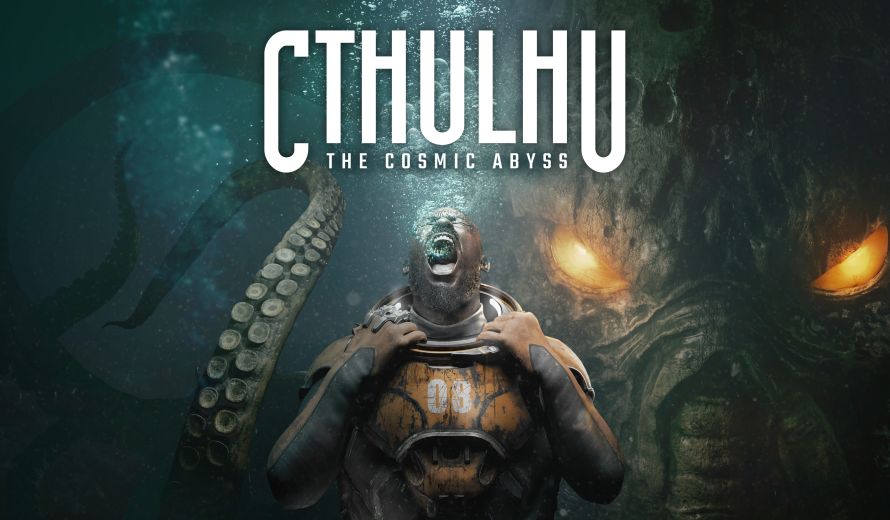
Cthulhu: The Cosmic Abyss Review
Cthulhu: The Cosmic Abyss comes from game developer Big Bad Wolf, who bills the game as a H.P. Lovecraft thriller meets investigation game. Big Bad Wolf previously released The Council and Vampire: The Masquerade – Swansong. Cthulhu stands on the shoulders of these previous games. The Council is an episodic mystery video game, and Vampire is a horror/thriller one.
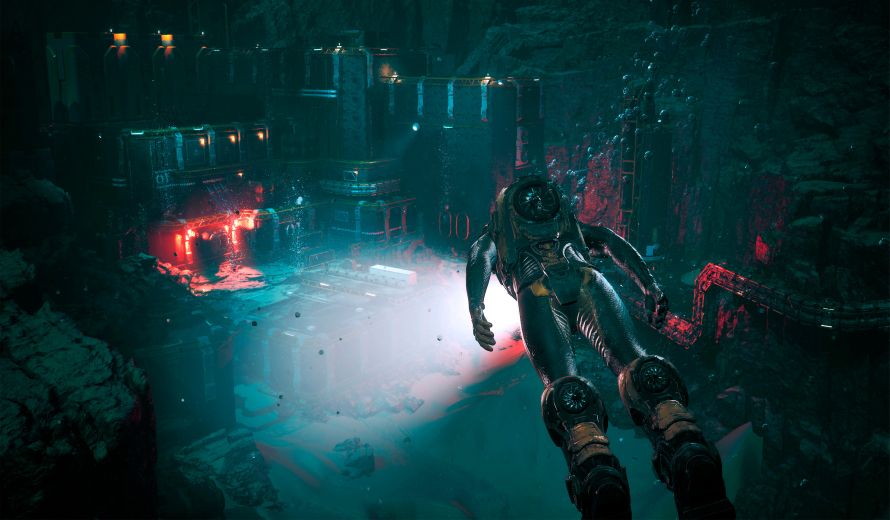
Merging the styles of the previous games into Cthulhu results in a game that will be for a specific audience; however. The Lovecraftian motifs of the game may put off those who like solving mysteries. Those who favor Lovecraft may not find the game thrilling enough and bogged down in too much clue searching. A real shame because the game sports appropriate, moody settings and atmosphere.
Another tough nut to crack is a horror game based on the Lovecraft mythos. One of the founding precepts of a Lovecraft horror story is that man is insignificant in the face of cosmic horrors. The creatures and forces of such a story are on a scale that the protagonists cannot mentally cope with. While horror on such a scale certainly generates a certain curiosity, it also makes it very difficult to create stories that are relatable. The best Lovecraft stories are the ones that make us empathize with the protagonist before they experience the horror elements.
Cthulhu: The Cosmic Abyss does its best to do so in the Prologue. It is the year 2053, and world conditions are grim. Climate change has taken a big toll on the world and, in tandem, recordable threats of an occult nature have increased too. Many of the strange events are beyond human comprehension. With dwindling resources across the globe, corporations have taken to the oceans to explore for more.
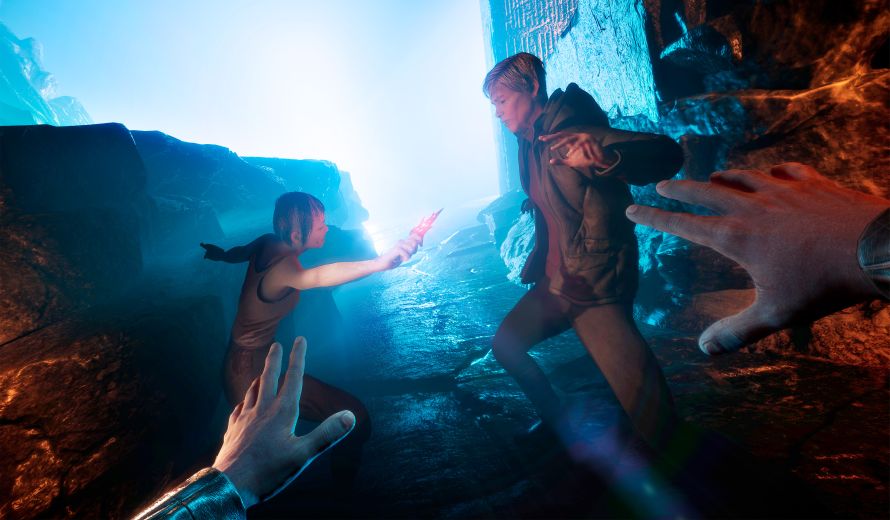
In this world, you play as Noah. He is an investigator for Ancile, an organization created to look into the ever-increasing occult events. Noah has a personal connection with the occult that goes back to his childhood. Along with his partner Elsa Royer, their investigation of a missing scientist leads to the discovery of a portal to the sunken city of R’lyeh. More of a prison than a city, it is the mythical prison of Cthulhu.
The prologue also provides an area for introducing the game mechanics. Out of everything to do with the game, it is without a doubt the UI that will what splits the players. Since the game heavily emphasizes investigative gameplay, the developers created a complex UI. To aid Noah, there is a connected AI called Key. Through Key, Noah has access to a suite of tools. This includes a sonar, the Vault, a tracking interface, and upgrades to them all, including Key.
Clunky Clue User Interface
All these mechanics are par for the course for a clue-driven narrative. Where it stumbles is how clunky and convoluted the UI for the tools is. Your focus should be the search for and analysis of clues. Instead, you are wrestling with the unintuitive controls. Finding a clue is one thing; analyzing them is a torture test of patience. It takes far too much navigation to uncover information. Navigation between the tools is also cumbersome via controls and commands not normally used to so. If you think navigation with a mouse and keyboard is frustrating, wait till you try to do so with a controller.
There is also a lack of clarity about how to use some tools properly. The biggest one has to do with the sonar. In the game, you will find objects that fall into four different categories that are basically plant, mineral, water, and air. Each of them provides reveal different things. To get full clues, you must collect objects from all four categories, though you can get by with only one or two. On top of that, you can also combine objects to get different results.
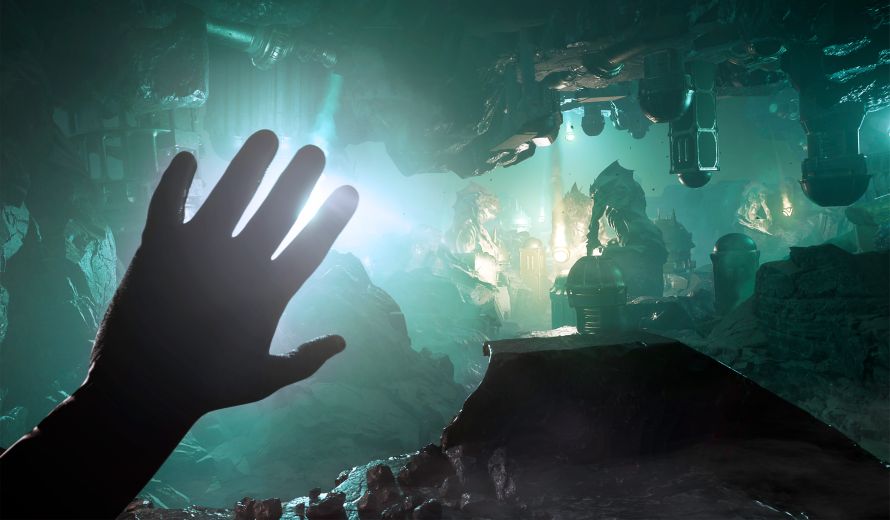
In theory, the flexibility of sonar is good; the problem is how to determine when to use which one and why. The game does not hold your hand. Some players will appreciate that, while others will find it off-putting. The game devs must know this, as they allow three modes of gameplay. In Investigation Mode, the default mode, you will progress through the game with minimal help from Key. Exploration Mode allows you to ask Key for up to three extra hints before receiving the solution. Finally, in Custom Mode, you can tailor the game to your preferences.
The various gameplay modes offer players further choices beyond clue-solving. One of the biggest factors that affects gameplay choices is corruption. Cthulhu provides 10 to 15 hours of gameplay, spread over 7 chapters. The variation in game length is not only dependent on a player’s general gaming habits but their level of corruption too. You arrive at different endings because of your level of corruption. Your corruption level depends on how you solve puzzles. Most chapters have two solution paths. One path will have a higher level of corruption than the other. Beware that when you reach the final chapter, your corruption level directly affects the conclusion. If your corruption level is too high, certain choices will lock you out.
Solid Production Values
Turning to the technical aspects of the game, it gets high marks on the graphical and auditory fronts. The locations have an impressive look and exhibit detail. The voice acting is good. They all tie into creating a dark mood. This is also true of the music. My playthrough was on the PC version, and my experience was smooth. I was a little alarmed when I first started. The fans on my AMD 7600XT card went into immediate overdrive upon startup. Quite startling, as the card has always been whisper-quiet. Thankfully, turning on frame generation returned the 7600 to normal operation. Other than that, I had no other issues.
So, what do we have here? Cthulhu: The Cosmic Abyss is an ambitious game that does not handhold. If you enjoy solving hard puzzles and can learn to use confusing interfaces, you’ll probably like this. Especially if you are big in the Cthulhu mythos. Horror and narrative-driven players will probably find the UI and lack of game direction clarity too deep an obstacle to overcome.
Cthulhu: The Cosmic Abyss takes an ambitious swing but it just doesn’t fully connect. It nails the atmosphere and tone but struggles where it matters most. The investigation systems are deep, yet buried under a clunky complex UI that often turns discovery into frustration. There’s a compelling game here but maybe it’s for a very specific type of player. In the end, Cthulhu: The Cosmic Abyss feels like a strong concept held back by execution.
***Steam key provided by the publisher***
The Good
- Great production values
- Faithful to the Cthulhu mythos
- Story tailored to player’s actions
The Bad
- Clunky UI
- Obtuse puzzles
- Lack of dread