Let’s be brutally honest for a second. For a massive portion of the MMORPG community, raiding is just a tedious chore you suffer through to get gear for the real endgame. PvP.
Competitive players don’t want to spend their Friday nights fighting scripted dragons that do the exact same mechanics every single pull. They want a system that rewards split-second reaction times, actual human psychology, and raw mechanical skill. Over the last twenty years, pretty much every major MMO studio has tried to build a lasting PvP ecosystem. Most of them failed. They end up as either mindless, chaotic zerg-fests where individual skill doesn’t matter, or they just get abandoned by the devs after six months.

World of Warcraft is the weird anomaly. Its structured 3v3 Arena bracket isn’t just a side mini-game; it is an absolute juggernaut. It’s the benchmark. It’s a format so punishing and so finely tuned that it keeps pulling hardcore players back, expansion after expansion, long after newer, flashier games have uninstalled themselves from our hard drives.
The Wild West: Origins of MMO PvP
If you played MMOs back in the early 2000s, you know that PvP was basically the Wild West. In Vanilla WoW, structured matchmaking was a pipe dream. You wanted to PvP? You went to Tarren Mill or Stranglethorn Vale and ganked low-level players until a max-level rogue showed up to camp your corpse. It was chaotic, it was memorable, and it was completely, hilariously unbalanced.
Eventually, Blizzard threw the community a bone and introduced the original Honor System. You grinded honorable kills to climb military ranks and earn titles like High Warlord. But here’s the dark secret of Vanilla PvP: the system didn’t reward skill at all. It was a pure, unfiltered test of sleep deprivation. The guys getting the best gear were simply sharing accounts and playing battlegrounds 22 hours a day.
Blizzard finally realized that if PvP was going to survive as an actual competitive format, it needed walls. It needed rules. That realization birthed the Arena system in The Burning Crusade. Small symmetrical maps. No world buffs. No escaping. Just you, your team, and your cooldowns.
The 3v3 Format and the Brutal Reality of the Ladder
You can queue 2v2s if you want a relaxed evening, but everybody knows that 2v2 is basically a meme bracket heavily skewed by whatever class is currently overtuned. The 3v3 Arena is the actual undisputed peak of WoW combat.
Why 3v3? Because it’s the exact mathematical sweet spot. It forces you to build a composition (like the infamous Rogue/Mage/Priest setup) that balances offensive burst, defensive peeling, and crowd control. You can’t just run in and mash your keyboard like a “zug-zug” warrior and expect to win against a good team.
Success in 3s requires you to track Diminishing Returns (DRs) in your head. You have to know that if your mage casts Polymorph on the enemy healer, your rogue needs to immediately follow it up with a Blind the millisecond it ends, while you stop the enemy DPS from disrupting the chain.
At high ratings, matches aren’t decided by who does more overall damage. They are decided in fractions of a second. A fake-cast that baits the enemy’s interrupt, a defensive shield pre-cast right before a rogue unstealths, or a perfectly coordinated burst window. It is stressful. It is exhausting. And it is entirely addictive.
Because the skill ceiling is so unbelievably high, climbing the ladder to grab the Gladiator title is a nightmare for the average player.
If you are stuck in the mid-tier ratings dealing with toxic randoms who backpedal, buying a WoW 3v3 Arena Boost is frankly how a lot of people bypass the misery. It guarantees you reach your desired rating without having to gamble your sanity in the group finder. Plus, it actually lets you play the game alongside multi-rank-1 veterans. You get to see exactly how they position around pillars, how they trade cooldowns, and how they punish mistakes in real-time. It’s basically a masterclass in survival.
The LFG Screen: The Real Final Boss
Ask any serious PvP player what the hardest part of pushing rating is, and they won’t complain about class balance. They will complain about the LFG (Looking For Group) tool.
The mechanics of WoW Arena are brilliant, but the social system used to find teammates is an absolute dinosaur. Sitting in the group finder looking for a healer is a soul-crushing experience. You wait 40 minutes, you finally find a decent Resto Druid, you queue up, and you lose one incredibly close match because of a bad lag spike. What happens next? The healer instantly leaves the party without saying a single word. Now you are back to staring at the UI for another hour.
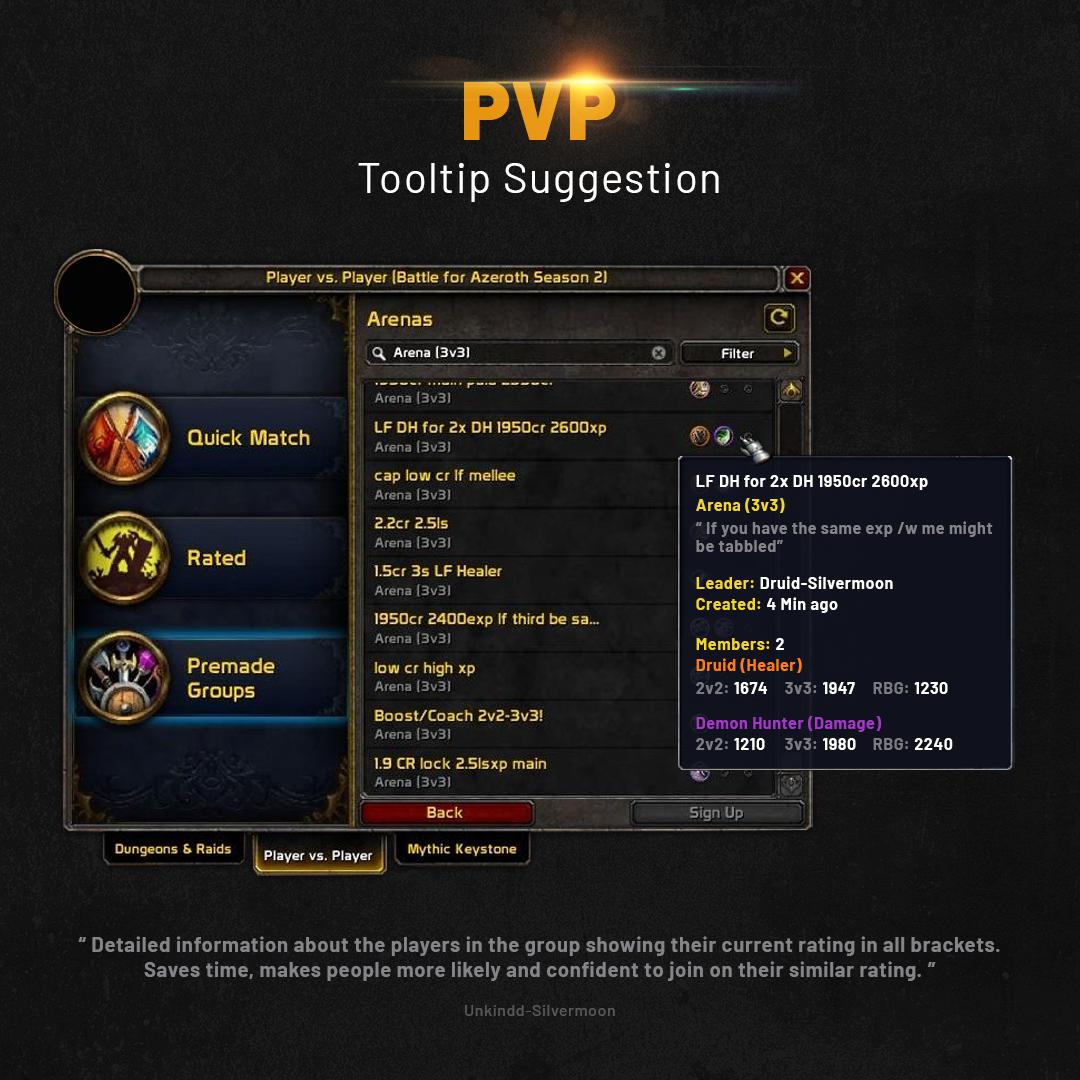
This toxic instability is exactly why the ladder feels so demanding. You spend 80% of your night playing “Queue Simulator” and 20% actually pressing your buttons.
Instead of dealing with that garbage, smart players who value their time often just use organized platforms that offer premium WoW PvP services. Queueing up with professionals means your MMR goes up smoothly, nobody screams at you in Discord for overlapping a stun, and you actually get to focus on your own gameplay instead of babysitting the fragile egos of random players from trade chat.
The Gear Treadmill and The Trinket Dance
Here is where WoW completely separates itself from modern, casual-friendly games. It actually rewards your time investment with numerical power.
You earn Conquest points from rated brackets, which you then use to buy the highest item-level PvP gear available. You aren’t just fighting for a cosmetic glowing weapon; you are actively building a mathematically stronger character. In the modern expansions, gearing is practically an art form. You farm Bloody Tokens in world PvP for early catch-up gear, you hoard Conquest, and you use the crafting system to forge pieces with the exact secondary stats you need for your specific build.
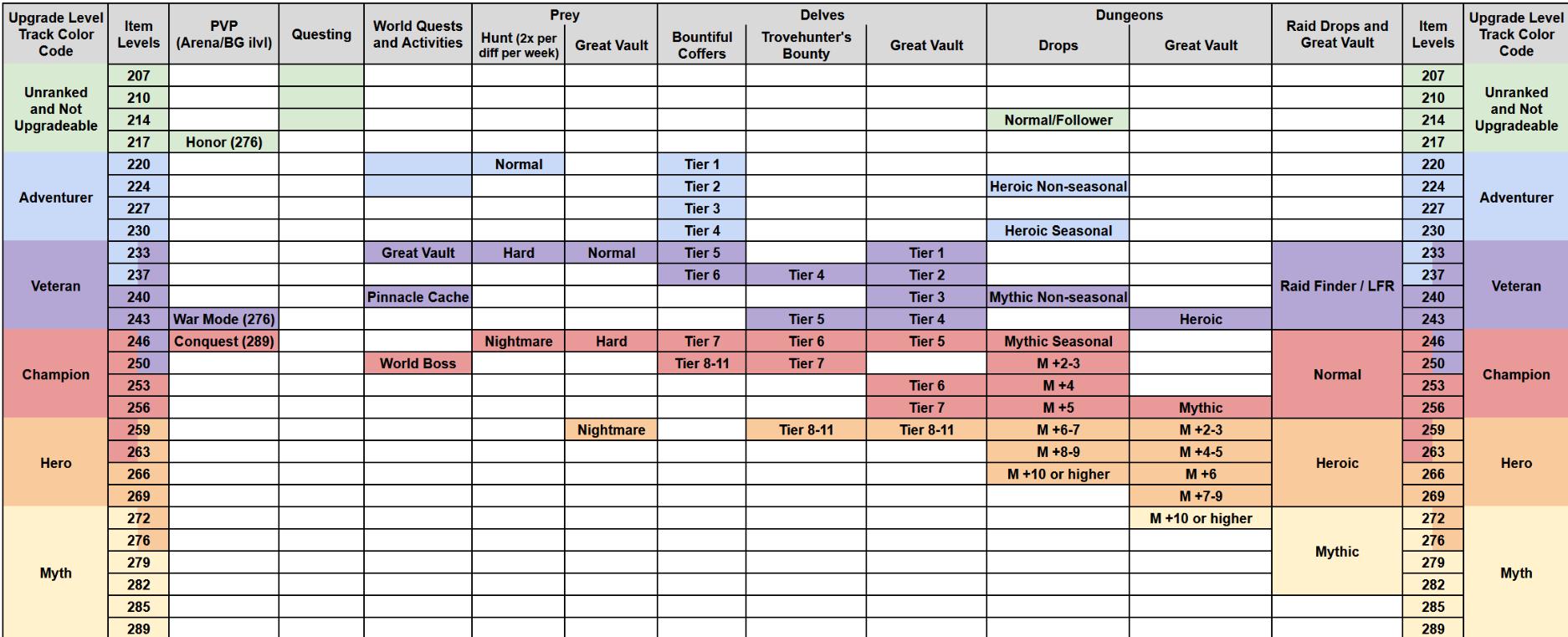
But gear is only half the battle. Every single player stepping into the arena is forced to wear a CC-breaking trinket, like the Galactic Gladiator’s Medallion. It has a strict two-minute cooldown and breaks you out of any stun, fear, or root.
Using this trinket is a massive psychological mind game. If you panic and use your Medallion early to break a random stun, the enemy team will immediately call it out on voice comms. They know you have no escape for the next two minutes. They will swap targets to you, lock you down, and delete your character. Tracking the enemy team’s trinket cooldowns is just as important as tracking your own health bar.
Why FFXIV and Modern MMOs Drop the Ball on PvP
A lot of MMOs have PvP modes, but almost none of them have the guts to make it deeply competitive.
Take Final Fantasy 14, for example. It’s an incredible game with mind-blowing raids, but their approach to PvP is basically the exact opposite of WoW’s. Square Enix recently overhauled their PvP system specifically to make it hyper-accessible. In their Crystalline Conflict mode, your massive spellbook is stripped down to about four or five buttons. Crowd control is heavily nerfed because developers don’t want players to feel “frustrated” by losing control of their character.
Even worse for hardcore players? Stat progression is completely disabled. A player who has PvPed for 5,000 hours has the exact same health and damage output as a guy who just queued up for his very first match. It’s a fun, arcade-style mini-game for casuals, but it has zero long-term depth.
WoW dominates because it refuses to hold your hand. You have full access to your entire spellbook. Surviving a brutal 8-second crowd control chain or completely outplaying a massive burst window from Convoke the Spirits gives you an adrenaline rush that a watered-down, four-button console rotation simply can’t touch. Every single global cooldown matters.
The Pillar Dance: The Secret Sauce of 3v3
If you want to know why 3v3 is so incredibly tactical, you just have to look at the map design. Every single arena features pillars or obstacles. This creates the “Line of Sight” (LOS) mini-game.
You aren’t just fighting the enemy; you are fighting the geometry of the map. Healers constantly “hug” pillars to avoid getting polymorphed by enemy mages. Melee DPS have to decide if chasing an enemy behind a pillar is worth the risk of “line-of-sighting” their own healer and dying in a dark corner. This spatial awareness separates the 1800-rated players from the 2400-rated gods. No other MMO incorporates map geometry into its combat quite as flawlessly as WoW does.
The Verdict
After twenty years of tweaking, nerfing, and redesigning, the core appeal of the Arena system is stronger than ever.
The 3v3 format provides a ruthlessly fair, violently fast-paced environment where your mechanical execution matters more than anything else. While other games desperately try to simplify their combat to appease the casual masses, WoW’s Arena system thrives entirely because it leans into its own massive complexity.
If you want meaningful competition, a brutal skill curve, and the adrenaline of high-stakes matches, this is it. Whether you are grinding the ladder with your guildmates, playing for the seasonal elite transmogs, or pushing for the absolute top-tier titles alongside the veterans at Frostyboost.com, World of Warcraft’s 3v3 Arena is still the undisputed king of the hill.
FAQ
How exactly do you get the Gladiator title in the Midnight expansion? They changed the rules to make it even more exclusive. It’s no longer just about hitting a flat number. In Midnight, you have to grind your way up to the absolute elite bracket, which means hitting a 2300 rating in 3v3. But that’s just the start. Once you cross 2300, you have to win 50 additional matches while staying above that rating. If you drop to 2299, your wins stop counting. It is an absolute meat grinder, which is why only a tiny fraction of the playerbase ever gets the mount.
Is 3v3 still the only bracket that matters? Pretty much. Solo Shuffle is incredibly popular right now because you don’t have to use the LFG tool to find a team, and Rated Battleground Blitz is a fun distraction. But 3v3 remains the “real” game. It is the only bracket that awards the seasonal Gladiator mount, and it is the only format they play at the Arena World Championship (AWC) esports tournaments.
Do I need a “Meta” comp to push high rating? In the lower brackets, you can play literally any random combination of classes and win purely off mechanical skill. But once you start pushing past 2000 rating, synergy is everything. You need a comp that doesn’t share diminishing returns on their crowd control (you don’t want two classes that rely on stuns, because the second stun will only last half as long). You need a team that makes sense.