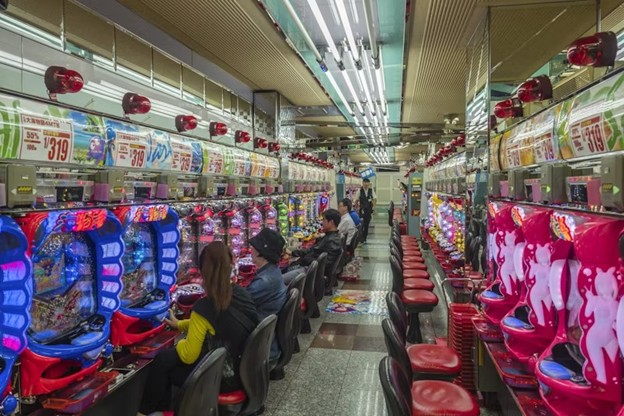
Walk through a casino in Las Vegas, a betting shop in London, or glance at a mahjong table in Shanghai, and you’ll notice gambling doesn’t always look the same globally. Games change, moods and trends shift, and even the way people talk about it feels different. That’s because laws, culture, and markets are at work. Together, they explain why one country might obsess over slot machines while another can’t get enough of sports betting.
Laws Write the Script
Every gambling scene begins with rules. Laws don’t just set boundaries; they decide what’s even possible. The U.S. is a very good example. In 2018, the Supreme Court tore down the Professional and Amateur Sports Protection Act (PASPA). Until then, sports betting was mostly banned. The ruling opened the gates, and in just a few years, sports wagering has spread to over 30 states. Billions of dollars in wagers are placed annually, and the number is still climbing. That entire boom exists because one law changed.
Europe shows a different picture. The United Kingdom runs one of the world’s most regulated gambling markets. There, operators must be licensed, advertising is controlled, and player protections are written into law. Germany, on the other hand, moved much more slowly. After years of back-and-forth, legal sports betting only came into play in 2021.
Canada is somewhere in the middle. Card Player’s take on gambling in Canada explains that licensed casinos there offer faster cashouts, higher withdrawal limits, and lower fees. These benefits directly affect how players enjoy the games. It’s a good example of how the rules don’t just control casinos but also shape the player experience. The difference isn’t technology or demand, but how governments decide to draw the lines.
When something is licensed and visible, people see it as safer. When it’s not, it’s perceived as riskier. Either way, laws set the tone for how gambling looks in every country.
Culture Shapes the Table
What people choose to gamble on reflects, in a way, their traditions and values. In China, families love to play mahjong during holidays, and versions of it spill into apps and digital tournaments. Poker variants are also popular because they blend strategy with social play. This fits neatly into cultural values of skill growth and community.
Australia tells a very different story. Walk into almost any pub or club and you’ll see poker machines, known locally as pokies, lining the walls. They are basically the same as slot machines in other countries. Australians spend more money per capita on gambling than any other nation, and pokies are the centrepiece. They aren’t just entertainment; they’re stitched into local social life. Entire town economies lean on the machines, for better or worse.
In the UK, sports betting dominates. Football (soccer) leads the charge, and wagering on weekend matches is as ordinary as buying groceries. Across Europe, this pattern repeats. Sports betting consistently outpaces casino gaming. In 2024 alone, the European betting market generated €123 billion (about CA$200 billion) in revenue. Other industry reports also confirm that in Asia, average bet sizes are 2.5x higher than in Europe, and over 4x higher than in Latin America. This cultural passion for sports naturally spills into gambling for fun. (€1 ≈ CA$1.62)
So while casinos might push the same global catalogue of games, local culture filters what actually sticks. One country favours slots, another chases cards, another pours its money into sports. The table always reflects the people around it.
Markets at Work
The gambling market responds to whatever the culture and law allow. Demand constantly expands and adapts.
In the U.S, after the fall of PASPA, sportsbooks gained more ground. Partnerships with leagues and celebrities, in addition to massive marketing budgets, turned betting into a mainstream product almost overnight. In 2024, U.S. sports betting revenue reached a record $13.7 billion, up 25.4% from the year before.
Macau shows a different market story. The Monte Carlo of the Orient has its economy built on high-roller casino tourism. While Las Vegas markets itself as an entertainment hub with shows and dining, Macau is more focused on VIP gaming rooms and baccarat tables. Its cultural and legal setup has created a market that attracts wealthy visitors, even from mainland China.
Markets also adjust to economic realities. In Europe, online gambling revenue hit €47.9 billion in 2024, making up 40% of all gambling activity on the continent. Of that, casino-style games brought in €23.2 billion, while sports and events betting made up €13.7 billion.
Meanwhile, in 2025, the Philippines’ gambling industry is expected to grow by about 17% over 2024. Gross gaming revenue is predicted to hit ₱450-480 billion (around CA$10.87-11.59 billion). Electronic gaming continues to take the lead in all this. In the first half of 2025, it made up 53.47% of the country’s GGR, hitting ₱114.83 billion. (₱1 ≈ CA$0.02)
Wherever there’s higher disposable income, you find that casino resorts thrive. Where everyday play is more common, small-stakes games dominate. Every market takes on the shape of its players’ wallets and expectations.
Technology’s Fingerprint
With technology, gambling feels borderless. Online platforms have brought slots, roulette, blackjack, and live dealer games to smartphones. That way, players can gamble even for real money without ever stepping into a casino. What used to be a night out is now as close as an app on the couch.
The U.S. leans heavily into mobile sportsbooks, where AI-driven odds and in-play betting keep fans engaged through every quarter of a game. In Asia, mobile-first design is in the lead because most people skip desktops entirely. This way, gambling has become a pocket-sized habit. Even when the same technology is available worldwide, culture and markets steer how it’s used. A slot game app might explode in one country, while in another, sports betting apps steal all the attention.
Why It Matters
It’s easy to think of gambling as a single global industry, but the truth is more complex and even more interesting. Gambling adapts to its environment like few other businesses. Change the law, and the market reacts overnight. Change the culture, and people swap one type of game for another. Change the technology, and players take their habits online without missing a beat.
For policymakers, these differences explain why some regions regulate tightly while others let markets expand quickly. For operators, knowing what locals actually enjoy: cards, slots, or sports, is the difference between success and failure. And for players, the gambling world they step into is always a reflection of their country’s rules and values.