
Picture a gamer flopping onto the couch after a marathon session of Elden Ring, thumbs aching, brain fried from another punishing boss run. Instead of powering down, they pop open Steam and load up Balatro or a quick match in Marvel Snap. No twitch reflexes required. Just cards, a little strategy, and that satisfying tick of a hand coming together. Card games have quietly become one of the busiest corners of the store, and their appeal runs a lot deeper than nostalgia. They scratch an itch that big-budget spectacle sometimes can’t: the low-stakes, high-satisfaction loop of drawing, deciding, and hoping the next flip goes your way.
That same rhythm is exactly what draws grown-up players toward the world of real-money card play online. For adults who enjoy sharpening their read on a table, sites offering poker real money have become a natural extension of the digital card hobby, with detailed reviews of well-known US rooms like Americas Cardroom, Ignition, and Bovada. These resources walk readers through welcome bonuses, break down state-by-state legality so players know where they stand, and offer strategy guides covering both cash games and tournaments. For someone already comfortable weighing a bluff or calculating a draw in a Steam deck-builder, stepping over to a genuine cash table feels less like a leap and more like turning up the intensity on a hobby they already love.
The Steam Card Game Explosion
Nobody saw Balatro coming. A poker-themed roguelike built by a solo developer, it detonated across Steam, racking up millions of sales and a spot in countless Game of the Year conversations. It fused the familiar language of poker hands with the addictive escalation of a roguelike, and the result was pure lightning in a bottle. Suddenly everyone was chasing that same magic.
Marvel Snap proved the mobile-style card duel could thrive on PC too, with fast three-minute matches that respect a busy adult’s time. Slay the Spire remains the gold standard for the deck-builder, its influence stamped on dozens of indie followers. Then there’s Inscryption, which took the humble card game and wrapped it in a genuinely unsettling puzzle-box narrative. These aren’t fringe experiments anymore. They sit near the top of Steam’s charts, and their success tells developers something important: players are hungry for games built around decisions, not just dexterity.
The Hook Is All About Anticipation
What makes a good card game so hard to put down? It comes down to the delicious tension of not knowing what’s next. Every draw is a tiny gamble. Every shuffle resets the possibilities. That flicker of uncertainty right before a card turns over is the engine that keeps players clicking “one more run” well past midnight.
Game designers understand this better than anyone, and there’s real science behind why it works. Studies on probability and player engagement show that the brain lights up not when a player wins, but in the suspenseful moment just before the outcome is revealed. That surge of anticipation is why 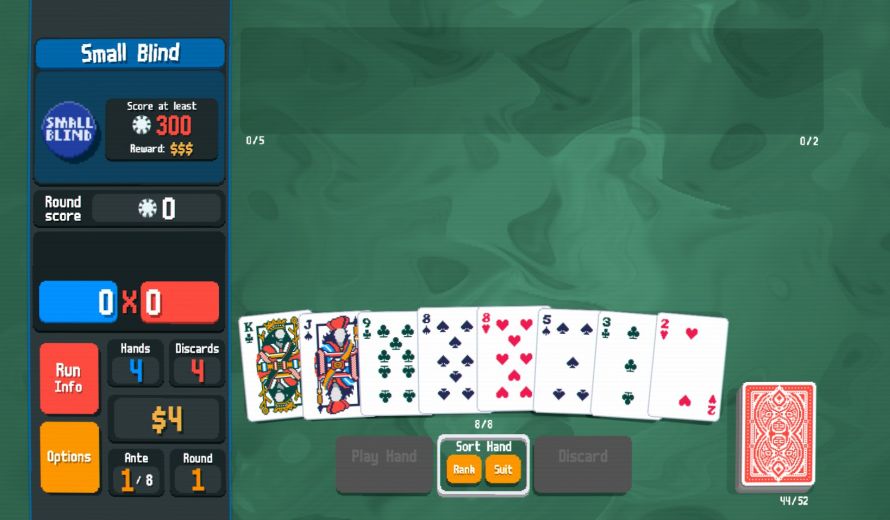 players will re-roll a shop over and over, and why a Slay the Spire run can feel so nerve-wracking on the final floor. The outcome matters, but the wait is where the fun lives.
Where Steam Cards and Poker Tables Overlap
Here’s the thing that ties the whole picture together. The mental muscles a player builds in Balatro or Inscryption are the same ones that make poker so endlessly compelling. Reading probabilities on the fly. Managing risk. Deciding when to push and when to fold. A roguelike deck-builder is essentially a solo poker session dressed in different clothing, teaching you to think in odds and outs without ever putting a dollar on the line.
Real poker layers human psychology on top of that math, which is why it has fascinated thinkers for generations. Long before video games existed, mathematicians were modeling the game’s decision-making, as seen in the foundational Borel and von Neumann poker models that treated bluffing as a solvable problem. That academic pedigree is part of the charm. Poker isn’t just luck. It’s a living puzzle, and the digital card boom on Steam has trained a whole wave of players to appreciate exactly that kind of layered thinking.
Leisure That Fits a Grown-Up Schedule
Part of why both worlds thrive is convenience. Nobody has forty hours to sink into a JRPG every week anymore. A round of Marvel Snap fits in a coffee break. A quick tournament sit-down fits into an evening after work. This is leisure engineered for the modern adult, delivered straight to a PC, a Steam Deck, or a phone with no downtime and no fuss.
That accessibility is a huge reason card games have outpaced flashier genres in raw engagement numbers. They respect the player’s time while still delivering genuine stakes and satisfaction. Whether it’s a free deck-builder or a real cash table, the experience is designed to slot neatly into the gaps of a busy life, offering a sharp little hit of strategy whenever the mood strikes.
The Genre Isn’t Slowing Down
Every Steam Next Fest now overflows with new deck-builders and card duelers, each trying to bottle the next Balatro-sized phenomenon. The appetite clearly isn’t fading. Players have discovered that a great card game can be just as gripping as any open-world epic, and often a lot easier to fit into real life.
For fans who catch the bug, the path from Steam’s card aisle to the wider world of real-money play feels perfectly natural. Same tension, same decisions, same thrill of watching the next card fall. It’s all part of one big, satisfying obsession with the turn of a card.