
I remember gathering around old CRT monitors for quick local matches that would end as soon as the power went out. Things are completely different now. Huge digital worlds bring millions of players together at the same time. Such evolution of online multiplayer gaming defines how young people spend their free time and shapes global culture.
Cultural changes have permanently changed how we spend our free time. Researchers now look at how video games have become places to socialize. Online multiplayer games have changed the way we connect online. Developers do more than just make games; they build virtual societies with their own rules and communities. Time to check what and how multiplayer games have evolved!
The Power of Gaming Communities
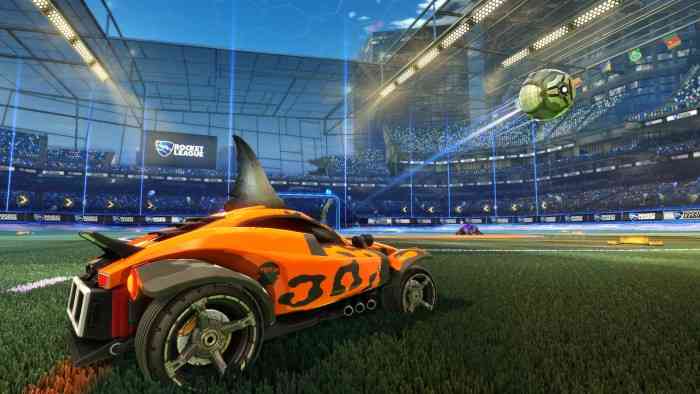
Few things in digital culture are as strong as the sense of unity in gaming communities. Clans, guilds, Discord servers, and subreddits form the foundation of loyalty. And platforms that recognize this have kept players engaged long after a game’s peak popularity has passed.
Counter-Strike is one such example. Its community has lasted through several engine changes. Players have found bugs and built maps through the community. It also gave them the platform to debate patch notes and made modding a key part of the game. This kind of dedication goes far beyond just enjoying the gameplay.
The community also helps new players get started. Someone new to a ranked ladder will have a very different experience depending on whether the community supports them. Retention numbers show this clearly: players with active social connections in a game are much more likely to come back after a losing streak or when there is little new content.
Virtual Gaming Economies

The real wealth of virtual gaming economies has become impossible to overlook. Marketplaces as well as player-to-player trading networks now generate real economic activity, with values reaching hundreds of millions of dollars every year.
Team Fortress 2 shows just how complex these economies can be. Players often compare TF2 key prices across third-party trading sites, peer-to-peer exchanges, and Steam’s own marketplace to get the best deal. Keys work as a stable in-game currency, and experienced traders watch their value as closely as someone trading real currencies.
These economies are interesting. Because they grew naturally. No one designed them to be a currency. However, the community turned it into one through repeated trades. Scarcity, demand, trust, and platform rules all play a part, just like in real markets, except here the asset is a digital item in a cartoon shooter that’s over fifteen years old.
The Design of Online Gaming Accessibility
Earlier, online gaming accessibility was only a niche concern, no more than that. But now it is a real design priority for major studios. This shift is clear in features like subtitle customization, colorblind modes, remappable controls, and adaptive controller support. More importantly, developers are starting to think about who might be excluded by a design choice, not just whether a feature works.
Microsoft’s focus on accessibility for Xbox and PC has probably done more for inclusion in gaming than any single policy statement. The Xbox Adaptive Controller shows that the traditional gamepad was just one design choice, not a universal standard. This recognition is important.
Latency and hardware requirements are accessibility issues too. They are often overlooked in this context. A player in a region with limited broadband infrastructure is not experiencing the same game as someone on a fiber connection in a major city. Cloud gaming services have attempted to bridge part of this gap, though with mixed results that continue to improve as compression technology advances.
The Resurgence of Browser Gaming Platforms
The evolution of online multiplayer gaming also includes browser gaming platforms. They are making a real impact these days. For a long time, downloadable games and mobile apps took the spotlight, but now browser games are becoming popular again. This change is driven by more people enjoying casual games and growing frustration with app stores.
People who play free online browser games today are not settling for less. This type of game has a dedicated audience that values easy access more than high-end graphics. There is often no need to download, create an account, or install updates, so anyone can start playing right away. This makes a big difference for many gamers around the world.
Developers now see browser games as a real release format, not just a basic version. Games made for browsers often include competitive multiplayer, seasonal updates, and in-game purchases that are just as advanced as those in mobile games. Browser gaming has become important again.
What is The Future of Multiplayer Gaming Trends?
Tracking multiplayer gaming trends over the next five years means paying attention to convergence across platforms, social media, gameplay, spectating, and playing. The boundaries that once separated these experiences are eroding faster than most analysts anticipated, and the player behavior data clearly reflect this.
Also, AI companions and adaptive difficulty are now standard features. Players expect games to match their skill level. Studios that use machine learning in their games notice that people play longer and quit less, which also helps them make more money.
The spectator side of gaming is equally important. Watching others play has become a way to take part. Some platforms mix the roles of viewer and player by adding things such as prediction games, live polls, and/or letting streamers affect the game. These features keep people involved even after the game session ends.
Conclusion
So the evolution of online multiplayer gaming is no longer a story. Many changes are happening at the same time and often connect in surprising ways. Communities are now products themselves. New economies have formed on their own. Accessibility is now a must, not just a bonus. Browser platforms are important again. In the end, the match is only the beginning. The real action is in everything that happens around it.