The Blood of Dawnwalker Review
The number of great vampire-themed games is surprisingly small, and if you narrow the list down to memorable vampire-themed RPGs, you’re pretty much left with Vampire: The Masquerade — Bloodlines (but not the disappointing sequel). If nothing else, The Blood of Dawnwalker is an excellent vampire narrative. Beyond that, The Blood of Dawnwalker has aspirations to reconfigure the open world RPG template. It succeeds, if not entirely.
Time Keeps Ticking
Big picture, The Blood of Dawnwalker has all the makings and mechanics of open-world RPGs you know and love. You know: main quest, side quests, exploration and treasure hunting, nooks and crannies, fast travel, crafting, and tons of combat. So far, I could be describing The Witcher 3: Wild Hunt, Elden Ring, Nioh 3, or a dozen other games.
But The Blood of Dawnwalker has a hook, and it sounds like a great one. Your family has been hauled away by a powerful vampire named Brencis. You have 30 days to rescue them. Completing every quest — and quite a few other activities — steals time from the available total. The goal is to make the player agonize over which side quests to take on and which skills to upgrade. The 30-day mechanic is also pure genius when it comes to motivating subsequent play-throughs. Time and your choices lock out a number of quests and items during any one particular run through the game.

It sounds awesome in theory. In practice, there are some flaws. For one thing, it isn’t just quests that take time from the total, but learning many skills (which also require skill points, or buying books) and completing small activities that you stumble on in the world. The economy of how much time is going to be subtracted feels, if not broken, then arbitrary. At some point, a few real-time hours in, I stopped stressing about the time element and just did what sounded fun or made my character stronger. Consistency, tighter reigns and more obvious consequences might make the system function a little better.
Night and Day, You Are the One
You play as Coen, who has been turned into a vampire by Brencis. Thanks to an overabundance of silver in your bloodstream (from years working the silver mines) you are a Dawnwalker: regular dude by day, vampire by night. This obviously gives you advantages over those loser, nighttime-only vampires.
Mainly, the day and night mechanic ties into Coen’s abilities. Vampire Coen has a set of brutal killing moves and the ability to teleport around the environment. Daytime Coen can use witchcraft spells. Both day and night Coen can fight with a sword, so the skills you learn in that branch of the tree are universal. When his health is low, daytime Coen needs to eat food or drink potions. Vampire Coen has to top off his health with blood (animals or human, take your pick). There’s a system where, if he gets low on blood, vampire Coen goes all woozy and can attack friendly NPCs and even end quest lines.
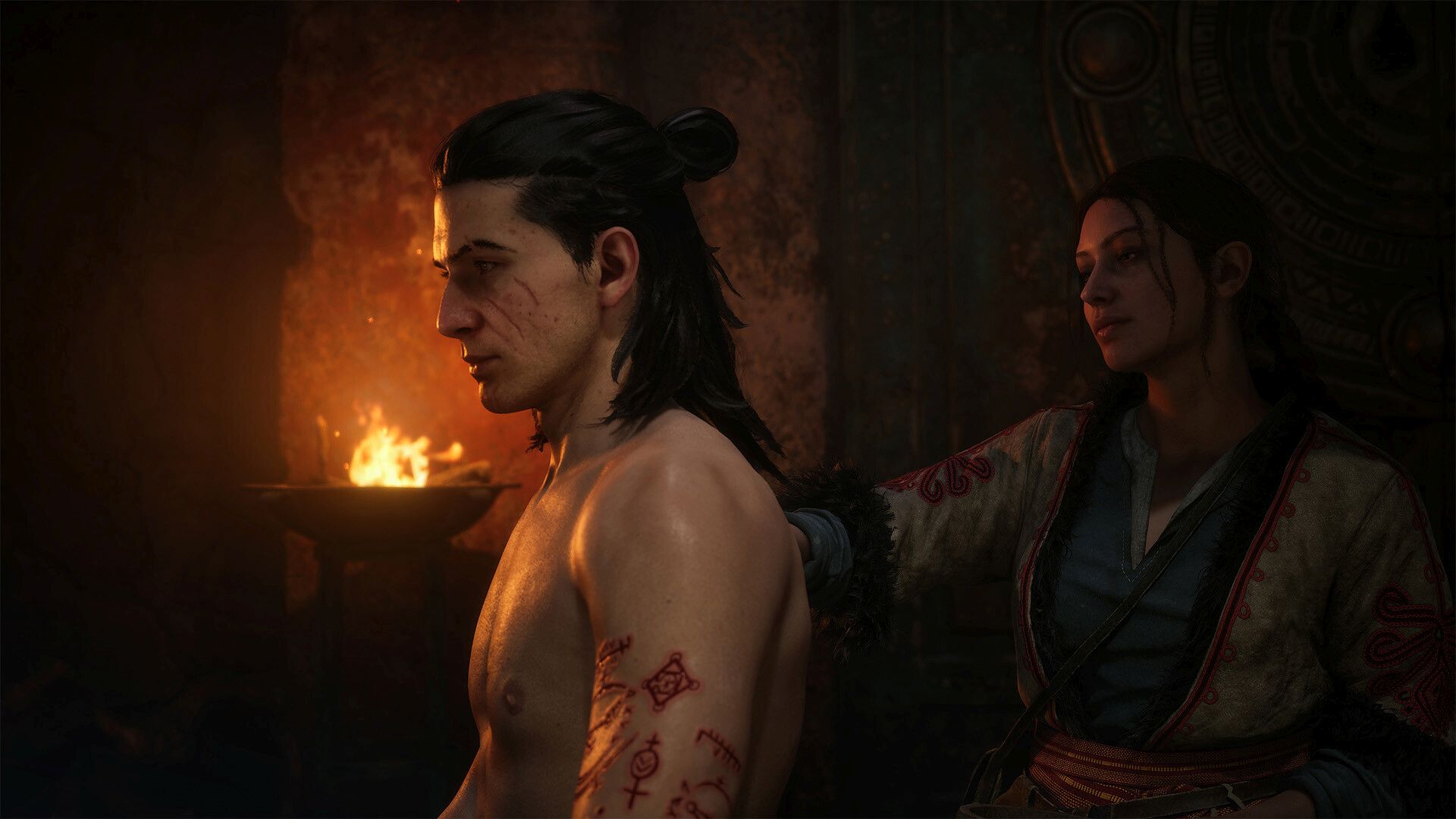
The day and night system also applies to gear, as some armor or rings or weapons only function in one or the other. Overall, I think this mechanic is more consistent and interesting to play with than the ticking-countdown-clock idea.
You Hit This Way, I Block That Way
Combat in The Blood of Dawnwalker feels like it borrowed some ideas from Kingdom Come: Deliverance. There are all the usual attacks, blocks, and parries but they come from the four cardinal directions. So the dance of combat, reacting defensively and offensively to the direction of attacks, is more nuanced and takes an entirely different type of attention and muscle memory. When it clicks, it feels awesome and powerful.
Unfortunately, one of the challenges of dialing into the new system is that the camera is sometimes uncooperative, along with a lock-on mechanic that is tied to proximity and resists attempts to break free in some situations. Movement in combat can be surprisingly janky at times.
While we’re on the subject of combat, enemy variety is fairly limited, and while bosses can behave unpredictably, it’s pretty easy to learn the attack patterns of many soldiers and other enemies in the game. Killing things outside of quests earns XP without a time penalty, so dispatching every wolf, bear, deer, rabbit, and duck you come across is easy XP, or a nice drink of blood at night.
The Vampire Diaries
If there’s one aspect of The Blood of Dawnwalker that’s hard to find fault with, it’s the game’s writing, acting and overarching narrative. Beginning with the masterful and lengthy Prologue, the story and characters are engaging from top to bottom. The Blood of Dawnwalker takes its time to establish the cast of characters and the high stakes (no pun intended) of failure. The central conceit is that vampire lord Brencis has brought an end to the plague in medieval Vale Sangora, in exchange for its citizens paying a literal blood tax and the occasional human sacrifice. A revolutionary group called the Manumits aims at ending the reign of vampires. The story is layered enough to include some shades of moral grey and characters with more than one dimension.
Some less-than-believable facial animations aside, The Blood of Dawnwalker looks and sounds incredibly good even on a base PS5. The environments are detailed and moody, if a little empty. There have been some technical hiccups specific to the console, but I never experienced any crashes, just some framerate stutters and inconsistency and a few issues with movement in tight spaces. As noted, the game’s voice acting is consistently excellent, as is the music, composed by a team of writers.

Bloody Good
Its strong narrative alone helps The Blood of Dawnwalker stand out in a crowded field of open-world RPGs. Add layered, nuanced combat and separate day and night skill systems, and you’re well on the way to something special. The innovative 30-day clock sounds like a better idea than it turns out to be, thanks to an inconsistent and somewhat punishing implementation. There’s also a fair amount of repetition in the loop of questing and fighting. Still, the positives far outweigh the negatives, and The Blood of Dawnwalker is an engaging and entertaining experience.
***PS5 code provided by the publisher for review***
The Good
- Excellent story and characters
- Deep combat systems
- Beautiful environments
- Innovative time mechanic
- Very replayable
The Bad
- Janky combat in places
- Repetitive quest design
- 30-day time system needs refinement
- A few minor technical hiccups