Resonance: A Plague Tale Legacy Review
Whether we think of it that way or not, our lives are full of puzzles. Where did I hide my keys? What’s the password for Netflix? How many hours do I need to work to pay for that new gaming rig? Why does some song I listened to 20 years ago keep me awake at night? These are all sort of superficial, of course, compared to some real puzzles around family, memory and legacy. Although Resonance: A Plague Tale Legacy is first-and-foremost an action adventure, there are plenty nagging questions about family and memory. Like The Last of Us and Uncharted, Resonance: A Plague Tale Legacy has some narrative meat on its combat and puzzle bones.
It’s All Greek to Me
The first two Plague Tale games were set in 14th century France, a time of religious persecution and disease ravaging Europe. They centered on a pair of siblings trying to evade the Inquisition, because little Hugo has a mysterious ailment that gives him visions. Resonance: A Plague Tale Legacy is a sequel, taking place 15 years before the first Plague Tale game. The player character in Resonance is Sophia, who was a relatively minor part of the first game.
The long early chapter and tutorial of Resonance: A Plague Tale Legacy gives us some context and backstory. Sophia was essentially raised in a convent, where she was subjected to borderline abuse because of her visions of the Minotaur and ancient Greece. Rescued at last by her long-absent father, Sophia joins her father’s gang of treasure-hunting rogues. She learns to fight and wield a sword and dagger. Her father mysteriously dies trying to follow Sophia’s visions of treasure on the island of Crete, possibly betrayed by his friend Faro. Sophia and her friend Leni sail off to Crete to head off the gang, solve the island’s mysteries and discover her father’s fate.
That’s a lot of exposition for a couple of tutorial chapters. That mini-drama might also be the narrative highlight of the game, with a cast of interesting characters, big set pieces, escapes and combat. Once Sophia and Leni reach the island, the pace chages. not always for the better. Anyway, no more plot spoilers. Well, one more: in her visions, Sophia sees the ancient world through the eyes of the Greek warrior Theseus.
Puzzle Pieces
Once Sophia and Leni sail to Crete, the game divides its time into three interwoven strands: exploration, puzzle solving and combat. I list those in that specific order for a reason. In Resonance: A Plague Tale Legacy, exploring the world often leads to progression blocked by a puzzle. Solving the puzzle nearly always is followed by a combat encounter. There are exceptions, of course.
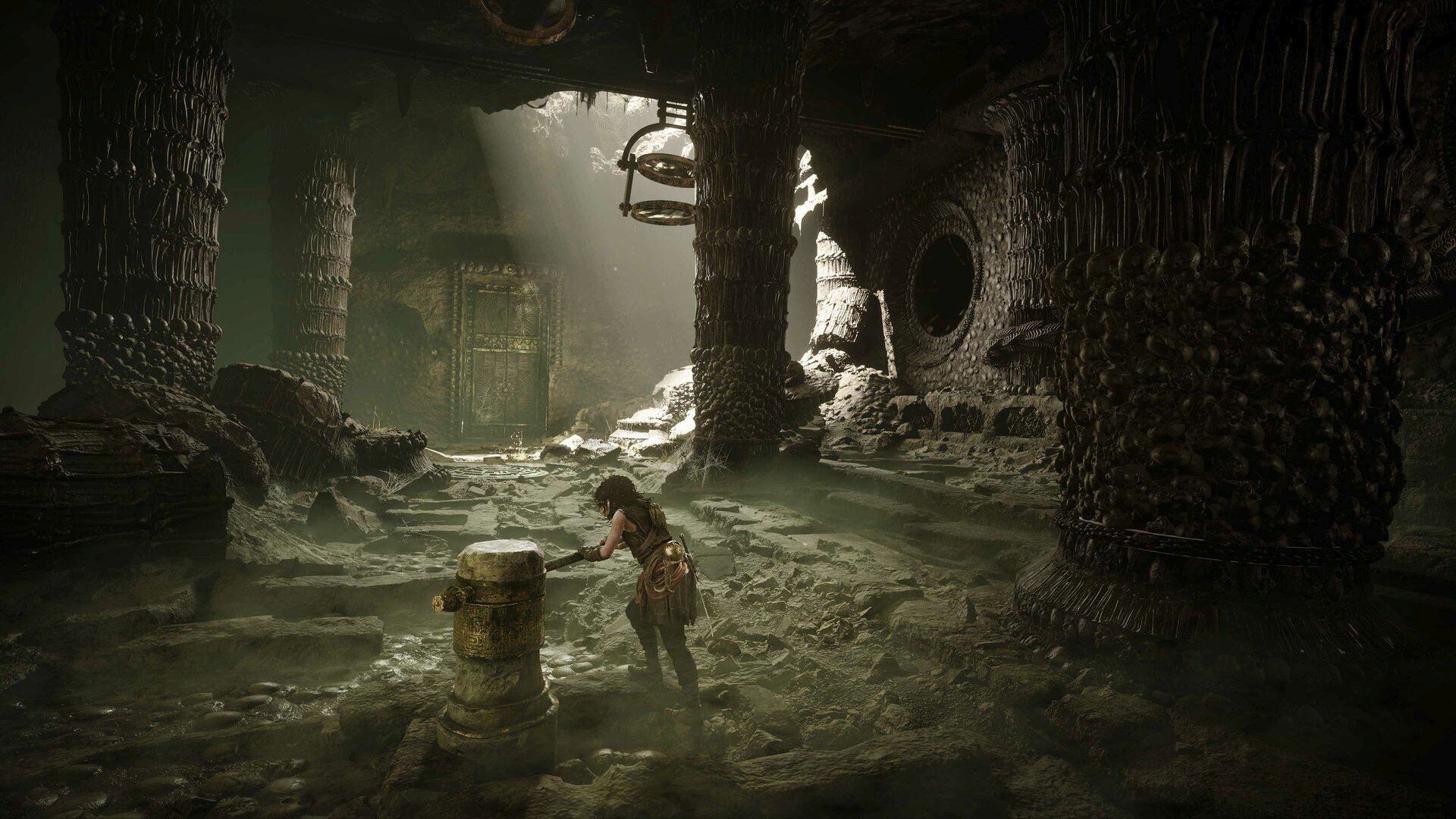
I am not patient when it comes to puzzle design. I get very frustrated by puzzles that demand the illogical combination of random objects. I’m happy to report that the puzzles in Resonance: A Plague Tale Legacy entirely sidestep this problem. Many of them use manipulating light, or pattern recognition or combinations of both. A number of them are fairly obtuse, but there are a few hint systems. For one, Sophia has her journal, which conveniently provides clues. If you get really stuck, you can ask Leni to nudge you in the right direction. Some of the puzzles require precise or time-constrained platforming, which can be a little unforgiving.
Overall, the game’s puzzles were interesting, well-designed and appropriate to the narrative and setting. However — and this is true of any puzzle adventure — getting stuck on a puzzle risks killing the game’s momentum, and listening to Sophia and Leni’s repeating banter starts to grate.
Fight Club
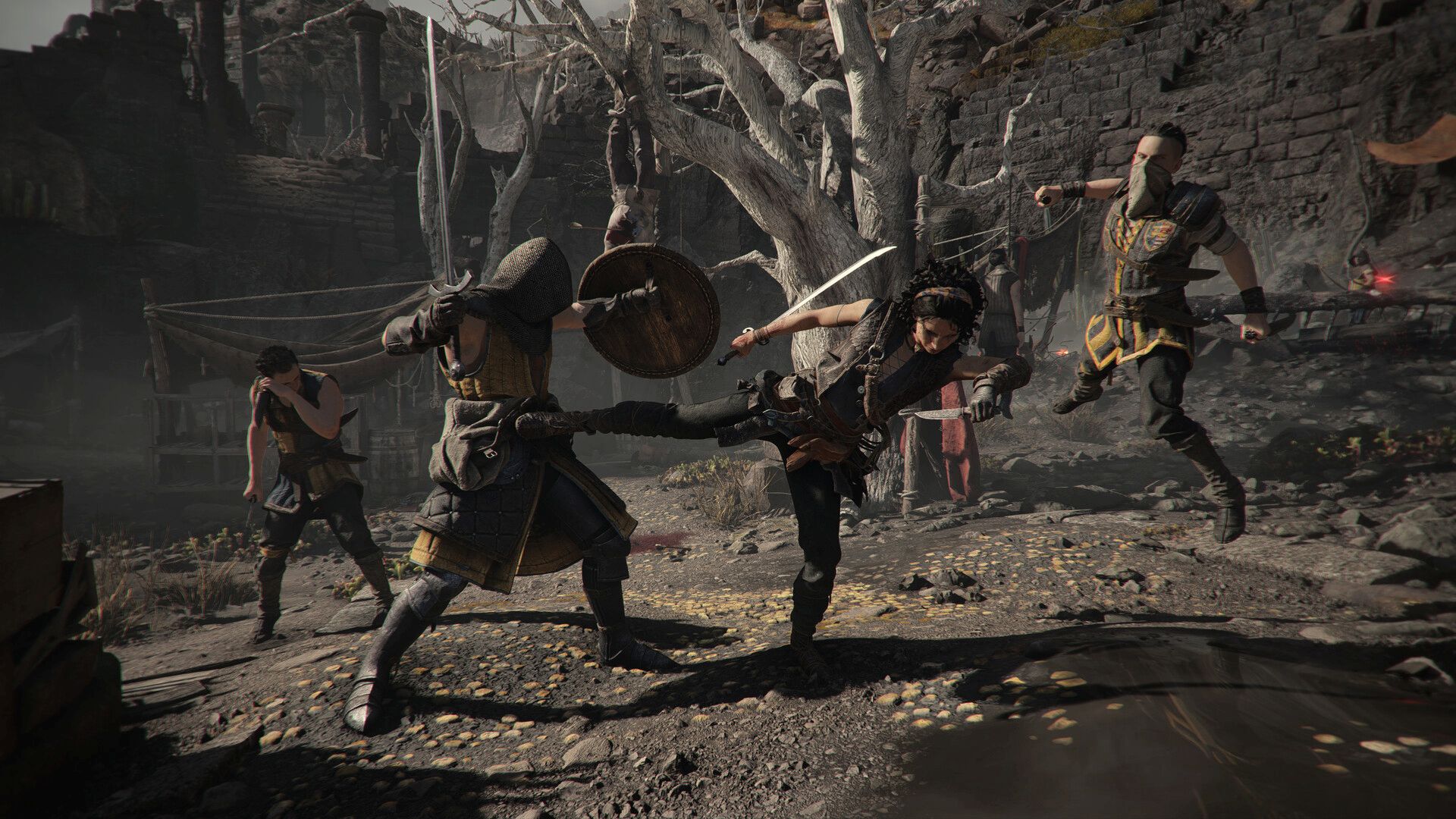
The original Plague Tale games were focused on avoiding combat using stealth. Combat often meant instant death. Resonance: A Plague Tale Legacy embraces melee combat as a pillar of game play. Combat is a compendium of familiar action RPG/Soulslike moves. Sophia has light and heavy attacks, blocks and parries, grapples and a range of special attacks that are unlocked along a rather modest skill upgrade tree. Sometimes Sophia fights in the present day, sometimes as Theseus in a vision/flashback. Sophia finds a series of weapons and they each have special attacks.
Considering this game is a real shift in design, developer Asobo has done a good job in making the combat feel natural and satisfying, if not terribly unique. There are a couple of small issues. Combat scenarios often consist of multiple enemies attacking a once, and crowd control can be frustrating when there is an elite enemy or two mixed in. Second, there’s a bit of jankiness to combat animations, especially when shifting between targets. Overall, combat is solid, if not as fluid as the best in the genre.
Picture Postcards
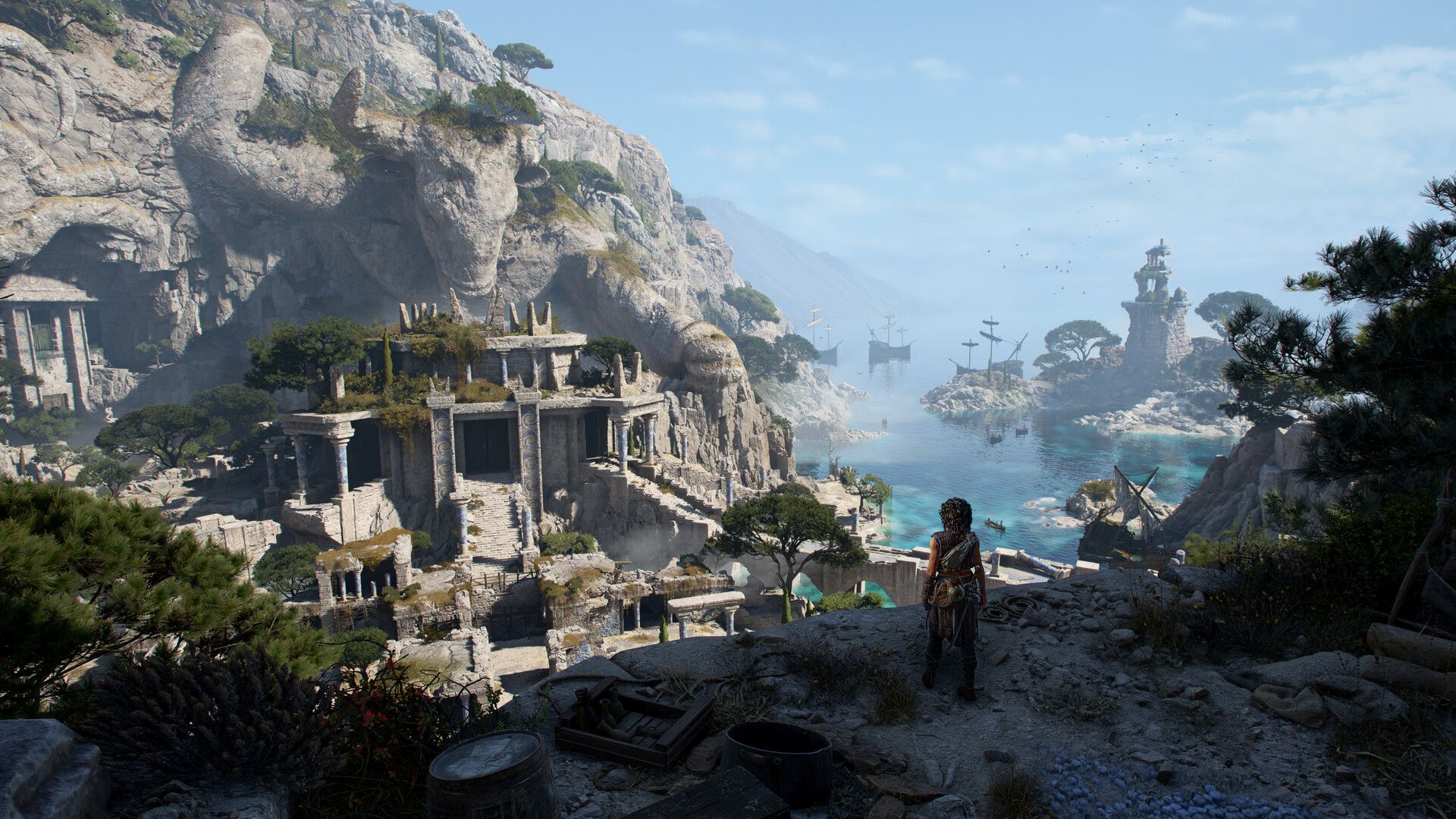
Along with of puzzling and fighting, Sophia spends a lot of time exploring the island’s ruins, monuments, underground temples and natural environments. Resonance: A Plague Tale Legacy looks spectacular. The Plague Tale games have always had exemplary art direction, and Asobo apparently doubled down this time around. The opening hour or so is a tour de force in environmental detail, performance capture and action. The vision of ancient Greece and its ceremonies and battles is equalled by Sophia encountering the same landscape as haunted and ruined. Facial animation, performances and character models are uniformly excellent.
Hand-in-glove with the visuals is the musical score by Olivier Derivière, focused on choral textures and modal harmonies. The score sets aside the usual action game cliches, replacing them with powerful voices and orchestral/world music colors. Melodic, menlancholic and unsettling in turn, Derivière’s music is some of the best I’ve heard this year.
I noted that the performance capture is excellent, and it is. But as written, the characters of Sophia and Leni feel slightly sanitized and their sometimes hokey banter smacks of writers deathly afraid of offending anyone by being too bawdy, fierce or inarticulate. It’s a small thing, really, compared to the overall achievement of the game.
Visionary
With Resonance: A Plague Tale Legacy, Asobo has shifted confidently towards action and combat, while preserving their reputation for excellent performances and outstanding visuals. An interesting narrative about memory and loss is the thread that weaves together enjoyable (if imperfect) combat, engaging puzzles and some jaw-dropping environments. The combat is not entirely polished and there are some pacing issues, but those complaints don’t seriously detract from an otherwise enjoyable adventure.
***PC code provided by the publisher for review***
The Good
- Incredible visuals
- Excellent puzzles
- Interesting narrative
- Enjoyable combat
- Strong characters
The Bad
- Puzzles kill the momentum
- Combat’s a little clunky
- Explore-puzzle-combat cycle gets predictable