Planet Zoo 2 Review
I love animals, and I enjoy visiting zoos. Now, I get why some people think that’s a contradiction. I would assert that an ethically run zoo is an asset to education and conservation and a reminder that homo sapiens exist in a web of living things. I also enjoy Frontier’s lineup of building sims, like Planet Coaster 1 and 2 and the Jurassic World Evolution series. Like the first Planet Zoo game, Planet Zoo 2 sits at the intersection of these two interests. Now, if Frontier would only make a game that combined zoo animals, dinosaurs and thrill rides.
Planet Zoo 2 is natural an evolution from the first game. It also borrows quite extensively from Planet Coaster 2 and Jurassic World Evolution 3. Some of these crossover mechanics include things like better guest AI, more responsive path creation tool and scenery brushes and most importantly, aquatic biomes. You don’t need to have played either of those games, of course, but having done so will jump-start your experience with Planet Zoo 2.
Micro and Macro
All of Frontier’s sims are built around the idea of scaling the experience to the player’s interest. There is a campaign/Career Mode, the point of which is drip-feeding the game’s mechanics, providing specific challenges around animal husbandry and economics and highlighting new features. In the case of Planet Zoo 2, the campaign focuses the player on rehabilitating a series of failing parks. Over time, a larger corporate scheme is exposed that necessitates the building of large wildlife reserves.
The campaign is less about the narrative than the tasks it assigns. Those tasks are many and come in tiers of challenge. Generally, they fall into categories like Animal Welfare, Husbandry and Genetics; Business and Infrastructure and Research and Expansion. If the list is daunting, in practice it can be overwhelming. Still, the many-moving-pieces puzzle nature of the Career Mode is what brings some players to the game.
Then there’s the Sandbox Mode, which is where many players spend their time. The Sandbox can be a rules-free playground or an exacting simulation, depending on how it’s configured. Even at its most free-form, there are baseline demands to be met, like staffing, support facilities, power and filtration. And that’s before considering the animals, their habitats, breeding and care.
Finally, there’s the Franchise Mode, which combines all the complications of a single zoo with trading animals between either a player-created network of zoos, or the zoos of other online players.
New and Old
The core loops of Planet Zoo 2 remain the same as in the first game, of course. The value of what’s new is where current players have a decision to make, because investments in the first game’s DLC animals and biomes don’t carry over. I get it. The new animals are more detailed in appearance and behavior than ever before. While the game’s launch roster of over 130 species is generous, it’s only a fraction of the animals that eventually made their way to the first game.
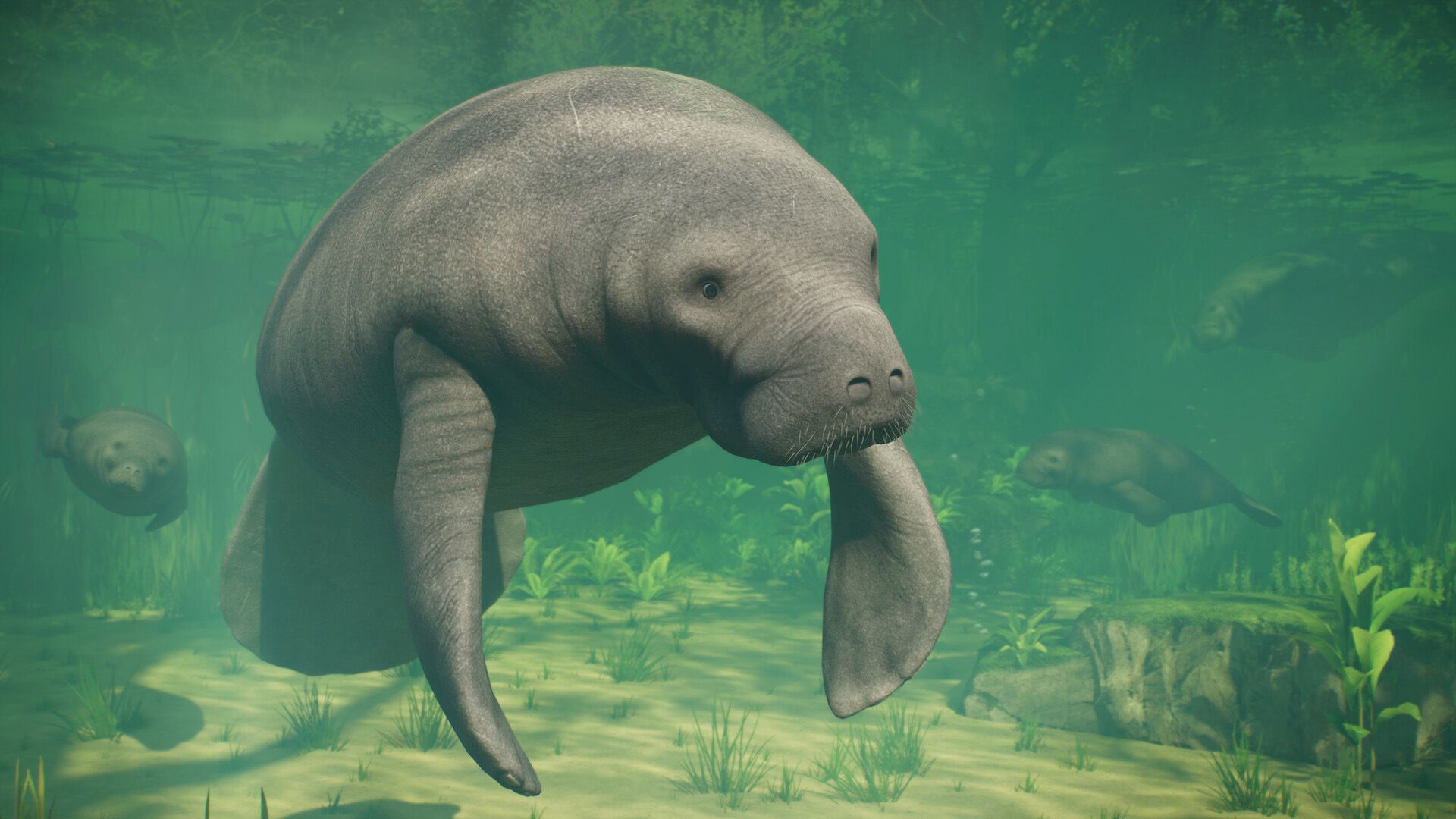
Planet Zoo 2 introduces three new types of animals and habitats. First, there are new aviary construction tools to make large, free-flying enclosures (with the bird species to go with them). There are new fresh and saltwater aquarium tools, allowing the display of deep water species. Finally, there are Wildlife Preserves, large unbarriered tracts of land for breeding and conservation.
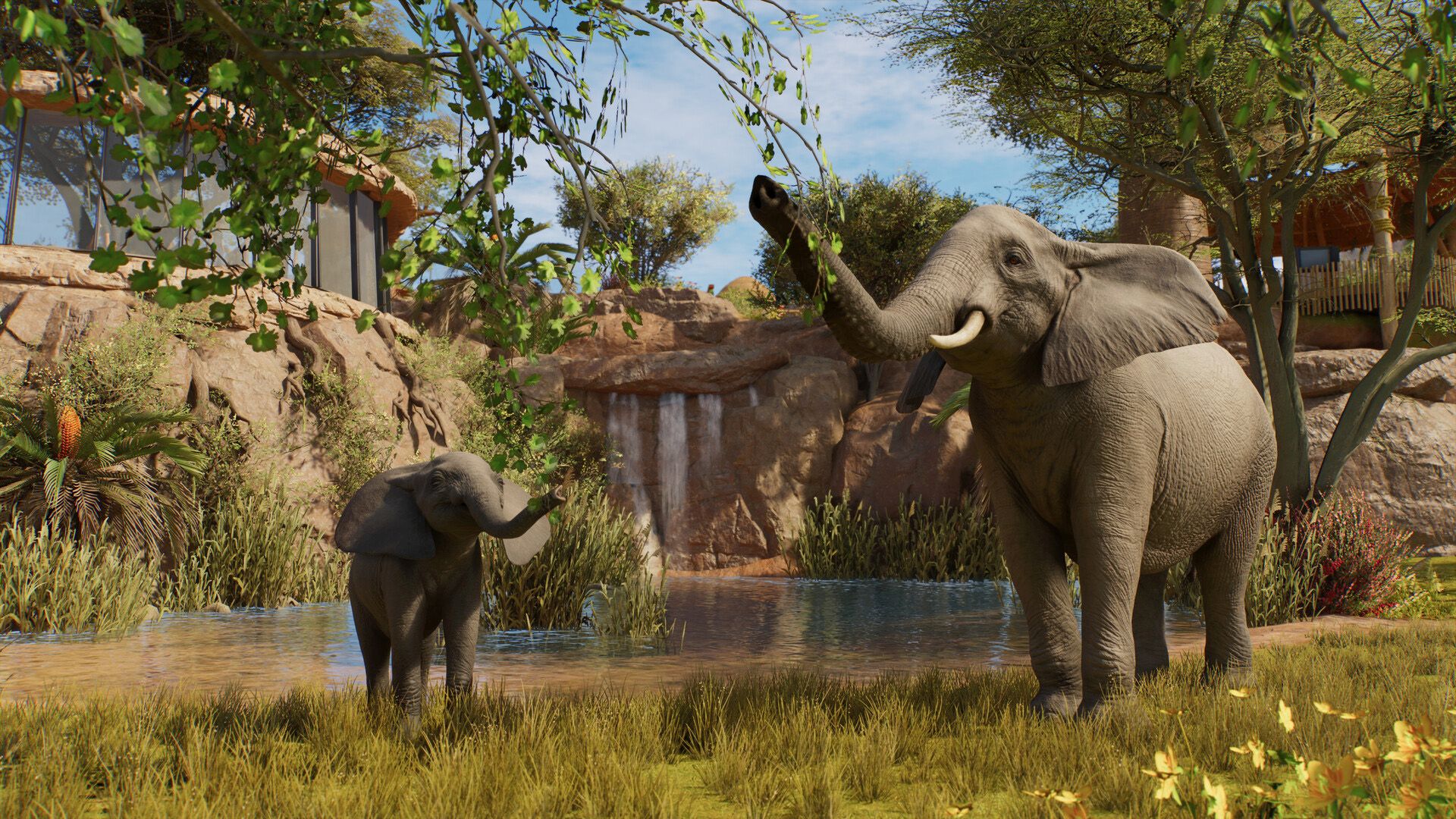
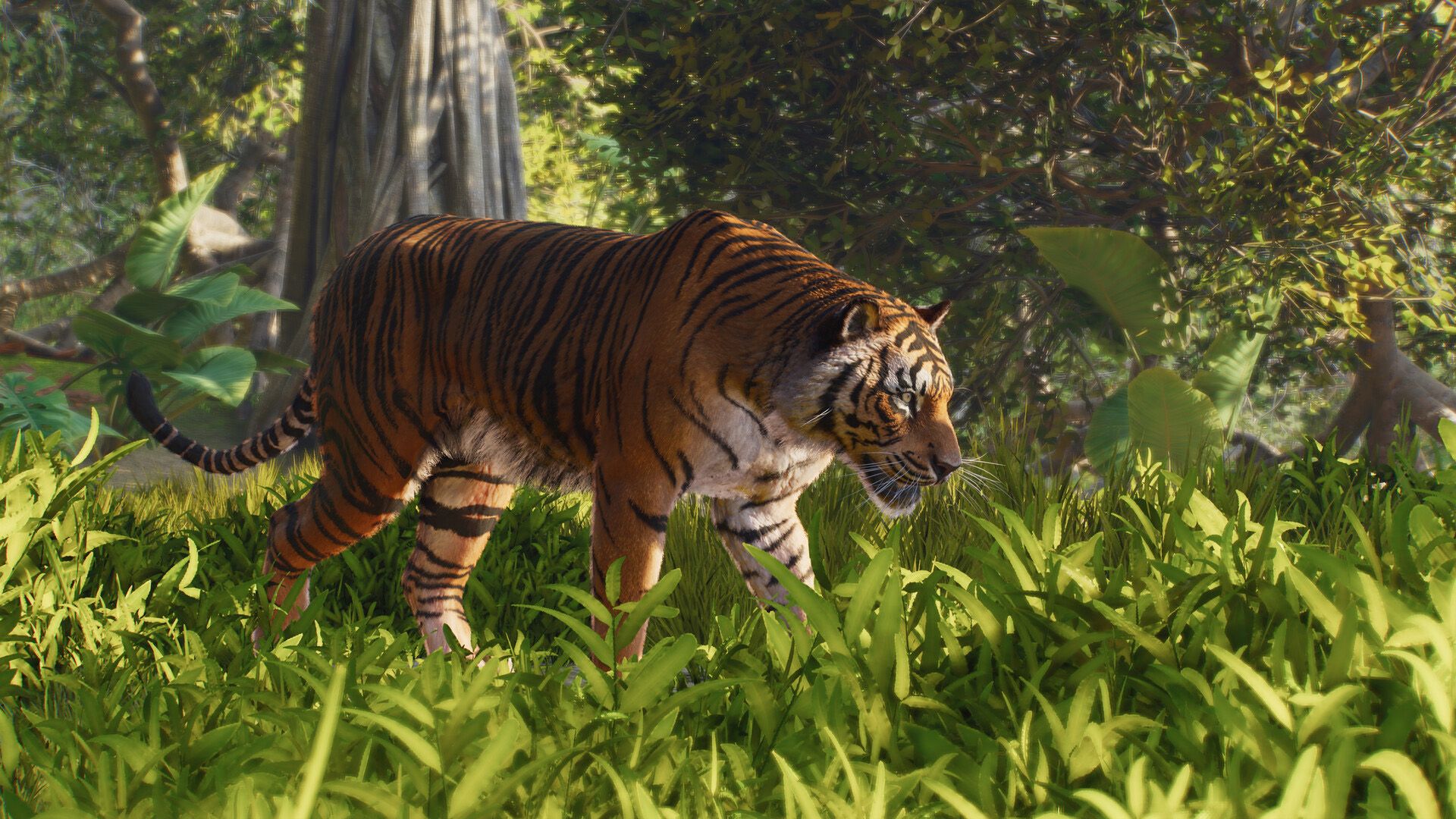
The jump in realistic animal behavior and lifelike appearance is dramatic. Many animals now have much more lifelike reactions to their environments, enrichments and enclosure mates. Besides the animals, the environments, lighting, vegetation and countless scenery objects have been improved and given the ability to be rescaled. There are a number of new brushes for painting the scenery and landscape more efficiently. The path creation system, carried over from Planet Coaster 2, makes creating guest paths around enclosures and scenery much easier. These are just a fraction of improvements and changes.
Bumpy Roads
Planet Zoo 2 — like all the Frontier building sims — is a complex web of systems, and navigating through them has become increasingly difficult, unintuitive, and time-consuming, thanks to nested menus and fiddly tools. Even plopping down a series of premade enclosures and filling them with animals is a multistage process that isn’t especially straightforward. If these kinds of games were ever a breezy, easy-to-manage experience, those days are over. Learning Planet Zoo 2 requires a commitment of time, patience and love for the journey. Puttering around is fun for a while, but you’ll soon realize that doing so misses the point and potential.
It is possible to create meticulous recreations of actual zoos or thriving, detailed new ones, but doing so has become the realm of dedicated players willing to spend hundreds of hours on a single park. For those folks, Planet Zoo 2 is a godsend, a vast and exciting set of tools, animals and possibilities, made even better in the new game. But I fear that the casual player is being left behind at the park entrance.
Finally, players of Planet Zoo 2 on Xbox Series X/S and PS5 have to contend with trying to manage the crowded den of menus and submenus and detailed construction with a controller. Save yourself frustration; plug in a mouse and keyboard if your setup allows it. If a controller is your only option, there are a few menu options to adjust, but be prepared for a rocky time until you build some muscle memory as to how things work.
Who Let the Rhino Out?
There’s a lot to appreciate about Planet Zoo 2, from better-looking animals that behave more realistically, to new biomes and building tools. Some improvements in existing systems, a few borrowed from other Frontier games, are also welcome. Just like with Planet Coaster 2, dedicated players will need to rebuy content that they can no longer use, and hope a particular species they loved will return in DLC. Console players will be frustrated by trying to manage it all with a controller, but Planet Coaster 2 looks genuinely amazing and gives players a deep set of tools to build the World’s Best Zoo.
***PC code provided by the publisher for review***
The Good
- Looks amazing
- Realistic animals and behavior
- Deep set of tools to build with
- Incredibly detailed management systems
The Bad
- Convoluted interface
- Painful with controller
- Daunting learning curve
- No carryover DLC content from Planet Zoo