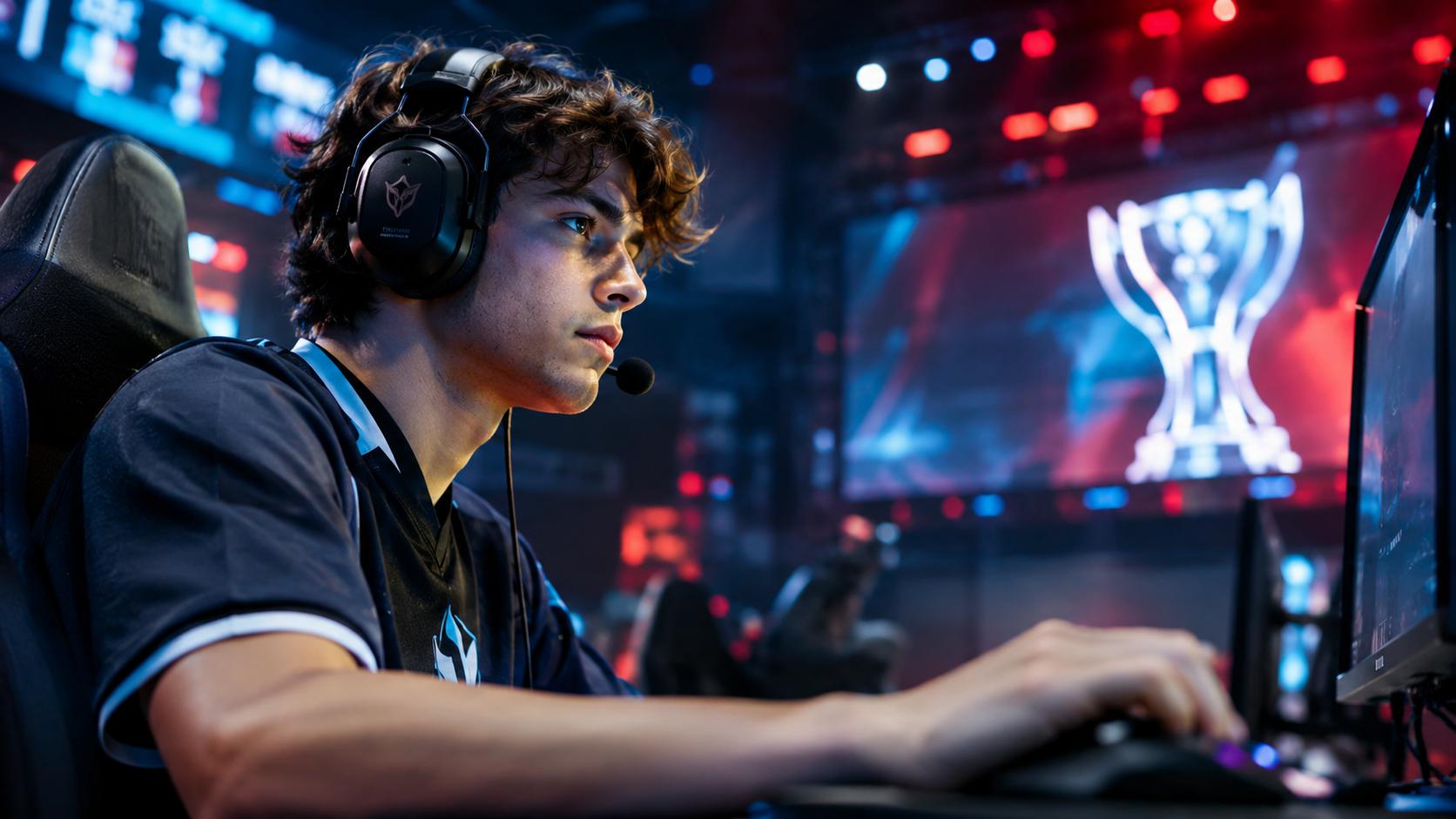
Esports Lessons for Traditional Sports: Broadcasts, Formats and Fans
Bilibili Gaming beat Gen.G 3–1 in the League of Legends World Championship final at Barclays Center in Brooklyn on November 14, 2026. Riot built much more around that match than a standard arena broadcast: Worlds Pick’Ems ran on the LoL Esports site and inside the League client, while a three-day Fan Fest filled Pier 36 in Lower Manhattan before and during the final. The competitive season itself ran through regional leagues into First Stand, MSI, and Worlds. The screen never sits still.
The Broadcast Assumes You Want the Numbers
An esports viewer is rarely left with only a score and a camera angle. League of Legends broadcasts can show gold totals, objective timers, champion selections and item changes while a fight is developing, and Worlds Pick’Ems gives fans another layer of interaction between matches. Traditional sports already use player tracking, expected-goals models and live probabilities, but esports has become especially good at placing information beside the action instead of burying it in a separate statistics page. The better lesson is restraint: show the number that explains the next decision rather than every number available.
Formats Can Change Without Losing the Audience
First Stand in São Paulo gave teams five games to solve the same opponent, and Fearless Draft made each game slightly different from the one before it. Once a champion had appeared earlier in the series, that option was gone, so coaches could not simply return to the same comfort picks when the score tightened. By game four, the draft itself was telling part of the story: which players still had strong choices left, which lanes had become harder to cover, and how much preparation a team had brought into the series. Traditional sports cannot rewrite their core rules every weekend, but shorter competitions and exhibition formats have more freedom to test an idea and see whether fans actually follow it.
Live Information Has to Be Read in Seconds
Esports viewers get used to spotting a shift before the scoreboard tells the whole story. A gold lead in League, a weak economy in Counter-Strike, or an objective timer running down can show where the pressure is building. That same focus on one changing number appears in the Airplane Crash game (Arabic: لعبة الطيارة كراش), where SPRIBE’s Aviator centers each round on a rising multiplier and lets the player choose when to cash out; the provider lists a 97% RTP, equivalent to a 3% theoretical house edge over long-term play. With the stake and session bankroll set beforehand, the multiplier becomes the main live decision, which is also a useful lesson for sports apps: put the number that changes the story where the viewer can see it immediately.
Valve Can Rewrite Preparation With One Update
Counter-Strike 2 showed how quickly competitive preparation can shift on July 8, 2026, when Valve added Cache to the Active Duty pool and removed Overpass. The change arrived a little over two weeks after the IEM Cologne Major weekend, leaving teams to rebuild grenade lineups, defensive rotations, and opening plans for the next part of the calendar. League’s Fearless Draft creates related pressure because a team’s available options shrink within the series itself. That change is immediate.
Sports Apps Can Learn From Short Sessions
The design lesson also reaches beyond tournament broadcasts. InOut Games released the chicken road game on April 4, 2024, with a 98% RTP and four difficulty settings, while the possible winning odds and risk rise as the player advances. A preset stake gives the session a fixed starting point, and the step-by-step screen makes progression easy to follow on a phone without opening another menu. A sports app can use the same economy of information by putting the score, game clock, possession state, or next event within one or two taps instead of surrounding a live match with unnecessary screens.
Esports Writes the Rules Down
The Esports World Cup’s 2026 resource center carries separate competition rulebooks for 25 game titles, each with its own current document and effective date. Riot also publishes event rules and a global esports code of conduct covering professional participants across its competitions, giving teams and players a written framework before a tournament begins. Competitive games need that documentation because patches, map pools, and draft systems can change more frequently than the laws of football or basketball. Traditional sports can take the procedural lesson: announce the change, specify when it starts, and give competitors enough detail to prepare for it.