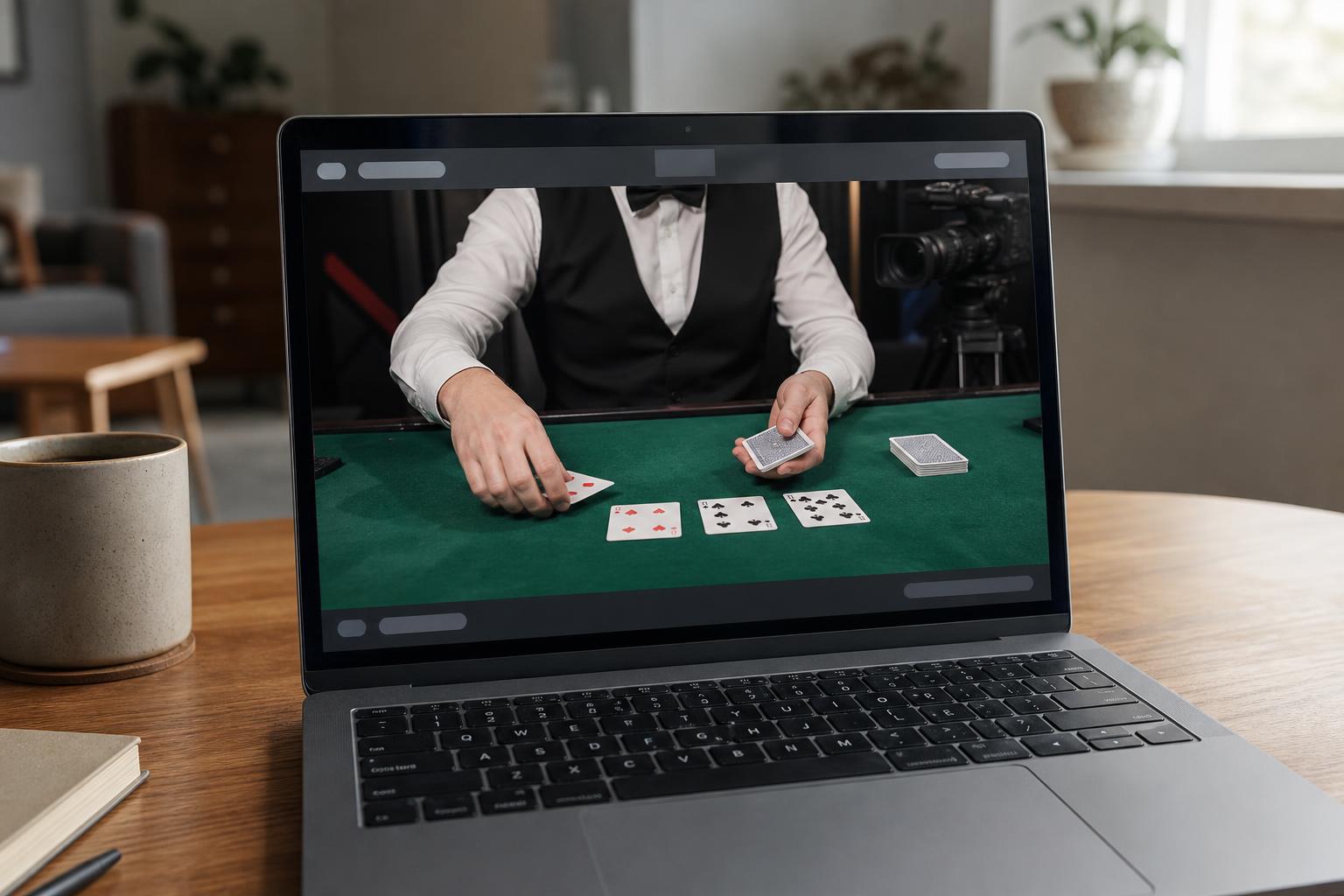
The dealer draws a card and lays it on the felt. On a laptop or phone, a player watches the movement and considers the choices displayed beside the video. The cards are physical; the decisions travel through software.
For football supporters used to watching live broadcasts, the camera work is familiar. Live-dealer casino games add something to that viewing experience: controls that let someone take part from another location. Delivering it requires a studio, a reliable stream and software that keeps the game moving between the table and the browser.
What Happens on Each Side of the Screen
In the online casino ontario market, live tables bring together a dealer’s actions and a player’s on-screen selections. Blackjack uses physical cards, with the available decisions presented through the interface. Roulette pairs a real wheel with a digital layout where players submit their bets.
A player can watch cards being dealt, hear the dealer and follow the round through the information on screen. The game’s rules explain which choices are available and how outcomes are settled.
Live-dealer tables accounted for 32% of casino wagers in iGaming Ontario’s first-year market report, covering April 4, 2022, through March 31, 2023. The figure covers operators reporting under agreements with iGaming Ontario. The provincial lottery corporation’s online offering is reported separately.
From the Camera to the Browser
Behind the dealer are cameras, microphones and broadcasting equipment. Several camera angles can show the presenter, the table and closer views of the action, giving remote players a view of what is happening.
The browser then combines that video with buttons, graphics and account information. Suppliers use HTML5, web technology that supports interactive content on desktop and mobile devices, to deliver these elements.
The game also needs to register the result. Some roulette products use video-based recognition to identify the winning number. That turns the wheel’s physical outcome into information the software can process and display.
There is a delay between an event being filmed and appearing on a player’s screen. Video delivery, game information and decision controls must work together so the player can follow the round and see when actions are available.
Where the Website and Studio Meet
The operator running the website and the supplier producing the live game have different jobs. An operator can offer access to games broadcast from a specialist supplier’s studio, bringing them into the same website as the player’s account. ToonieBet works this way in Ontario, hosting live tables from specialist studios on its own site and backing them with 24/7 live chat support.
A single supplier studio may serve several operators. Some suppliers can give the same physical table different branded appearances, using customized graphics to change what customers see through each website.
Another option is a dedicated studio created for one operator and its audience. These arrangements shape the appearance and production of the broadcast, while the operator provides the route into the game.
A table available through an Ontario website can also be broadcast from a studio elsewhere. The player’s location, the operator’s platform and the production room are separate parts of the service, each with a role in delivering the game.
Rules for Equipment, Software and Dealers
Ontario’s private operators need registration with the Alcohol and Gaming Commission of Ontario and an operating agreement with iGaming Ontario.
Before games become available, the province’s market-entry guidance requires certification of games and supporting critical systems by an independent testing laboratory registered with the commission.
The documented standards extend to electronic equipment used in live-dealer games. They also address access to gaming supplies, limiting it according to business need, and require controls to protect game integrity from presenter-related risks.
Ongoing monitoring checks the operation of systems and supplies. Operators must also have procedures for service interruptions, including recovery, appropriate voiding of bets and settlement that protects the player when a game cannot continue.
Those requirements matter because an interrupted connection can affect a wager already placed. The rules give operators responsibilities for handling the disruption and its outcome.
The Controls Beside the Table
Players must be at least 19 and physically present in Ontario when wagering through its regulated private-operator market. Account access is treated separately: someone outside the province can access an account, while wagering requires presence within Ontario.
Regulated operators must provide spending and time limits, short breaks and longer-term self-exclusion. Deposit limits cap money added to an account; loss limits restrict losses over a selected period. Time limits set boundaries around time spent playing.
Gambling involves financial risk and can cause harm. Anyone concerned about their gambling or someone else’s can contact ConnexOntario at 1-866-531-2600.
The broadcast brings the physical table to the player’s screen. Alongside that view, the game rules and account controls give players information about participation and ways to set their own boundaries.