Most of us have a graveyard of digital stuff we paid for. Skins in a shooter we stopped playing, a battle pass from a season nobody remembers, a library tied to a launcher that may not exist in fifteen years. None of that matters while the game is alive. It starts to matter when it isn’t.
Physical trading cards sit at the other end of that scale, and Pokémon cards are the clearest example. A card printed in 1999 still exists, can still be sold, and still has a price you can look up today. That gap between a licence to use something and an object you own is worth thinking about if you spend money on either.
What a digital purchase really is
When you buy an in-game item you’re almost always buying a licence, and the terms of service on the big platforms say so fairly plainly. The item lives on someone else’s server and is tied to your account. You usually can’t move it or sell it outside whatever system the publisher allows.
That holds up until a publisher decides a game has run its course. Ubisoft’s The Crew is the case people still bring up: when its servers shut in 2024 the game stopped working, and whatever players had bought inside it went with it. Plenty of mobile games have closed the same way with far less fuss.
There are exceptions. Valve lets Counter-Strike players trade and sell skins on the Steam Community Market, and that has produced a real secondary market with real prices. Even there, though, the rules belong to Valve. It sets the fees and the trade holds, and it can change either whenever it likes.
What a physical card is
A Pokémon card is a piece of printed cardboard, which sounds like a downgrade until you think through what it means. Nobody can switch it off. You can sell it to anyone, on any marketplace, or hand it to a friend across a table. Its price comes from what the last few buyers paid for the same card, and no publisher gets a say in that.
Because those sales are public, you can track them. Here’s where some of the very first English cards stood at the end of October 2026, using near-mint, ungraded prices from sold listings:
-
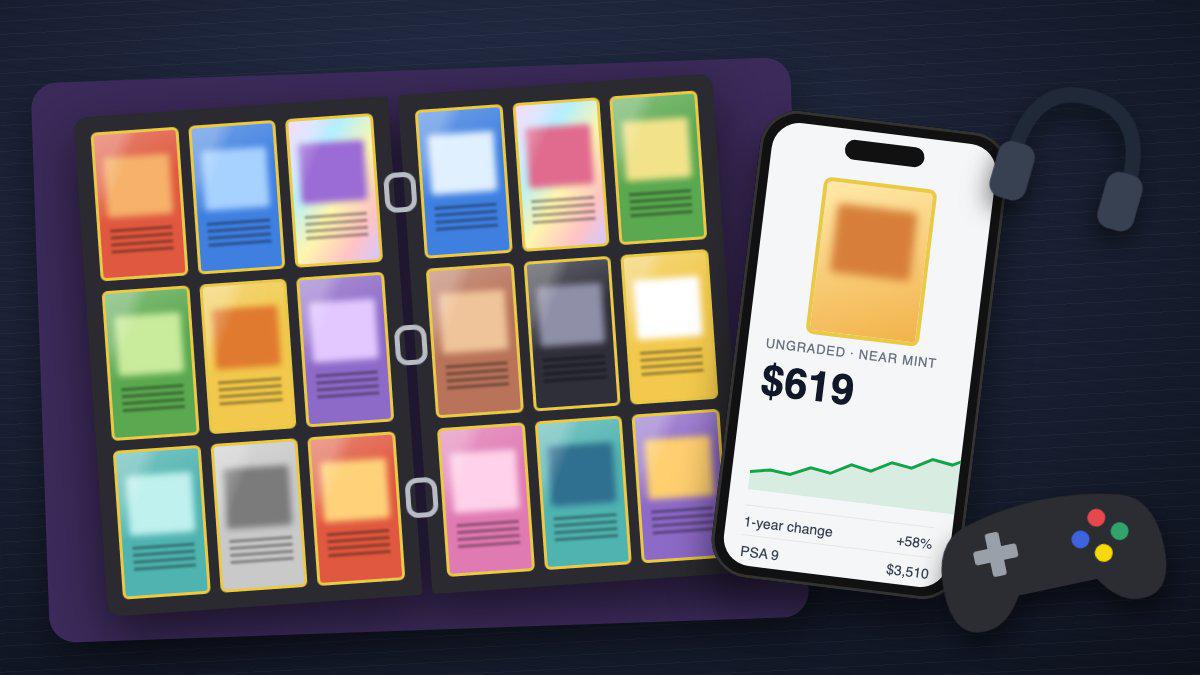
Base Set Charizard (the common unlimited print): about $619, up 58% on a year ago
-
Base Set Blastoise: about $211, up 181% and at its highest since 2021
-
Base Set Venusaur: about $159, up 242%
-
Base Set Pikachu: about $9.74, up 189%
Those cards came out of booster packs in 1999. Every pack cost about the same; the cards inside just aged very differently.
It goes down as well as up
It would be easy to turn that list into a pitch for buying cardboard instead of skins, and it would be misleading. Card prices fall, sometimes hard.
Charizard shows it well. That same Base Set card peaked at about $820 in September 2026 and now sits roughly 25% below that, a drop that happened within weeks. Typhlosion from Neo Genesis sells for around $300, up 161% over the year, yet still 39% under the $491 it reached in April 2021. Base Set Pikachu, for all its recent gains, is about half its December 2020 high.
Modern cards move too. The Umbreon ex special illustration rare from Prismatic Evolutions, one of the most chased cards of the last couple of years, sells for about $1,105 ungraded. That’s a lot of money for one card, and it’s also around 14% less than it fetched twelve months ago.
Most cards, meanwhile, are worth very little. A common from a current set typically sells for between 10 and 16 cents. The bulk of what comes out of any pack ends up in a shoebox, which is honestly where most of it belongs.
So cards aren’t automatically a smarter way to spend money. What you get is an object with an open market and a public price, and you keep it whatever happens to the company that made it. A skin is yours on the publisher’s terms, for as long as they keep paying for the servers.
Why so many gamers cross over
A lot of people who grew up on Pokémon Red and Blue have gone back to the card game as adults. Nostalgia is a big part of it. I suspect another part is that collecting something you can hold feels different after years of buying things that only exist inside an account.
The overlap with video games is obvious once you look. The same characters turn up on cards and on screen, new sets get talked about like game launches, and chasing one rare card from a box works a lot like grinding for a drop. The difference is what’s left at the end. A rare drop goes when the game goes. A rare card is still in the binder.
If you’ve got cards in a drawer
If you kept cards from the Game Boy years, have a proper look before they go in the bin or into a yard sale box. Condition makes an enormous difference. A near-mint Base Set Charizard and a heavily played one are priced almost as if they were different cards, and graded copies are in another bracket again: a PSA 9 of that Charizard sells for about $3,510.
The quickest way to check is to look up recent sold prices rather than asking prices, because an asking price is only a hope. UltraBall tracks sold listings for more than 20,000 Pokémon cards and shows ungraded and graded values side by side, so you can see what a card is really changing hands for before you decide whether to sell it, keep it or send it off for grading.