Digimon Story: Time Stranger Review
There are legions of gamers for whom the difference between Pokémon and Digimon could not be more obvious. There are other gamers who mistakenly dismiss Digimon as a less popular Pokémon knockoff. The reality is that, while they share many similarities and have both generated vast amounts of merch and content across all media, they are quite dissimilar. There’s maybe no better introduction to what makes Digimon unique than Digimon Story: Time Stranger.
Time Stranger is the seventh game in the Digimon Story series. Development started in parallel with 2017’s Digimon Story: Cyber Sleuth-Hacker’s Memory, but it has taken 8 years to arrive. Time Stranger is not a sequel but of course exists in the same universe. It’s also the closest the series has come to the kind of fully-realized JRPG that general audiences expect. Uniformly excellent visuals, a well-written, voice-acted story — a franchise first — and outstanding combat with real depth help Time Stranger stand out.
Time Travelers
When I praised Time Stranger’s story I could have added “for a Digimon game.” While it isn’t an incredibly deep premise, the narrative and characters are engaging enough to keep things moving and hold the player’s interest. There are far worse recent high-profile examples. Yes, we’re talking about you, Lost Soul Aside.
In a nutshell, a digital monster anomaly has broken out of a parallel dimension and is wreaking havoc on Tokyo. You’re an agent, a part of an organization investigating these shadowy anomalies and you get sucked into a time vortex. You come out 8 years earlier. Your tasks are to investigate what happened, find a way back home and fight a lot of Digimon.
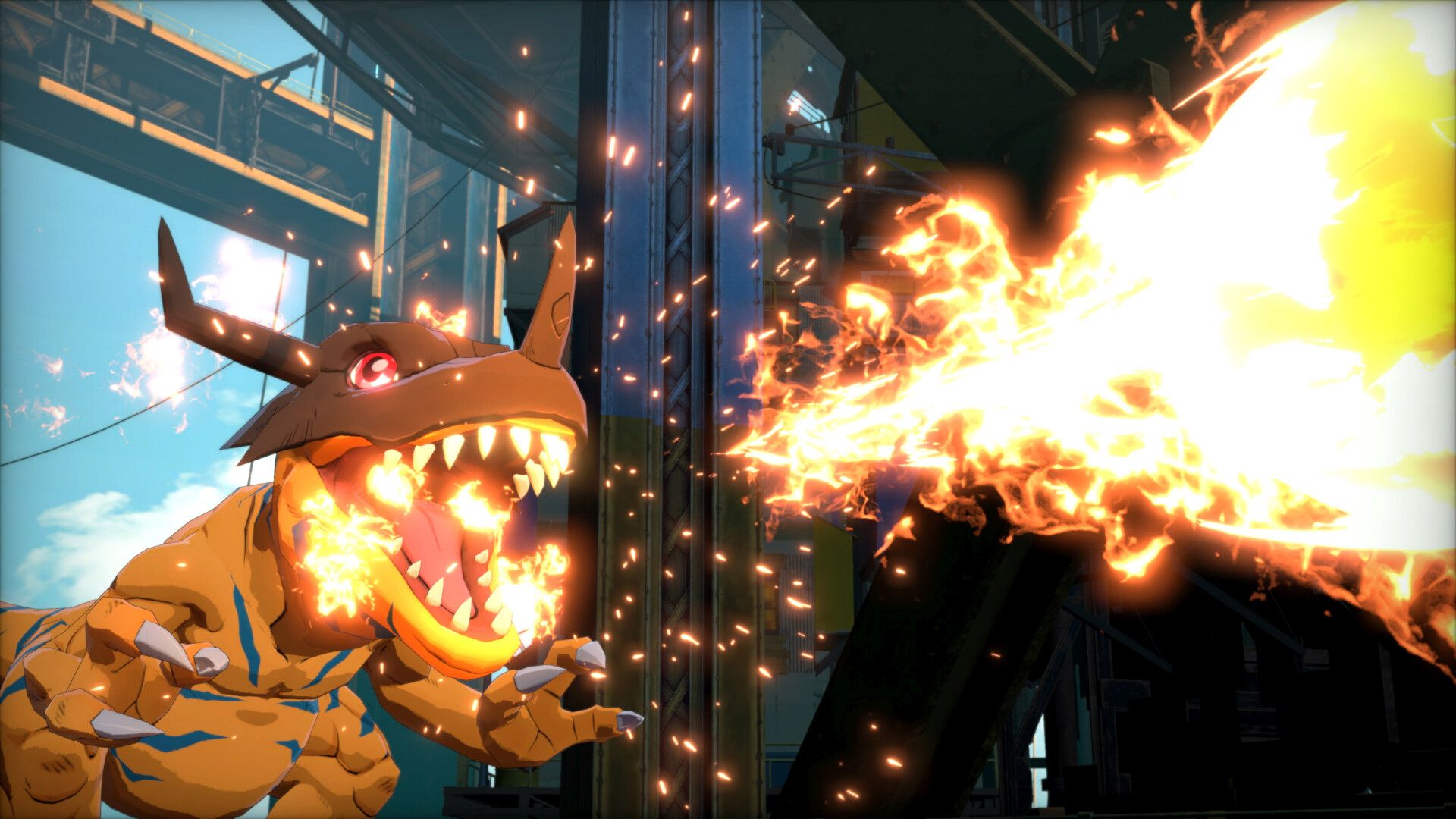
In terms of story, characters and themes, Digimon Story: Time Stranger is a little darker and edgier than anything in the Poké-verse. I can’t remember a Pokémon game with ESRB warnings about “suggestive attire and suicide.” Now, everything is relative, but gamers with a distaste for Pokémon’s sanitized world might enjoy Digimon’s slightly more mature focus.
The Stars of the Show
Where Digimon Story: Time Stranger shines is in its combat and varied, deep and engaging mechanics for fighting and training Digimon. You don’t add new Digimon to your roster by catching them, but by fighting them and scanning them. At 100% scan rate, they can be added to your team, but waiting until 200% gives them added abilities from the start.
Of course, Digimon get stronger by engaging in combat, but their development is also tied to player agent level and a well-known mechanic called Digivolution, where traits of various Digimon are combined to form a new species. With an astounding 450 Digimon, it’s unlikely that players will run out of possible combinations, adding an immense amount of replay value. The power of Digivolution really becomes apparent later in the game.

While Digimon raise their basic stats in combat, there are many additional layers to pay attention to. Talking to your Digimon impacts their personality and changes their Philanthropy, Valor, Wisdom, and Amicability scores, necessary for some Digivolutions. Digimon also have elemental strengths, weaknesses and resistances and levels in seven attributes including Virus, Vaccine, and Data. These are critical components in battle. There’s a rock-paper-scissors element to combat that requires planning and attention.
Unlike in Pokémon, there are no random battles. You can see the Digimon in the path and often, preemptively attack them. That’s good, because it can take some of the tedium out of those endless, low-stakes battles. Thanks to engaging animations and interesting sound design, the Digimon themselves are a lot of fun to discover, fight and talk to.

Personality Plus
Digimon Story: Time Stranger is definitely the most graphically sophisticated game in the series, although some environments look pretty basic and less inspired. Likewise, there’s a bit of repetition and lack of imagination in the dungeon design and most of the side missions are fetch and kill quests, sometimes with a few environmental puzzles thrown in.
While Time Stranger is a perfect introduction to the Digi-verse for newcomers, the game itself starts out slowly and takes some time to really kick into gear. However, this is in part due to the need for tutorializing so many mechanics. There’s a lot to take in.
A first for the series, most of the NPCs and Digimon are voiced and the English version isn’t bad. The musical score by superstar composer Masafumi Takada is excellent, with a dizzying range of styles, especially in the battle music and boss encounters.

Start Here
Digimon Story: Time Stranger is one of those rare games that should appeal to both veterans of the franchise and absolute newcomers. A decent story, great music and appealing visuals are icing on the Digimon cake, a delicious and satisfying take on the turn-based JRPG battle formula. With a little more edge and deeper mechanics than its Poké-cousin, Digimon Story: Time Stranger is addictive, fun and definitely the best game in the Digimon Story series.
***PS5 code provided by the publisher for review***
The Good
- Addictive and deep battle systems
- Enjoyable story and characters
- Endless Digimon possibilities
- Great intro for newbies
The Bad
- Slow pacing at the start
- Some basic graphics in places
- Repetitive side quest design